


 Nature
 PUBLISHED




What you'll discover in this article
- Bycatch in static nets is the leading cause of human activity-related death for small whales, dolphins, and porpoises across the world.
- For the first time, hydrophones have recorded the sounds of two porpoises before, during, and after a fatal bycatch event.
- "Here the surviving porpoises stuck around for almost an hour after the entangled animal died producing hundreds of communication calls… I’ve never seen anything like it in data before," Dr Jamie Macaulay, Senior Research Fellow at the Scottish Oceans Institute, told IFLScience.
Cetaceans have a lot to put up with – and we're not just talking about right whale moms lying upside down to get a break from their calves.
In 2002, humans caused the extinction of an entire species. The world's only freshwater porpoise has been in decline for over 1,000 years. And now, the cetaceans of the world have to deal with fisheries and fishing nets on a daily basis.
For the first time ever, a real-time audio recording of a bycatch event involving two harbor porpoises has been recorded, and it is utterly heartbreaking.
Bycatch is an issue that the fishing industry, conservationists, and government all want to solve.
Dr Jamie Macaulay
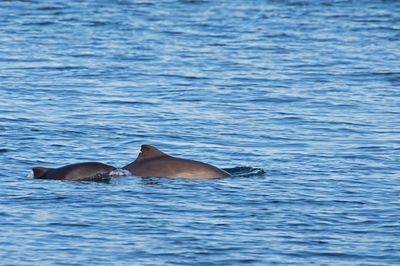
Harbor porpoises (Phocoena phocoena) are one of the smallest species of cetacean and are often seen in the coastal waters of the United Kingdom. Around these waters, deaths of these porpoises and dolphins from bycatch events in static nets are thought to reach around 1,000 individuals per year.
To help minimize these events, a research team was looking at the benefits of passive acoustic monitoring (PAM) to learn more about how these small cetaceans interact with static nets, and how they become entangled in the first place.
“It is unfortunate when any wild animal unintentionally dies due to human activity, and this research is a poignant reminder that bycatch is a welfare issue as well as a conservation one," Dr Jamie Macaulay, Senior Research Fellow at the Scottish Oceans Institute, told IFLScience.
"However, static nets have some significant environmental upsides and are important for coastal communities. It’s thanks to fishers that we were able to collect these data, and bycatch is an issue that the fishing industry, conservationists, and government all want to solve."
The initial process saw a hydrophone system mounted on static nets off the coast of Cornwall in the UK between 2017-2019. This gave the authors insight into how the animals moved around the net. However, the setup managed to record a real bycatch event close to the monitoring array.
The array was two PAM devices spread apart along the static net so that if a porpoise was recorded on both devices the signal could be used to pinpoint where the porpoise was and track its position in real time.
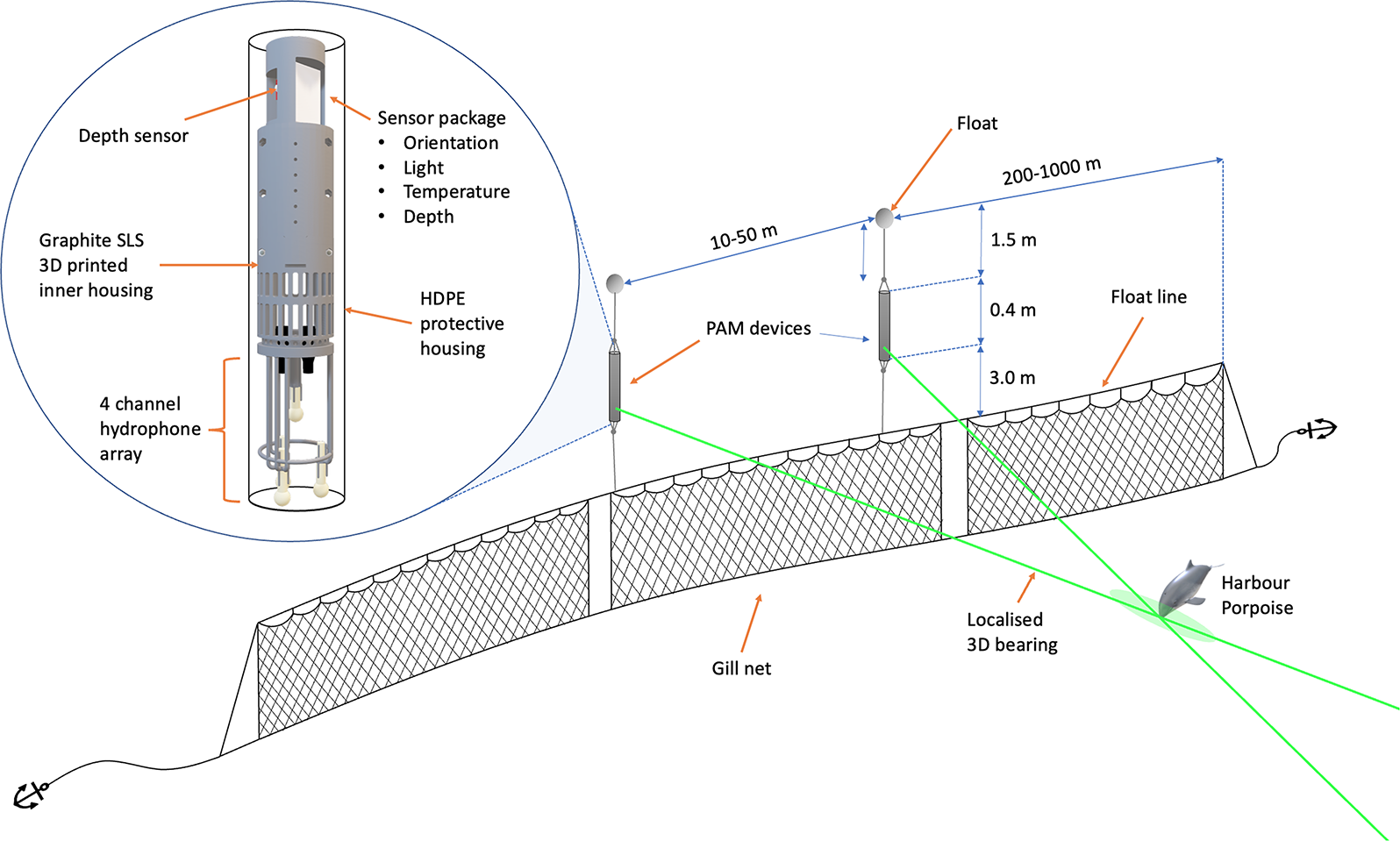
The porpoise became entangled around 20 meters (65 feet) from the hydrophone and depth sensor. Using the data, the team can tell that it lifted the net around 7 meters (23 feet), presumably trying to get to the surface.
Acoustic data was also recorded before, during, and after the event, and showed there were two porpoises in the vicinity – the one that was caught and a second animal swimming nearby.
The audio data shows that the pair were actively foraging before the bycatch event occurred. Between the point the porpoise became caught in the net and its death, 51 calls were recorded from the caught porpoise and 15 from the second one.
"We also noticed a remarkable change in acoustic behaviour: as soon as one of the animals became entangled, both animals switched to producing special sequences of clicks that we think are used for communication," explain the authors in blog post about the study.
Around four minutes after the caught porpoise is presumed to have died, the team recorded calls from the surviving purpose for around the next hour. Given the social structure of harbor porpoises, and the length of the caught male, it has been suggested that this was a mother and calf pairing.
“Usually with PAM we only get fleeting glimpses on communications as animals are only present for a small period of time. Here the surviving porpoises stuck around for almost an hour after the entangled animal died producing hundreds of communication calls…I’ve never seen anything like it in data before,” said Macaulay.
While this is a heartbreaking occurrence, the data from the hydrophones and depth sensors could be extremely useful in working out how the entanglement happened and what can be added to the nets to mitigate further bycatch events.
“We now have a programme funded by the EU's CIBBRiNA project and supported by the UK's Bycatch Monitoring Programme to record porpoise and dolphin behaviour around nets, which will tell us a lot about how and why animals are interacting with fishing gear,” said Macaulay.
The results show the two porpoises feeding near the nets for eight minutes before the entanglement, suggesting that they are capable of perceiving the net at least at close range. However, the team thought that the caught porpoise could have been distracted by the foraging and swum into the net before he had a chance to course-correct.
If this is a correct assumption then strategies to make the nets more “acoustically visible” to the dolphins could help to prevent this from happening.
“We’re also trialling new mitigation measures, such as acoustically reflective pearl beads in nets, and working out if these change behaviour, and therefore are likely to be effective in reducing bycatch.”
“Ultimately, we are hoping that by studying behaviour, we can rapidly identify which mitigation approaches are ready for larger-scale trials and ultimately reduce bycatch in static net fisheries,” added Macaulay.
The study is published in Royal Society Open Science.


 1
1