


 Nature
 PUBLISHED


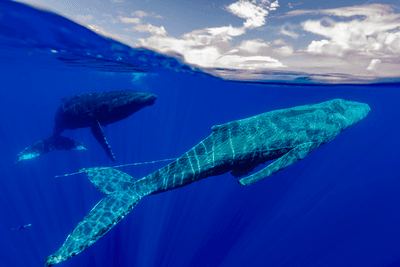


As fishing poses an increasing threat to whales, one side effect is offering whales a chance to show their solidarity, even with those that are not close relatives. Detailed observations of one case challenge the belief that animals only ever act out of self-interest or to support their families.
Many humans have claimed that empathy is a uniquely human trait, although notably those who say this the loudest often seem to be the ones who don’t display much empathy themselves (many denying animals even think).
When we see other animals caring for each other the assumption has usually been that this represents parental care, or at least that of siblings that need to stick together to survive. Counter examples, such as dogs’ self-sacrifice for their humans, are explained away as products of misperceiving us as members of their pack.
Yet examples keep appearing that don’t fit this interpretation, and Griffith University PhD student Stephanie Stack is part of a team that got to explore one such case in detail.
In February 2021, a humpback whale was reported entangled in fishing gear in the Au’Au Channel between Maui and Lāna‘i. The Hawaiian Islands Humpback Whale National Marine Sanctuary (HIHWNMS) was notified, as they are unfortunately familiar enough with cases of entanglement to have developed skills in freeing trapped whales.
When the whale was resighted on March 9, its condition had deteriorated significantly.
HIHWNMS was able to remove most, but not all, the fishing lines affecting the whale, but feared they had arrived too late. Two days later the whale was seen for the last time, and is believed to have died from the effects of the entanglement, but it is what happened in between that amazed marine biologists.
Two companion whales were filmed swimming with the entangled whale, and while one did not appear to stay long, the other remained with its distressed brethren for at least five hours. That meant making less direct progress than a healthy whale normally would, but not necessarily doing less swimming, since it circled the wounded comrade.
The circling dispersed 10-12 tiger sharks, drawn by the possibility of a whale-sized meal. The companion also supported the entangled whale so it could come to the surface to breathe, like a mother whale will do to its calf.
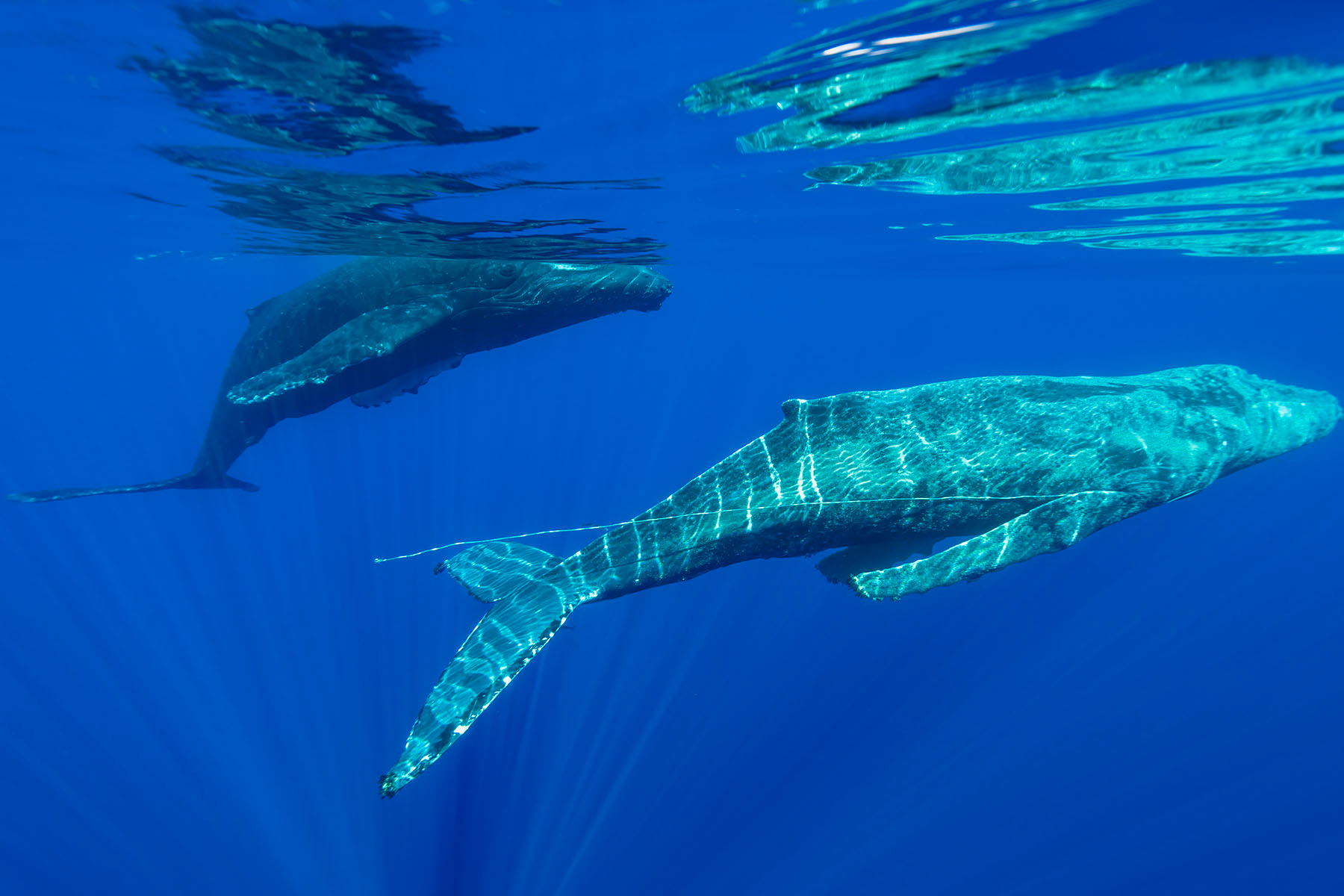
The companion even placed its pectoral fin on the upper body of the entangled whale in a manner reminiscent of a human offering comfort. Biologists are always wary of attributing animal behavior to human emotions. Nevertheless, short of reading the wounded whale its last rites, it’s hard to imagine anything more similar to the way humans seek to support each other as death approaches.
Stack and her co-authors found 11 other reports of humpback whales that changed their behavior to stay with a whale caught in fishing lines, aside from those that definitely involved mother and calf, although examples with toothed whales are much more common. Unfortunately, none involved the same level of detailed observations, but in one case the companion stayed with the entangled whale for four days.
The authors also note that whalers often reported baleen whales staying with injured or captured members of their species, but since the voyages were about plunder not science, the descriptions lack detail.
The paper refers to whales staying with an injured counterpart as epimeletic behavior (care for a distressed individual), and includes a comparison with another remarkable incident.
In 1996, at least four humpback whales were seen apparently competing for access to a female. This competition can get rough, with whales striking each other in ways that can produce severe injuries. Less than two hours later, one of the males was dead, almost certainly the first (and still only) known case of a humpback killed in such competition. Three whales stayed with the body – one male for more than four hours, during which it sometimes grasped the corpse with its fins.
The original report on that event considered the possibility that the other whales were grieving their former rival or hoping to revive it. However, it reached a much more disturbing conclusion, instead denoting the interaction as sexual. Apparently a sufficiently aroused male whale will engage in necrophilia, given the chance.
That may still be the case, but in the context of so many subsequent examples of apparent compassion, an epimeletic interpretation of the incident now seems less far-fetched.
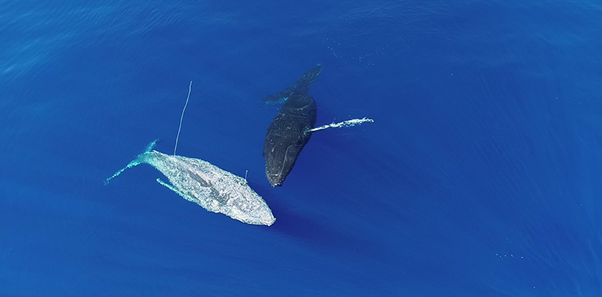
Stack told IFLScience that in the more recent case, the companion whale’s actions in chasing away sharks and helping the entangled whale to breathe would have represented practical assistance. There was, however, no way it could help untangle the fishing lines, and its presence appears to have been at least partly an act of sympathy, rather than utility.
Stack is unsure how much of a sacrifice the companion was making, for example whether it delayed leaving Hawaiian waters to provide comfort, or how much effort it would take to raise an adult whale to the surface.
Humans love tales of wild animals seeking us out, particularly to free members of their species from traps or dangers. However, Stack is not aware of any reports of whales alerting boats to the distress of a companion.
“You have to wonder how whales view humans,” she told IFLScience. “You would think there would be some memory [of] whaling. When they’re entangled it’s a very stressful time and they don’t like to let boats get too close. They don’t seem to know you are trying to help.”
Stack took the opportunity to emphasize the message that if you encounter an entangled whale, call for help, rather than trying to cut it free yourself. “You can make it worse or injure yourself,” she said. “Even a trained responder was killed recently, so don’t try to be the hero.”
The study is published open access in PLOS One.



 1
1