Nature
 PUBLISHED


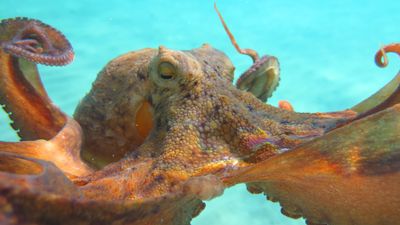


How do you weigh an octopus? Or a giraffe, for that matter? That’s a question that zoos and conservation groups across the world grapple with as they strive to keep the animals in their care safe and healthy. For some species the answers might come easily, but for those more slippery of inhabitants the keepers have to get creative.
How do you weigh an octopus?
The Aquarium of the Pacific shared on their Facebook page a video of their staff weighing Glinda the giant Pacific octopus.
Through positive reinforcement training, Glinda is helped gently into a bucket submerged into her tank. From there the bucket and Glinda are transported away from the water and to the scales.
After a super quick weigh in, Glinda is returned to her habitat. Weighing 17 pounds or roughly 7 kilograms, Glinda is on the smaller side for a species that can grow to be more than 50 pounds or 22 kilograms when at full size.
How do you weigh a giraffe?
Now for something a little bit taller.
At Wellington Zoo, a “trainer” was installed, which is a large metal stall with padded sides. By adding loadbars to the sides of the trainer the team can now weigh Zahara, Zuri, and Sunny the giraffes.
Checking their weight is a fundamental part of making sure the giraffes are healthy and happy.
At Giraffe Inn and Safari, a similar method is used along with some target training for male giraffe Juji, along with plenty of snacks.
How do you weigh a small bird?
For something a little more wild, ecologists and ornithologists frequently have to weigh birds in the wild when they are ringed and monitored for scientific study. But how do you weigh something that could fly away at any moment?
Well, for most small passerine species they fit pretty well into a pot or old camera film case that can then be placed on a digital scale.
How do you weigh a whale?
On the other end of the scale – literally – is the marine mammals. While seals could be tempted onto a weigh bridge or floor scale, how on Earth do you go about weighing the world's largest creature?
One technique is called photogrammetry, where the body size of whales is measured from photographs taken by drones.
This allowed one team of researchers to measure body length, width, girth, and height, in order to create 3D models of the whales and then predict their body volume. Using historical data, the team also combined density into the model to predict the final weight.
Check out the full method in their paper from 2019.
Now for something a little more abstract?
It’s all very well for physical things, however big or small they are – but what about those objects we can’t touch? How, for example, would you go about weighing something like a planet or even a supermassive black hole? Find out here.

 2
2