Nature
 PUBLISHED
 1
1


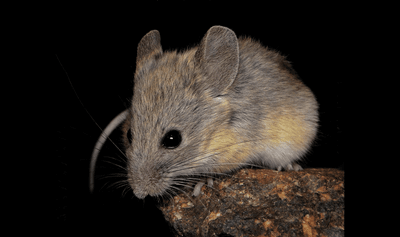


Scientists have figured out how a tiny rodent can survive at altitudes that are otherwise inhospitable to other animals. The Andean leaf-eared mouse (Phyllotis vaccarum) is as adorable as it is marvelous. The little rodent, which is found in Ecuador and Peru, has evolved specific adaptations that allow it to thrive at altitudes higher than any other mammal.
Life at high elevation is extremely tough. Solar radiation is high, while food and water become increasingly scarce. What’s more, temperatures become lower the higher you climb, as does oxygen. Taken together, these conditions are extremely challenging for aerobic life.
For instance, at 5,000 meters (16404 feet) above sea level, the availability of oxygen is only half that at sea level.
To survive at this altitude, a mammal acclimated to sea level would need to breathe at a much higher rate to keep their blood oxygen levels up. But this would result in a huge loss of carbon dioxide, which can lead to respiratory alkalosis. This is where body fluids become “basic”, or too alkaline, which can cause sickness, nausea, headaches and light-headedness.
For most of the 20th century, scientists believed the only mammal that could survive at extreme altitudes was the large-eared pika (Ochotona macrotis), a species of small mammal that lives in the mountainous Hindu Kush Himalaya region.
Researchers have shown that this relative of the rabbit has several adaptations that allow it to live at high altitudes, including having decreased pulmonary vasoconstriction (a reflex where blood vessels in the lungs narrow due to low oxygen levels) and thin-walled arterioles (small, thin branches of arteries).
But between 2020 and 2023, researchers found Andean leaf-eared mice thriving at 6,739 meters (22,109 feet) above sea level on the summit of Volcán Llullaillaco (between Argentina and Chile). This means the little Andean mouse can live at around 500 meters (1,640 feet) higher than the large-eared pika. At this height, oxygen levels are around 44 percent of those found at sea level.
“It was completely unexpected. People did not think mammals could survive at these altitudes, but they’re there,” Graham Scott, a professor in the Department of Biology at McMaster University who co-authored the study, explained in a statement.
So how does this little mouse achieve this massive feat? Well, a new study has shown that the Andean leaf-eared mouse uses a combination of metabolic and genetic adaptations to survive. These include a surprising ability to detoxify poisonous plants.
“Evolution is a complex process,” Grant McClelland, a co-author of the study and a professor in the Department of Biology, added.
“When animals encounter really challenging environments, there are a lot of different things they need to cope with, not just the obvious ones.”
The team analyzed whole-genome sequence data for 167 leaf-eared mice that lived across the species’ range. This included specimens collected at high, mid-, and low altitudes.
They also performed laboratory experiments that simulated cold, low-oxygen conditions on the mice from these environments and found that the mice that scurried at high elevations generated significantly more body heat than their lowland counterparts. They also demonstrated greater activity in their muscles and their heat-producing brown fat.
“They’re more like a marathon runner than a sprinter,” Scott explained. “Their muscle cells are packed with mitochondria that allow them to sustain heat-producing activity for longer periods.”
This reflects an enhanced ability to stay warm despite the low oxygen levels. Strangely though, the mice do not seem to rely on the same oxygen transport adaptations other high-altitude mammals do. Instead, they have different physiological and genetic adaptations that improve energy production.
But the strangest finding had less to do with oxygen or temperature than it did the animal’s diets. Food at high elevation is limited, but these mice survive on unusual food sources, such as lichens, and possibly seeds and insects brought up by winds.
Genetic analysis showed that the high-altitude mice have evolved alterations to the genes involved in metabolizing food and can actually detoxify plant compounds that would typically be harmful.
“We were initially focused on the most obvious environmental challenges, things like low oxygen and cold, but there were important factors we didn’t expect, including how these animals deal with what they’re eating,” Scott said.
The results demonstrate that evolution is a multi-layered process whereby multiple systems change to manage complex environmental challenges.
“Sometimes our assumptions about the most extreme environments animals can live in can be questioned,” McClelland concluded. “Evolution has a lot of room to experiment.”
This point may be more salient now than it has for a long time, as more animals are forced to adapt to a rapidly changing climate.
“We tend to focus on temperatures as the big challenge,” says Scott. “But animals are dealing with many pressures at once and evolution may push them in ways we don’t always anticipate.”
The study is published in Science.