Nature


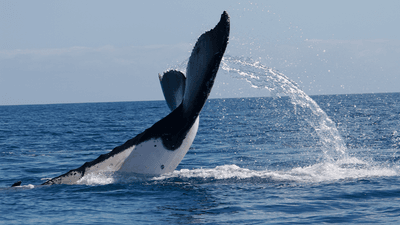


Humpback whales are known for their migrations, with some populations typically swimming between feeding and breeding grounds from the Antarctic to around the coast of Australia. While this is no mean feat, for two individuals they decided this wasn't quite far enough and swam from the east coast of Australia to the coast of Brazil and vice versa – a distance of more than 15,000 kilometers (9,320 miles).
Swimming between Australia and Brazil marks the longest known distance ever confirmed between sightings of individual humpback whales across the world. But making sure that one whale spotted in Australia is the same whale spotted off the coast of Brazil is not easy. Investigators had to compare over 19,000 photographs of whale tails over 41 years to recognize the individuals.
To track individual whales over years, there is a photo ID technique that compares the unique shapes and colors found on the whales’ tail flukes. There is even a global platform, Happywhale, where people can upload photographs and track whales across their typical migrations. Here, citizen science comes into play, with photographs taken from whale-watching tours as well as dedicated research trips.
“Citizen science was extremely important. Platforms like Happywhale allow researchers, whale watchers, and tourism operators to contribute photographs that become part of global catalogues,” Dr Cristina Castro, study author and Ecuador Programs Director of the Pacific Whale Foundation, told IFLScience.
“Whale-watching vessels that support research provide unique non-invasive platforms to document whales and collect valuable long-term information. Every image can help connect sightings across years and oceans. Without this international collaboration and contributions from the public and research groups, discoveries like this would probably never have happened.”
These whales were photographed years apart, by different people, in completely different ocean basins, and yet we were able to connect their journeys.
Dr Cristina Castro
Humpback whales are incredibly loyal to their breeding and feeding zones, with mothers teaching calves the routes between the two. This makes these two journeys between breeding areas extremely rare. The previous record-holder swam 13,000 kilometers (8,077 miles) between Columbia and Zanzibar. A whale shark named Mistral also swam a not-quite-as-impressive 1,200 kilometers (745 miles), though it was the first of its kind.
“In this study, we documented movements involving two ocean basins and distances exceeding 14,000 and 15,000 km, which is extraordinary. To find these two whales, researchers compared photographs from more than 20,000 whales collected over several decades in Brazil and Australia,” said Castro.
The distance covered is the minimum, since the photographs mark the seen start and end points of the journey, and suggest a shortest route of 14,200 and 15,100 kilometers, respectively, for each whale.
The gaps between the photos tell another story. One individual whale was photographed on August 9, 2007, in Hervey Bay, Australia, seen again off the coast of Australia in 2013, and then seen in Brazil on July 15, 2009 off São Paulo. This represents a time gap of six years, and a minimum circular distance of 14,200 kilometers (8,823 miles).
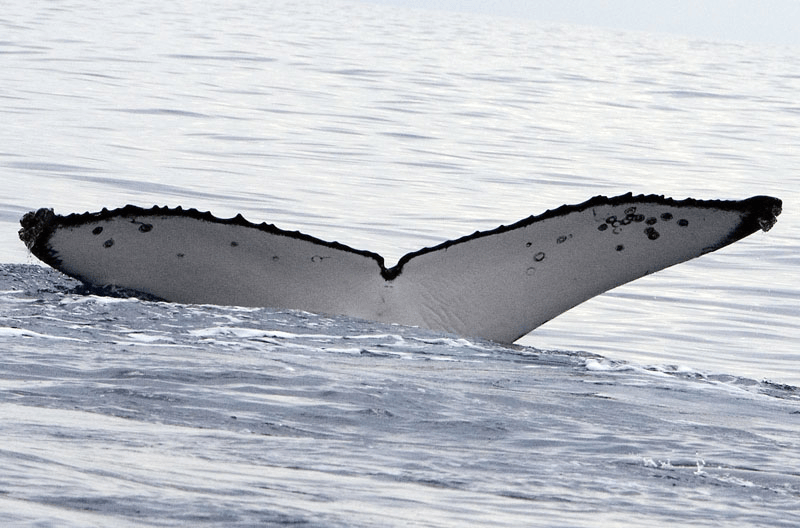
The second whale was first photographed on August 7, 2003 in Abrolhos, Brazil, in a group with nine whales. The same individual was then photographed September 22, 2025 in Hervey Bay, Australia. This is a time gap of 22 years and one month and represents one of the longest intervals between sightings.
These movements are probably exceptional events rather than common behaviour.
Dr Cristina Castro
"One of the most exciting aspects of this study is that it highlights the importance of multinational collaboration and long-term research. Teams from Australia, Ecuador, and Brazil have worked together for decades, collecting and comparing information across the Southern Hemisphere. These whales were photographed years apart, by different people, in completely different ocean basins, and yet we were able to connect their journeys. It also reminds us how much we still have to learn about whale migration and the connectivity between populations across the oceans," said Castro.
These two individuals represent the only examples of animals that have made this journey in over 40 years of data. There is a theory called the “Southern Ocean Exchange”, which holds that animals previously unknown to each other could meet in shared Southern Atlantic feeding grounds and then follow each other home, ending up – perhaps forever – in a new breeding region and population. It's also possible that prey availability could have driven these whales to seek new areas.
“One possible explanation is that some whales may temporarily change migration routes after sharing feeding grounds in Antarctica with whales from other populations,” said Castro. “Humpback whales are highly migratory and can be influenced by environmental conditions, reproductive opportunities, social interactions, and also food availability. Changes in prey distribution may influence whale movements and migration routes. These movements are probably exceptional events rather than common behaviour.”
The study is published in Royal Society Open Science.