Nature
 PUBLISHED


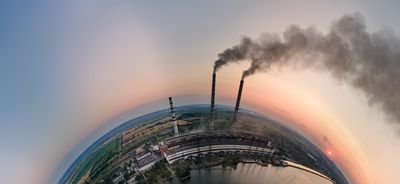


For the past decade, climate scientists and (some) policymakers have hoped and prayed the world could limit global warming to 1.5°C (2.7°F) above pre-industrial levels, but it's looking like that dream may be dead in the water – staying below this threshold is no longer a realistic goal.
The global annual average temperature was 1.5°C above pre-industrial levels for the first time in 2024. While a single year could just be a one-off blip, increasing evidence suggests that the world might be on track to surpass that limit as part of a larger, long-term trend.
In a new study, scientists at the University of Kansas put forward evidence that suggests the world will blast past the 1.5°C threshold in a few years.
They showed that Earth warmed about 0.18°C (0.32°F) per decade between 1971 and 2010, a rate that increased to 0.40°C (0.72°F) per decade between 2011 to 2025. Many previous climate models, they write, fail “to capture the observed doubling of the warming rate.”
Based on this trend, they argue that the planet will cross 1.5°C between 2026 and 2031, most likely around 2028.
Broken promises from the Paris Agreement
All of this ties back to the Paris Agreement, the massively hyped international treaty on climate change that was signed by 194 states and the European Union in 2016.
A central goal of the accord was to keep the global average temperature increase to “well below” 2°C (3.6°F) above pre-industrial levels, while maintaining that the world should still pursue efforts to limit the temperature increase to 1.5°C.
As many pointed out, it was fairly loose language that didn't set the 1.5°C limit in concrete terms.
In 2018, a special report by the Intergovernmental Panel on Climate Change tried to double down on the lower threshold, stressing that limiting global warming to 1.5°C would significantly lower the impact on “ecosystems, human health, and well-being," compared to 2°C.
1.5°C vs. 2°C: What's the big difference?
And all evidence suggests that the mere 0.5°C (0.9°F) would make a hell of a difference.
At 2°C above pre-industrial levels, the world is a planet without coral reefs. Jumping between 1.5°C and 2°C, the number of people exposed to severe heat waves, water scarcity, extreme poverty, and flooding rises by hundreds of millions. Crop yields will shrink, even more species will die out, and coastlines will increasingly encroach inland.
This isn't the time to give up
Now that a world below 1.5°C looks unlikely, policymakers and scientists are looking to see how the road ahead might look, while emphasizing that this is not the time to give up on all climate action.
To be sure, it looks as if we've overshot 1.5°C, but there's good reason to limit global warming as much as possible below the dreaded 2°C mark.
“Some might think that we should just give up on the 1.5°C goal. We have missed the target, and that’s the end of it. Or we should set a new goal of 2°C or 2.5°C that we can achieve. These are absolutely the wrong strategies,” writes Martin Krause, Director of the Climate Division of the United Nations Environment Programme.
“The higher the peak temperature and the longer we stay above 1.5°C, the more risks we’ll face [...] Suppose we plateau at 1.6°C, 1.7°C or 1.8°C (hopefully not beyond 1.8°C). How can we develop concrete plans without knowing the consequences of these different peaks? What will happen during the ensuing periods of decline?” he added.
The study is published in npj Climate and Atmospheric Science.


 1
1