Nature
 PUBLISHED



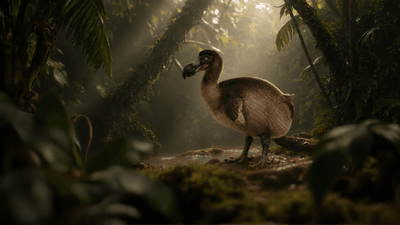


Colossal, the biotech company that wants to bring back woolly mammoths and thylacines, has just unveiled a new AI platform they say will help their mission to de-extinct the dodo.
While a high-quality dodo genome has previously been sequenced, the result is essentially a string of over a billion genetic base pairs, not a foolproof instruction manual for building the bird. Reading the letters in the code at face value doesn't necessarily tell you what they do.
What's more, it’s important to look at the regulatory elements in the DNA. These are the regions of the genome that aren't directly coding for proteins but instead act like dimmer switches controlling how genes are turned on and when.
An atlas of avian genes
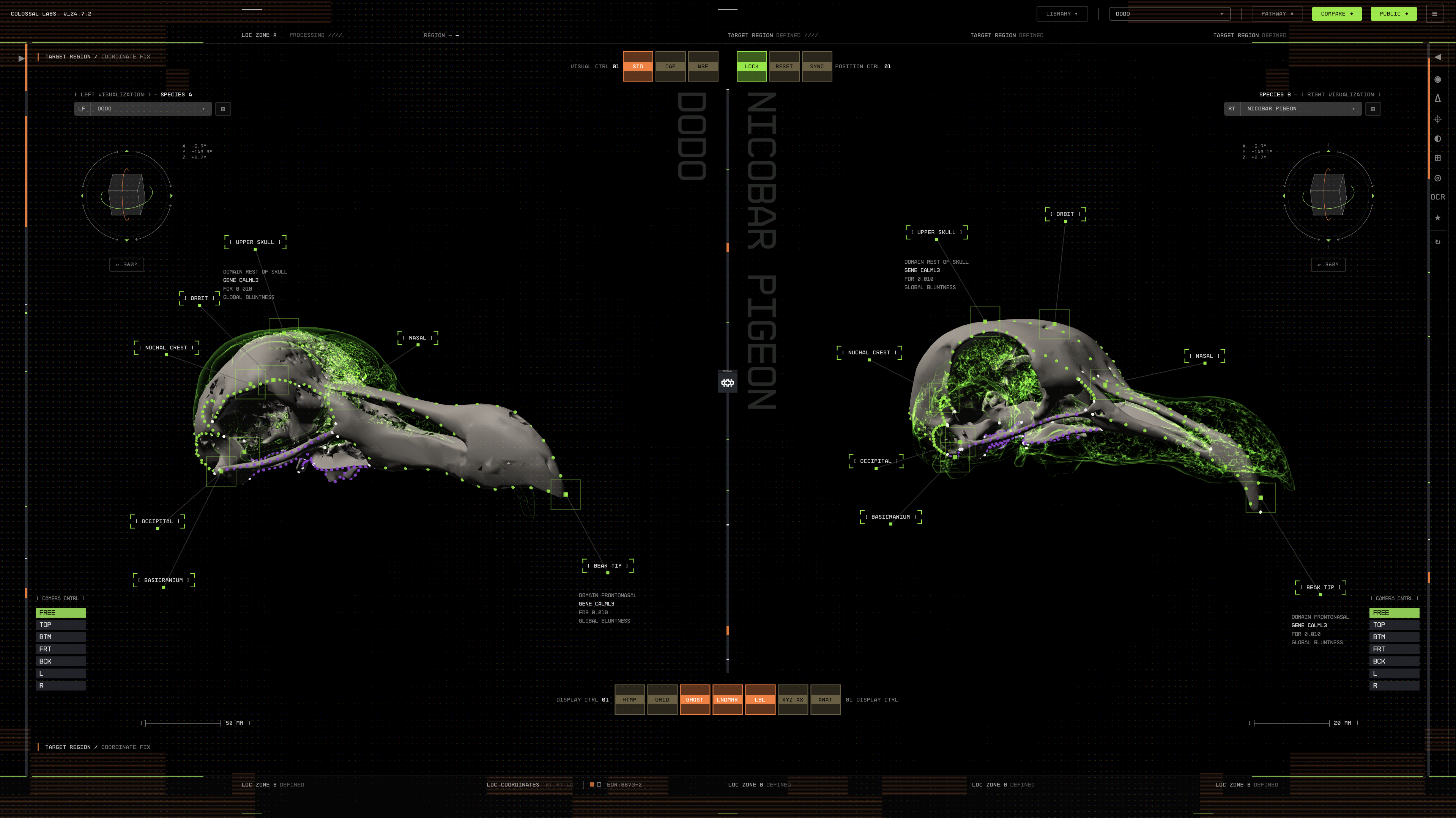
Colossal's new AI platform, dubbed GenoMorph, aims to pinpoint these regulatory elements within the genome, allowing the company to create a more complete dodo genome than before.
For the dodo, one of its most iconic features was its chunky, colorful beak, so this is where the researchers have taken their first shots.
So far, the AI has found 653 candidate regulatory elements associated with beak size, and 1,698 associated with beak thickness and breadth.
This doesn’t necessarily mean those elements directly cause those traits, but the work identifies regions that are worth further investigation and experimental testing.
“De-extinction is as much a data problem as a biology problem. Because so few dodo genomes survive, we cannot rely on the population-level comparisons available for many living species,” Ben Lamm, CEO and Co-Founder of Colossal, said in a statement sent to IFLScience.
“Our GenoMorph platform provides another path: it learns how regulatory DNA shapes living birds, then identifies the genetic switches that may have contributed to the dodo’s distinctive anatomy. This is more than a solution for the dodo. It provides a repeatable approach for extinct species whose genomic records are similarly limited.”
To create GenoMorph, researchers gathered heaps of genetic data from chickens, quails, ducks, and pigeons, including the dodo’s closest living relative, the Nicobar pigeon.
The focus was regulatory DNA, taken from samples covering six stages of embryonic development and three regions of facial development. This was then paired with anatomical data of skull measurements taken from 70 bird species.
“The dodo’s defining anatomy emerged from networks of regulatory instructions that are difficult to interpret from ancient DNA alone,” said Dr. Beth Shapiro, Colossal’s Chief Science Officer.
“The answer turned out to be comparative: use the breadth of living bird diversity, combined with AI, to identify candidate loci for the next phase of testing. By learning how skulls and beaks develop across living birds, GenoMorph allows us to prioritize the regulatory changes most likely to have shaped the dodo and move them into functional validation.”
“It establishes a repeatable framework for connecting ancient genomes to extinct traits.”
Building on previous missions
All of this, Colossal says, is building on the work used to “de-extinct the dire wolf”.
This project made lots of noise last year when the team tweaked the DNA of wolves through 20 changes on 14 different genes involved in coat color, body size, and skull shape. This, they claim, makes them appear more like “dire wolves”, a functionally extinct species.
“Colossal has de-extincted the dire wolf,” Lamm boldly told IFLScience in 2025.
Many scientists disputed whether these animals were true dire wolves or rather genetically modified gray wolves with dire-wolf-like traits. Nevertheless, it was an impressive demonstration of what genetic engineering is capable of in this era.
With the GenoMorph platform, exploits like this may become easier in the future.
When can I expect my dodo?
Looking ahead with the dodo, the next step is to test the candidate elements in the genome that have been identified by GenoMorph, then edit the most promising ones into the germ cells of the Nicobar pigeon and essentially see whether it helps to generate dodo-like features.
Paired with the AI news, the team has also developed a new lipid-nanoparticle method that’s able to deliver DNA, RNA, and CRISPR tools into the embryo of birds.
Their initial experiments have edited the bone-development gene Runx2 in several different bird species, including rock dove and duck embryos, and the change produced a visible change to the skull and face.
There's no ETA for Colossal's dodo (or dodo-like pigeon) just yet, but the company is keen to show it's making promising progress.
The researchers' preliminary findings have been presented at the Craniofacial Gordon Research Conference, the Society for Molecular Biology and Evolution annual conference, and the 2026 Society for Molecular Biology and Evolution annual meeting.
A paper describing the new AI platform will be published on the bioRxiv preprint server.