Nature
 PUBLISHED





When a whale dies it usually sinks to the ocean floor and become a “whale fall”.
These islands of food become something of a feeding station for ocean critters, supplying a bounty of nutrients for deep sea animals for up to 100 years after the animal's death.
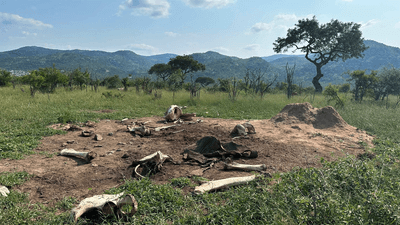
But what happens when a large animal dies on land? Researchers have been studying what they've termed “elephant falls” to see if a similar effect occurs on the animals and plants of the savanna.
What they found surprised even them.
“My intuition was that, since the carcass was only physically present for a relatively short period, its effect would also be rather muted and transient,” said co-author Izak Smit, a senior scientist at South African National Parks, in a statement.
“However, a very different picture emerged when the lab results came back.”
Alexander the elephant
In 2009, a lone bull elephant in Kruger National Park, South Africa, called Alexander died of natural causes, and for some time researcher Dave Thompson had to pass the carcass on a frequent basis.
“Watching the decomposition of that carcass over just a couple of months, got me curious,” Thompson explaine.
Speaking to UC Santa Barbara colleague Deron Burkepile, the two began to hypothesize about the effect the carcass would have on the the soil, microbiology, and surrounding wildlife over time, and soon they sought a grant to study just this over the course of more than a decade.
Studying the sites of other fresh elephant carcasses, at first the effects are what you might expect.
Where the elephant fell, so did the vegetation around it. As well as the simple heft of the elephant, scavengers moving into the area also messed up the surrounding plants, leaving a barren-looking patch surrounding the remains.
But it wasn't just the physical action that disrupted the plant communities. When the researchers looked at the nutrients they discovered something else.
“That's just insane”
The team found that the dead animals had a profound effect on the soil chemistry and microbial communities. Looking at older carcass sites, they found the effects could last over a decade.
“At really fresh carcass sites, soil nitrogen concentrations can be up to 3,000 times higher,” Courtney Reed, lead author of the paper, explained. “That's just insane.”
While more nitrogen may sound good to any layperson or 16th century fallow year farmers, it isn't all party time.
The initial flood of nitrogen and other compounds like ammonium prevented the regrowth of plants, and “essentially resets the plant communities to zero," according to Burkpile.
The microbes at the site, meanwhile, became less diverse as the fast-growing species dominated. These coldspots of diversity of plants and microbes remained for up to 8 years after the death of an animal.
But interestingly the grasses did survive tended to be especially nutritious.
“It turns these grasses from watery iceberg lettuce into a juicy romaine,” Burkepile said. “Those plants are probably growing faster, but the herbivores are just mowing them down because they want to get at that nutrient-rich forage.”
“The 'signal' was still present”
Everybody's got to poop, and as these grazers returned to the carcass site to feed on this nutritious grass, they left their own contributions to the soil which boosted the nutrient levels.
“We found that even around eight years after an elephant had died, the ‘signal’ was still present in the soil and vegetation, and herbivores were still preferentially visiting those areas,” co-author Izak Smit added.
At that time, nitrogen levels in grasses were still high, while plant and microbial diversity had still not returned to pre-elephant death levels.
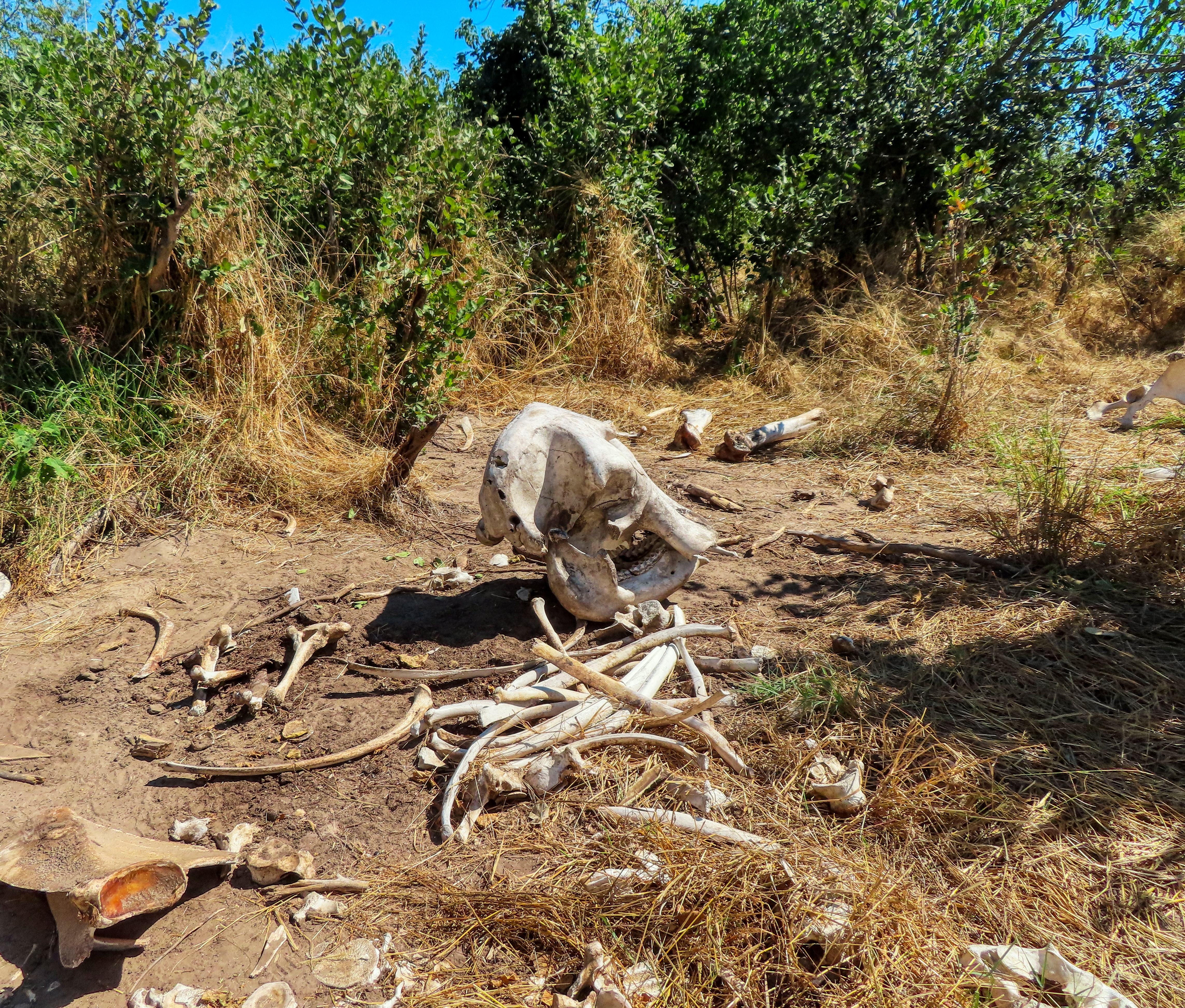
“It was such a powerful reminder that what we see in nature is often shaped by legacies from the past,” Smit added, “even when the causes of those legacies have long since disappeared from view.”
All in all, the team found that the death of an elephant was not the clear-cut boon to life that you see with whales.
“Honestly, I was expecting it to operate really similarly to a whale fall,” Burkepile said. “You have this big pulse of nutrients that can create these unique islands of ecosystem processes and biodiversity.”
“The deep sea is essentially a food desert,” he explained. “It’s so low in nutrients, so low in energy that those whale carcasses attract organisms from all over.”
Meanwhile, the nutrients that pass from the elephant into the soil are so great it suppresses diversity of plant and microbial life, in a way which can last over a decade, at the same time providing improved nutrients for animals for years to come.
“We can only speculate on what this may mean for ecosystems where these mega-herbivores are now missing,” Smit added, “but our Kruger mega-carcass study does make one ask and wonder about those questions more seriously.”
The study is published in Proceedings of the National Academy of Sciences.