Nature
 PUBLISHED





What you’ll discover in this article...
- The new species is thought to have had 10-to-20-centimeter-long claws and is the first megaraptoran dinosaur discovered in Europe.
- Named Invictibellatrix amberina, the relatively small dinosaur helps uncover how megaraptors moved from the north into the southern hemisphere, where they grew larger and became top predators of the region in the Cretaceous period.
- “This name is to give hope and strength to all those who are bullied, discriminated, victimised, and oppressed that tomorrow will be theirs and not to give up in face of such odds,” Dr Cassius Morrison told IFLScience.
Around 120 million years ago, an ancient predator stalked the floodplains of an area that would eventually become the Isle of Wight in the UK.
Meet Invictibellatrix amberina, the latest meat-eating dinosaur to have been described from Europe. This formidable predator is thought to have belonged to a group called the megaraptorans, which would make it the first member of this clade to be discovered on the continent.
These dinosaurs were slightly unusual among the two-legged carnivores known as theropods because, in contrast to more famous relatives such as T. rex, they had relatively long and slender heads with large, muscular arms. An anti-T. rex, if you will.
While in later periods megaraptorans evolved into quite substantial animals, Invictibellatrix was a little more modest in size, although you still wouldn’t want to bump into one while out walking.
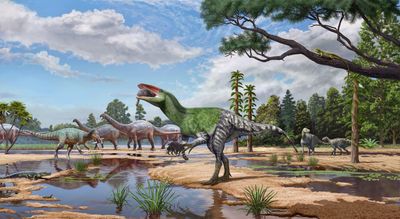
It would have lived in an environment not too dissimilar to the modern-day Mediterranean. The seasonal floodplain would have been subject to frequent wildfires, and the dinosaur would have navigated a world filled with large sauropods, titanosaurs, and armoured dinosaurs similar to Ankylosaurus.
“Invictibellatrix was about the size of a large tiger, probably hunting a variety of small vertebrates such as mammals, lizards, crocodiles, and other dinosaurs especially babies or small ornithopods similar to Hypsilophodon,” lead author Dr. Cassius Morrison at the Natural History Museum in London told IFLScience.
The mid-sized, long-clawed predator was "living in the shadows of other carnivorous theropods,” he said.
A global jigsaw
The discovery of a megaraptoran from Europe is intriguing for what it tells us more widely about the evolution of these animals.
That’s because megaraptorans were previously thought to have had a primarily "Gondwanan" distribution. This is when animals and plants evolved on the ancient continent of Gondwana before it split up into South America, Africa, Australia, and Antarctica.
For a while, that interpretation held up against the fossils we had discovered, which tell us megaraptorans were most diverse in what is now Patagonia, South America, indicating they first evolved within this part of Gondwana. They were also the largest predatory dinosaurs in Australia.
But discoveries in Southeast Asia have challenged this. For example, the dinosaur Fukuiraptor from Japan is widely believed to be one of the most ancient megaraptorans and is actually thought to be related to those that come from Australia, implying a non-Gondwanan origin for the group.
This means that while the discovery of a new species in Europe is perhaps not unexpected, it adds to a growing picture of a wider Eurasian distribution for these dinosaurs that was previously underappreciated.
It now seems likely that the megaraptorans first evolved during the Early Cretaceous in Asia, before migrating through Europe and down into Gondwana, where they then diversified.
“This new species is the first proof we have that megaraptorans were also present in Europe and that they reached Gondwana this way rather than island-hopping further south,” said Charlie Scherer, a PhD student at UCL, in an email statement seen by IFLScience.
By the Late Cretaceous megaraptorans seem to have gone extinct in the northern continent of Laurasia, while in South America they grew to rather impressive sizes. The Argentinian species Maip macrothorax, for example, had claws up to 35 centimeters (14 inches) long and likely weighed the same as a fully grown elephant.
The unconquered warrior queen
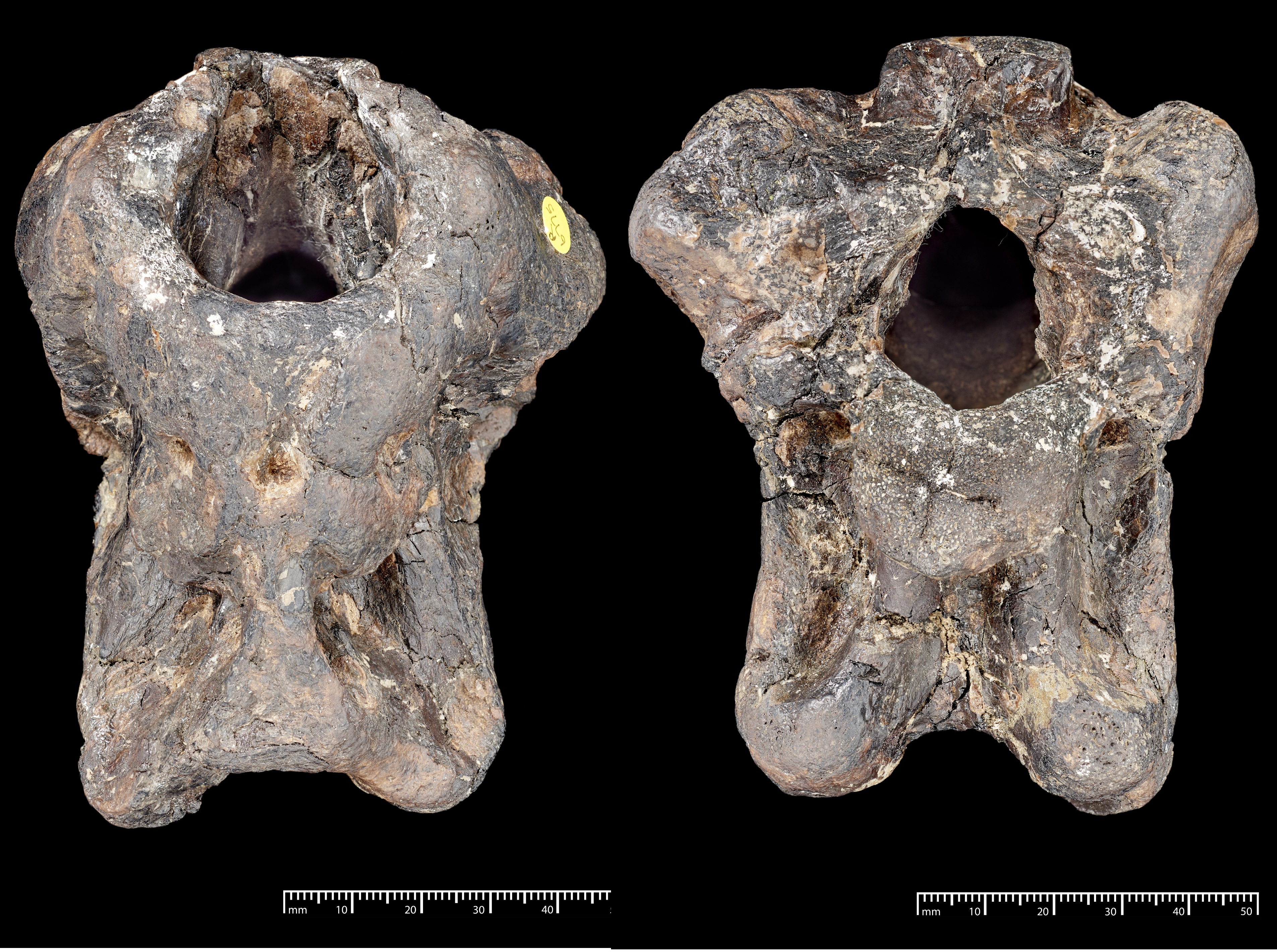
The fossil used to describe Invictibellatrix was initially discovered in the 1920s by amateur palaeontologist Reginald Walter Tooley. The partial remnant of the animal's skull has since sat in the collections of the Natural History Museum, London, for around 100 years.
Despite its scrappy nature, the fossil braincase was enough for a team of researchers to be confident it belonged to an unknown dinosaur due to unique features such as the shape of one of its crests and structure of the recesses in the back of the skull.
These allowed the team to establish first that it belonged to a megaraptoran, and then to name it as a new species: Invictibellatrix amberina.
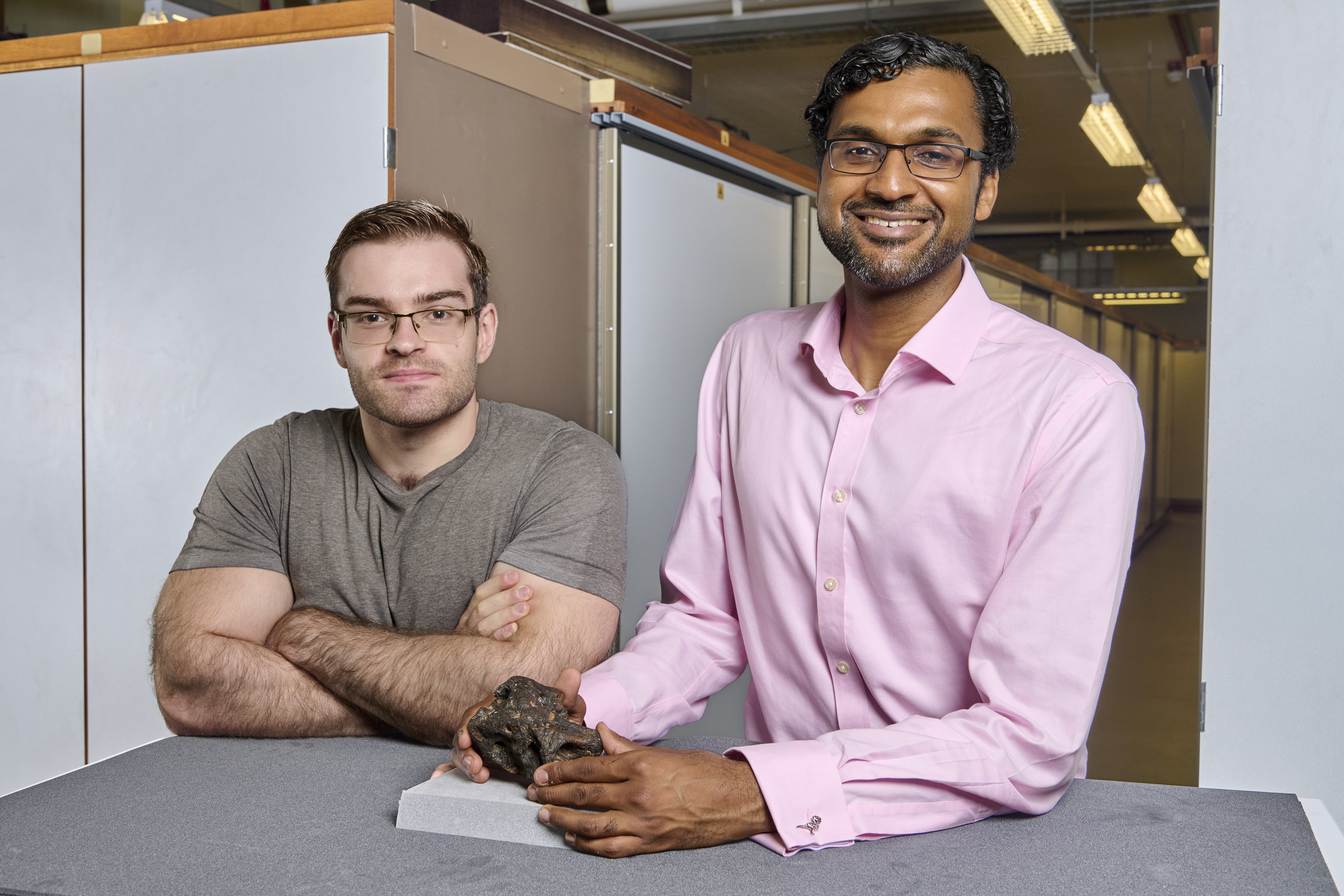
“The name comes from the latin words 'Invictus' meaning unconquered and 'bellatrix' meaning warrior, in the feminine form,” said Morrison.
“These come together to translate to the unconquered warrior, representing that while megaraptorans started off small, they became the apex predators later in the Cretaceous in South America, Australia and Antarctica, being the ruling queens, while the tyrant kings (the tyrannosaurs) ruled North America and Asia.”
“This name is to give hope and strength to all those who are bullied, discriminated, victimised, and oppressed that tomorrow will be theirs and not to give up in face of such odds,” he said.
The second part of the name refers to the amber found in the same rock formation, and it is also written in the feminine form. This means the species joins a very select group of dinosaurs named in the feminine mode.
The Isle of Wight is one of the best places in all of Europe for dinosaur fossils, and it could hold many more new species just waiting to be found. Some of them, like this one, may already be hiding in collections around the world.
The study was published in the journal Royal Society Open Science.