Nature
 PUBLISHED



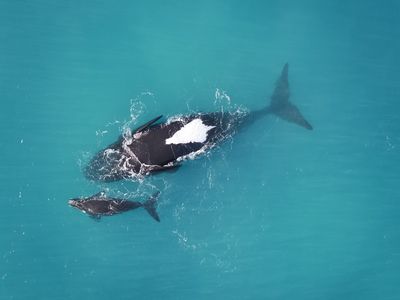


If you’re at the right place at the right time, you might be lucky enough to spot a southern right whale migrating. If you’re extra lucky, you may see one of the females with a new calf that has stopped to rest. And if you’re extra, extra lucky, you may even see that female resting upside down.
Southern right whales (Eubalaena australis) migrate along the coast of Australia to the colder waters of Antarctica and the Southern Ocean and back every year. These whales are capital breeders, which means they must eat and store up as much as possible before reaching their calving grounds, where they fast as they raise their young.
At the Head of Bight calving ground in South Australia, researchers used drones to monitor what the whales were up to. Whale mothers are known to spend a lot of time resting to manage the energetic costs of nursing their young, but the drones caught footage of something new: the whales were resting upside down. So what was the reason for this behavior?
Drone records collected from June to September in 2021 allowed the team to identify each whale that was filmed. They could estimate the body length and condition of the whales based on the aerial images and monitor them over time to track changes. Overall, 90 mother and calf pairs were spotted and 59 were included in the final results.
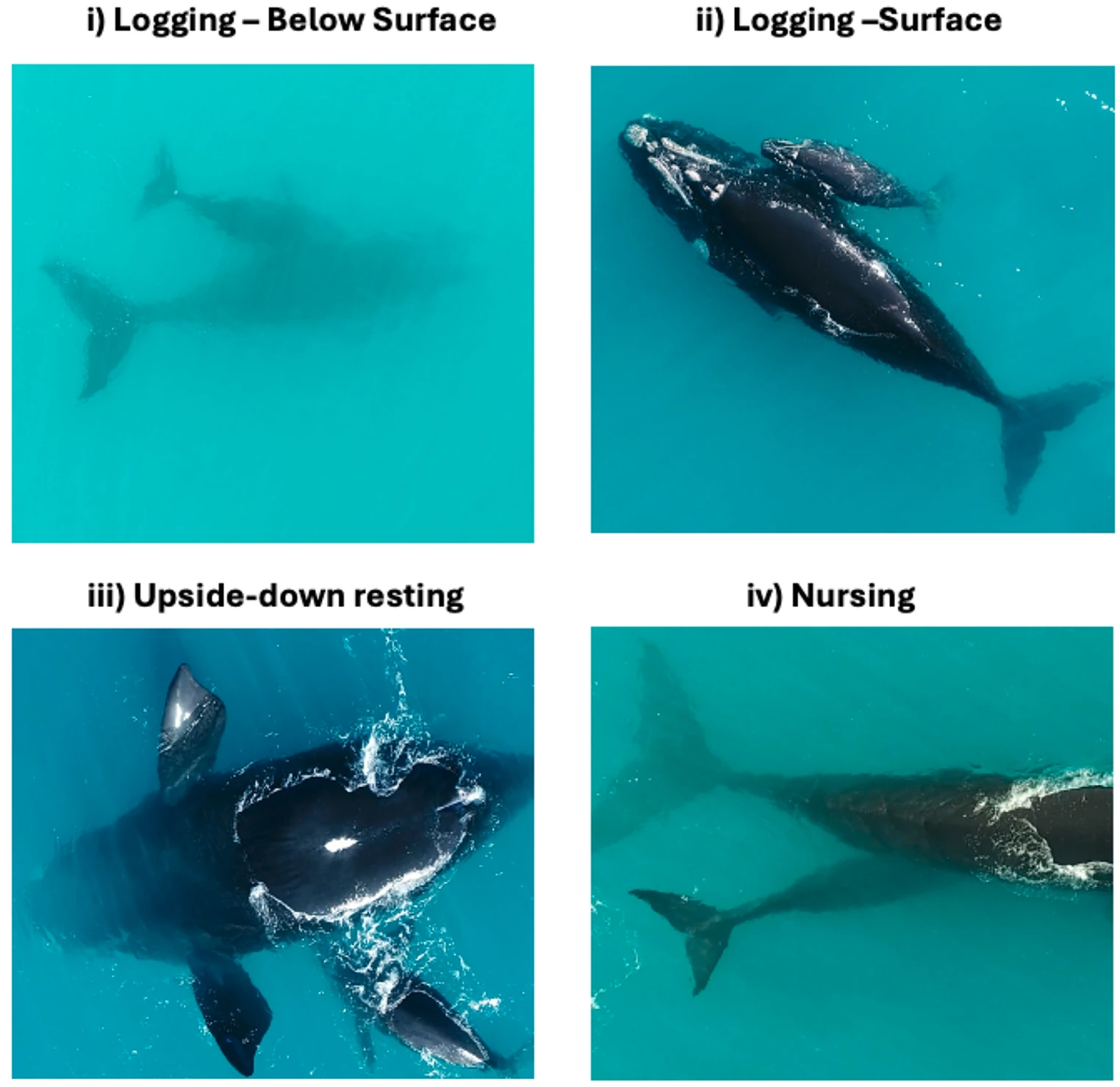
The upside-down resting behavior was only seen in mother whales and was never recorded in males, non-breeding females, or calves. The behavior occurred in 25 percent of the recorded mothers, mostly lactating females and one heavily pregnant whale.
“Three different types of upside-down resting were observed: underwater (the mother rested upside-down fully submerged under the water, 24.1% of observations), combination (the mother began resting upside-down underwater before passively floating to the surface, 10.3% of observations) and surface (the mother rested upside-down on the water’s surface with her pectoral fins out of the water, 65.5% of observations),” the researchers write in a paper describing the results.
The team believes that resting upside down is a way for the mothers to conserve energy as well as limit their calves' access to nursing. The mothers spend around 33 percent of their time resting in both orientations. The team expected that the mothers would rest more as the calving season progressed but actually found the opposite to be true, that the mothers rested less as their body condition worsened.
This could be because the energetic requirements of the calves are at their highest in the month after the calf is born, so more rest is needed earlier on in the season to compensate. An alternative theory is that resting upside down also acts as a way to regulate temperature. Southern right whales lack a dorsal fin, so exposing their bellies and fins to the open air could be a way to lose heat.
Resting upside down puts the whales in a vulnerable position since more energy and time is needed to turn and swim away from danger. It also makes the whales vulnerable to boat strikes, the leading cause of death for the species. Though the whales in this area are protected by the vessel exclusion zone, this isn't in place around all of the right whale calving grounds around Australia.
The team suggests that vessel exclusion zones and speed restrictions should be implemented in areas of southern right whale gatherings during the calving season to help the continued recovery of the species.
The paper is published in the journal Mammalian Biology.