Nature
 PUBLISHED
 1
1



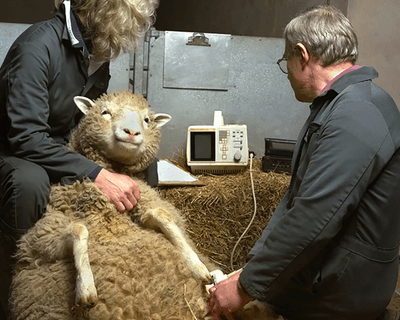


On July 5, 1996, Dolly the sheep – the first mammal cloned from an adult cell – was born in the UK. However, the world wouldn't know about this momentous feat until she was revealed to the public in February 1997, amid a frenzy of front-page headlines and media buzz.
This seven-month delay wasn't part of a shady cover-up or a deliberate campaign of secrecy. By most accounts, it was a sincere attempt to honor the scientific process, in a kind of patience that feels almost quaint in the media-mad world of 2026.
Why was Dolly the Sheep kept quiet until February 1997?
The brains behind Dolly, a team of scientists from the Roslin Institute at the University of Edinburgh in Scotland, had kept quiet about the news because they wanted the public announcement to coincide with the publication of their paper in the journal Nature, which would describe the experiments in scientific detail.
Not only did the data need to be independently verified, but the team also needed to be certain that Dolly would survive. There had reportedly been 276 failed attempts before Dolly, so another disappointing result was still very much on the cards.
Some have said the delay was also about buying time to prepare for the public reception to the news. But while the Roslin Institute did expect the work to make a bang, it's been said they underestimated the level of media interest they'd attract. In the weeks around the "big reveal," they received thousands of phone calls from journalists around the world.
The article that broke the news, published in The Observer on February 23, boldly led with the headline: “Scientists clone adult sheep: Triumph for UK raises alarm over humans,” providing the Roslin Institute with an unwelcome preview of how the story would be framed by many outlets.
"It is the prospect of cloning people, creating armies of dictators, that will attract most attention. The Roslin technique could, theoretically, be used on humans. A sheep is a complex mammal, after all, so cloning one raises concerns. Whether anyone would wish to clone a human is a different matter," the story reads.
By all accounts, this front-page splash had jumped the gun. Nature had circulated its usual weekly press release detailing the contents of the following week's issue, embargoed until the publication of the journal.
Hungry for a scoop and realizing the gravity of the story, The Observer ran its article early. The reporter claimed he learned about Dolly through an independent tip-off and wasn't involved in the embargo arrangement, so it was fair game.
The release of the big study
The study was officially published a few days later on February 27, 1997, in the journal Nature.
It explained how Dolly was created through the transfer of a single nucleus into an unfertilized egg that was stripped of its own nucleus. The nucleus came from a mammary gland cell taken from a six-year-old Finn Dorset sheep, while the empty egg came from a Scottish Blackface sheep. This tweaked egg was then placed inside the womb of a Scottish Blackface surrogate mother.
After hundreds of failed attempts, a successfully cloned lamb was born on July 5, 1996, and named after Dolly Parton, apparently in a cheeky nod to the mammary gland cell that was used and big breasts – yes, this biological breakthrough is named after a boob joke.
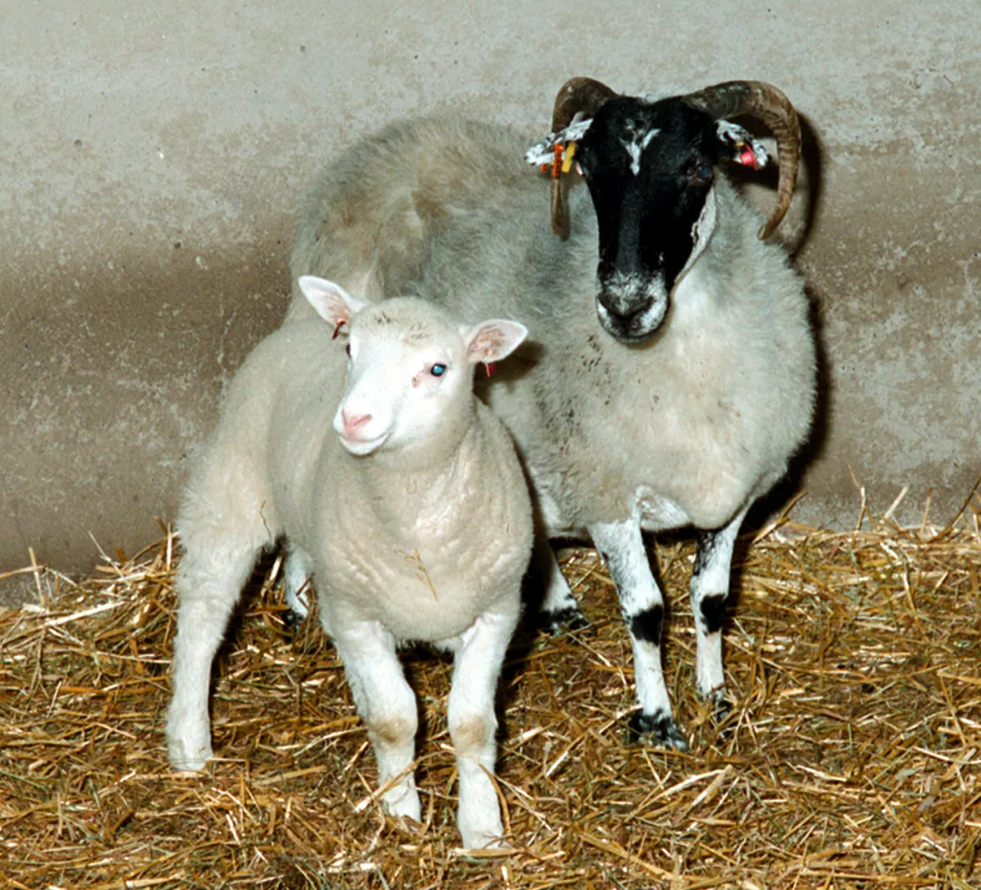
The Roslin Institute had previously been successful in cloning two other sheep, Megan and Morag, from embryonic cells grown in a lab. However, Dolly was special as she showed that specialized adult cells could be used to clone mammals, something once thought impossible.
Many scientists had believed that once a cell specialized into, say, a skin cell or a mammary cell, it only held the information to do that job. However, this breakthrough proved that specialized adult cells hold all the genetic information needed to create a whole new sheep, and this could be utilized for cloning.
The life and times of Dolly the Sheep
Despite being a child celebrity, Dolly lived a relatively normal life. She appeared to be happy and healthy, eventually giving birth to six lambs with a Welsh Mountain ram called David. However, under the surface, something odd was going on.
When she was around one year old, an analysis of DNA showed her telomeres – the caps on the ends of DNA molecules that protect them from damage - were shorter than would be expected for a normal sheep of her age. This effectively meant she was biologically older than she should have been, perhaps because her telomeres had not been fully renewed after they were taken from the older progenitor from which she was cloned.
In 2001, Dolly started walking unusually, and she was diagnosed with arthritis. Some scientists, however, have since suggested this might not have been the case.
She continued to live happily until February 2003, when she developed a cough, caused by a virus called Jaagsiekte sheep retrovirus (JSRV), which causes lung cancer in sheep.
On February 14, 2003, she was put to sleep at the age of six.
Dolly was born into a changing world
Thirty years have passed since her birth, and the world has changed a lot, thanks in no small part to Dolly herself. For one thing, she probably wouldn't be named after a country singer's chest in 2026. Beyond dodgy jokes, the whole episode struck at a crucial turning point in the relationship between the media and science.
Dolly arrived at a time when cable news, tabloid papers, and the early internet were already pushing the pace of news into overdrive. Scientists' attempts at due diligence and containment were starting to buckle even then. The seven months of quiet, unglamorous peer review barely survived a journalist breaking the news ahead of schedule by just a few days.
In 2026, this level of prudence is much more difficult to pull off, and sometimes it is done away with altogether. Major cloning and gene-editing stories are pumped out by a well-oiled, well-funded PR machine. Juicy press releases and media exclusives often come before peer-reviewed papers, much to the dismay of scientists, who increasingly find themselves correcting the story after the headlines have already run riot.
When we look back at Dolly the Sheep, we get a small taste of how this jet-fuelled media ecosystem – which we all must do our best to navigate – came into being.