Nature
 PUBLISHED



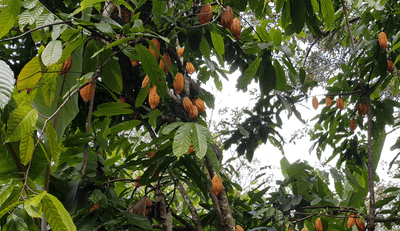


A genetic study of Peruvian cacao has uprooted the family tree of the world’s favorite treat. In the process, researchers have identified four previously unknown lineages, two of which are expected to prove popular with chocolate connoisseurs. Plus, in a world where chocolate farmers face multiple threats, the extra diversity could help secure the future of an increasingly endangered crop.
Chocolate isn't immune to the problem that bedevils most of humanity’s crops. Wild plants are usually highly genetically diverse, and large-scale agriculture has almost always chosen just a handful of varieties – sometimes just one – to spread around the world.
By picking those that give us the largest yield, and then selectively breeding for even greater production, we have pushed back the constant threat of hunger that stalked humanity for most of our existence, but at a price.
Monocultures – the result of growing just one or a few varieties – are vulnerable to disease, a lesson the world should have learned as early as the Irish potato famine and that more recently almost cost us bananas – and might still. Such monocultures are also less adaptive to climate change, and chocolate could be the next one to have a crisis.
Often, the solution to these problems is finding surviving varieties, either in the wild or on small-scale farms that have kept planting heritage strains. For chocolate, much of this diversity lies in Peru, which is probably where the plant was first domesticated. That prompted a team led by Lambert Motilal at the University of the West Indies to go hunting for new strains.
All known lineages of cacao trees, whose beans produce chocolate, are generally placed in 10 groups named after geographic regions (although most commercial trees are the product of cross-breeding between more than one lineage). Recent studies, however, have suggested that this categorization is missing some of the trees' natural diversity.
Motilal and his co-authors studied 192 single nucleotide markers – points where a single letter of genetic code differs between individuals – in the genomes of 390 trees, finding evidence of four previously unknown lineages.
Two of these four have ancestry that suggests they might produce especially high-quality, well-flavored beans, according to the researchers.
The sampled trees didn't necessarily belong to exactly one lineage, with many showing signs of cross-breeding, but the percentage ancestry could be measured.
“Our research reveals that while Peru’s cacao trees share a common genetic thread across the country, each region harbors a unique genetic signature and we've successfully pinpointed four entirely new cacao lineages,” the authors write.
“This blueprint not only reshapes our understanding of Peru’s genetic landscape but provides a tangible new resource for conservation and the fine flavor chocolate industry.”
The cacao cultivar known as CCN 51 has become increasingly popular in recent years, and this research has revealed a new estimate of its ancestry, finding that it is a mixture of four previously known lineages and identifying the percentage genetic contribution each has made.
The diversity of cacao species has survived in Peru both because so much of its chocolate comes from small-scale, Indigenous-run farms and because the climate varies so dramatically between the Amazon basin and the Andes foothills.
In the light of growing fears that much of the world’s chocolate crop is nearing its thermal ceiling, identifying genetics that could help the plant survive warmer conditions may prove vital.
And, in its own way, the discovery of new chocolate varieties may help on that front too. Niche markets – such as for ruby chocolate, which is now gaining fans among connoisseurs – can do more than refresh jaded palates; they can keep alive diversity that might otherwise perish.
Understanding cacao's genetics could therefore prove crucial in both promoting new flavors and protecting the plant's future.
A paper describing these results has been published in the journal PLOS One.