Nature
 PUBLISHED



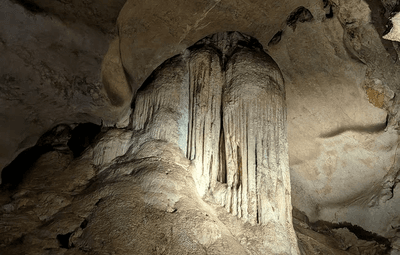


In 1830, European settlers found a slew of giant bones at Wellington Caves, 350 kilometers (210 miles) northwest of Sydney, Australia.
The site was sacred to the Aboriginal people who lived near it, though we can't be sure they knew about the fossil treasures held within. The discovery was certainly a shock to the settlers, however, and interpretations of what they found had an outsized impact on the science of biology.
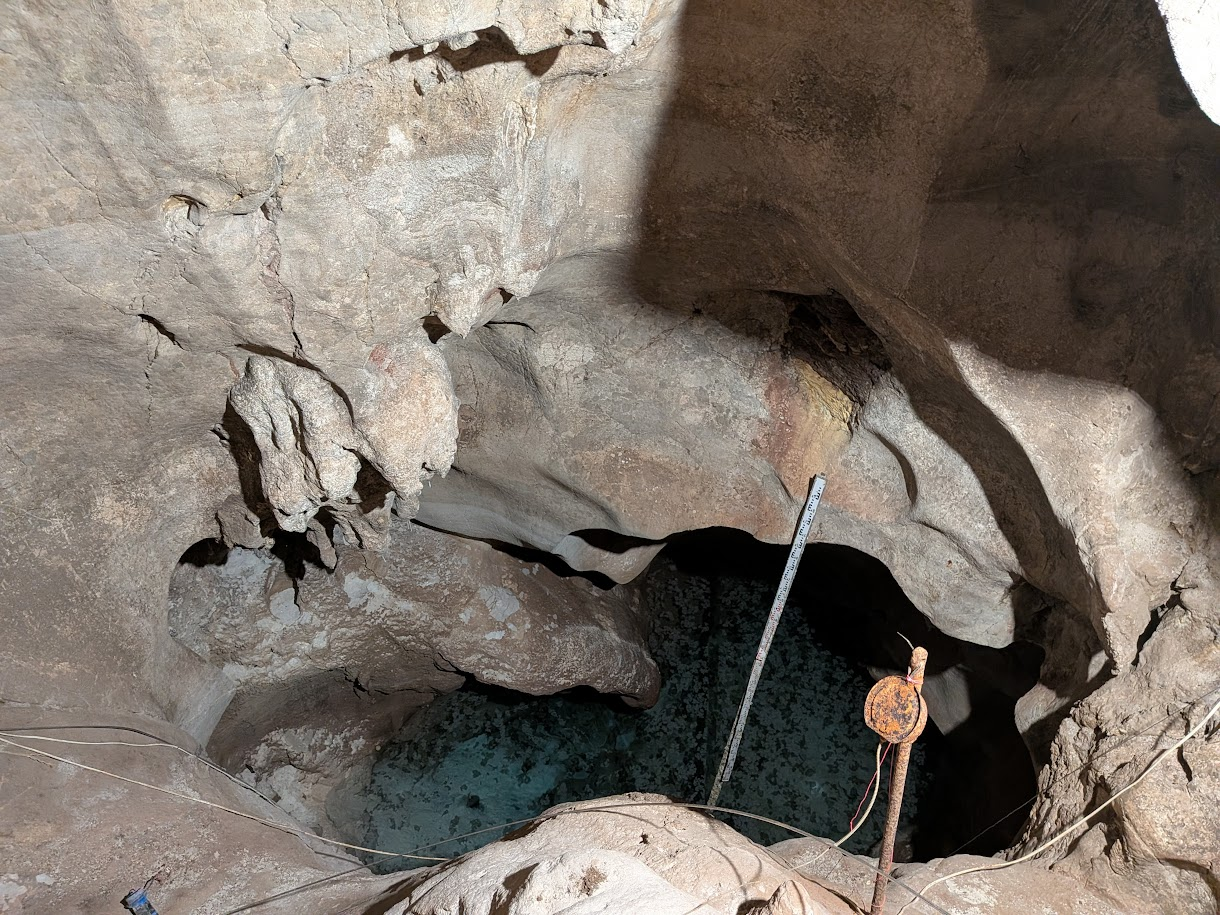
The caves, which are in New South Wales, have played an enormous role in Australian palaeontology and remain an active research site, as well as offering tours that serve as an introduction to the continent’s natural history.
Although people have been tripping over giant bones all over the world for hundreds of thousands of years, the first non-avian dinosaur – megalosaurus, discovered in Oxfordshire, UK – had only been scientifically described six years before the Wellington cave fossils were found.
While scientists were starting to suspect that these objects might be clues to something important about the history of our planet, the bones were first attributed to elephants, with Noah’s flood providing a handy explanation for how they ended up in Australia.
However, when pioneering naturalist Richard Owen made the first detailed investigation of part of a jaw from Wellington Caves, he identified it as coming from an unknown species, which he called diprotodon (Diprotodon optatum).
More significantly, he recognized that, while the size was similar to a rhinoceros, key features marked his creature as a marsupial, whose closest surviving relative was the wombat.
Diprotodon turned out to be just one of many giant creatures from Australia’s past, collectively known as its megafauna, a substantial portion of which were first found in the Wellington Cave system.
Although this list includes Genyornis newtoni, colloquially known as the “demon duck of doom,” as well as some 6-meter-long (20-foot) lizards, the majority of Australian megafauna were marsupials.
Around the same time, Darwin had returned to England with large fossils from South America. These were recognized as belonging to extinct ground sloths – whose smaller cousins could still be found in the rainforest canopy above – as well as giant armadillos and capybara.
The fact Australia’s prehistoric megafauna was composed of species most closely related to the animals living there in the modern day, and that the same could be said for South America, seems unsurprising to us.
That, however, is because we have grown up in a world shaped by these discoveries. To scientists of the mid-19th century, this pattern represented a shock, and the previous attribution of diprotodont bones to elephants only emphasized how views of the world needed to change.
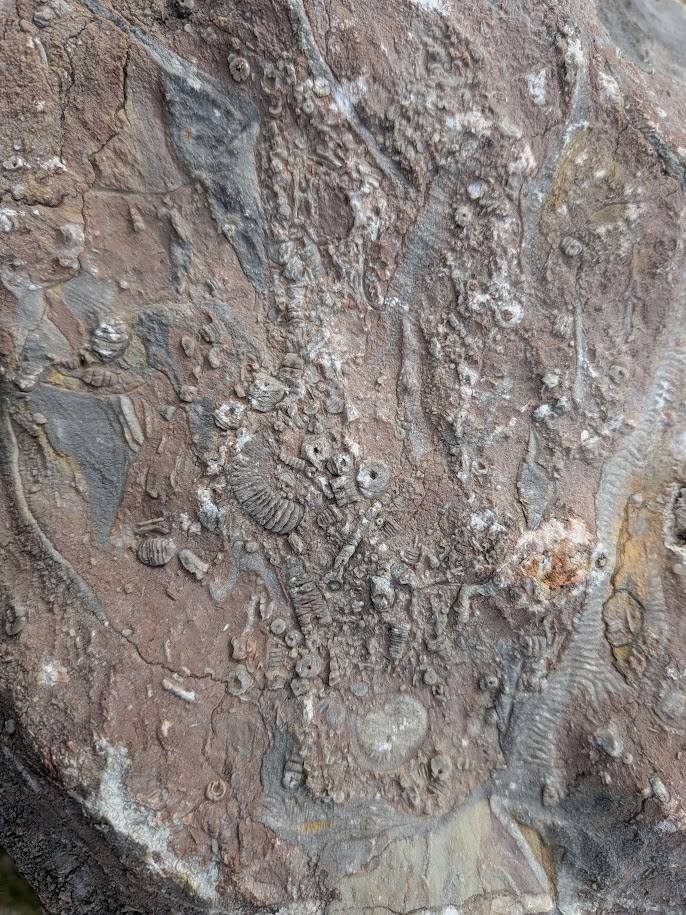
No longer could scientists hark back to an imagined pre-flood era when animals lived in parts of the world very different from their modern habitat. Indeed, the whole idea of an epic flood as a way to account for the presence of marine animals at high altitudes, like the numerous corals, nautiloids, and brachiopods found around the caves, was looking shaky.
Stories about how Galápagos finches and tortoises contributed to Darwin’s world-shaking theory of evolution by natural selection are told often. However, Darwin was also aware of the findings of Owen and others – after all he'd supplied some of the fossils – and this contributed to his thoughts. Why would giant marsupial bones only be found in Australia if they weren't relatives of the modern counterparts? From there, it was easier to imagine some species evolving into others.
Nevertheless, the relationship between the megafauna and modern marsupials remains widely misunderstood in the popular imagination. For example, contrary to common belief, wombats didn't evolve from diprotodonts. In fact, wombats have been around for an estimated 25 million years in forms not greatly different from how they look today.
Darwin would say this shows how well adapted they are to their environment, although people who have met a wombat might wonder if they were just too stubborn to evolve any further.
Diprotodons were relative late-comers to this party, appearing less than two million years ago. Both they and wombats evolved from the same common ancestor, with koalas being a more distant branch of the same family tree.
We understand this family history partly because of modern advances such as DNA sequencing and molecular clocks – which can be used to estimate how long ago a common ancestor must have existed between two species based on how different their DNA is from one another – but finding bones of other extinct species has been more important. We now know Australia was once populated by giant kangaroos, one-meter echidnas, and the hard-to-categorize Palorchestes as a result of excavations in the same caves.
The rocks in which the caves exist were formed more than 400 million years ago, when Australia was much smaller than today. Instead of being far inland, the area was a shallow sea, in which a giant reef system flourished. The rocks are composed of sediments laid down over time, incorporating a staggering concentration of invertebrate shells and impressions.
Much more recently, lower stratigraphic layers of these rock formations eroded, exposing the Devonian rocks, and spaces formed within them. Carnivorous bats, larger than any alive today, took up residence in these around two million years ago.
Subsequently, after the bats were gone, other megafauna stalked the hills above, unaware, and sometimes fell through sinkholes, or their bones were swept in floods into the caves, where they were relatively likely to be preserved.
Almost a hundred species' bones have been found in the caves. Digs take place for a few weeks each year, as only small sections of the most promising areas of the cave floor have been excavated.
Recently, supersized skinks were added to the list, and two Thylacoleo carnifex (marsupial lions) were found, expanding our knowledge of one of the era’s apex predators. Possessing the most powerful bite of any mammal (pound for pound) and teeth like bolt cutters, Thylacoleo are thought to have put this weaponry to use killing prey many times larger than themselves.