


 Nature
 PUBLISHED


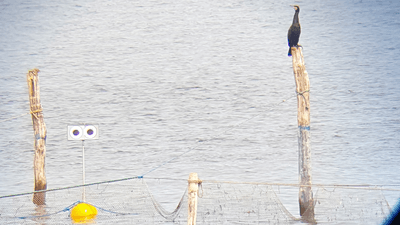


How do you deter a seabird? Make a loud noise? Wave your arms around or abandon your fish and chips to the gulls of the sky? Well, for one team in Denmark studying birds caught in fishing nets, the answer might be googly eyes.
In the Western Baltic, large fixed traps called pound nets are used to target migrating fish. These nets feature an entryway and multiple chambers that end in a fish trap. This type of set up also attracts seabirds that feed on the fish – the birds themselves, however, may also become trapped in the pound nets as they follow the fish inside under the water.
These nets also feature long poles that protrude out of the water, making ideal perches for the birds to sit on. To prevent this from happening, researchers developed a novel plan known as the Looming-Eye Buoy (LEB).
The LEB is a floating windmill, attached to a buoy, printed with a pair of googly eyes that spin round. The idea is that it's supposed to mimic a predator and hopefully put off the seabirds from landing on the nets.
The benefit is two-fold: firstly, the birds will predate on the fish less, leading to better outcomes for the fishers; and in turn, the birds will become entangled in the nets less, leading to a reduction in bird deaths from these nets.
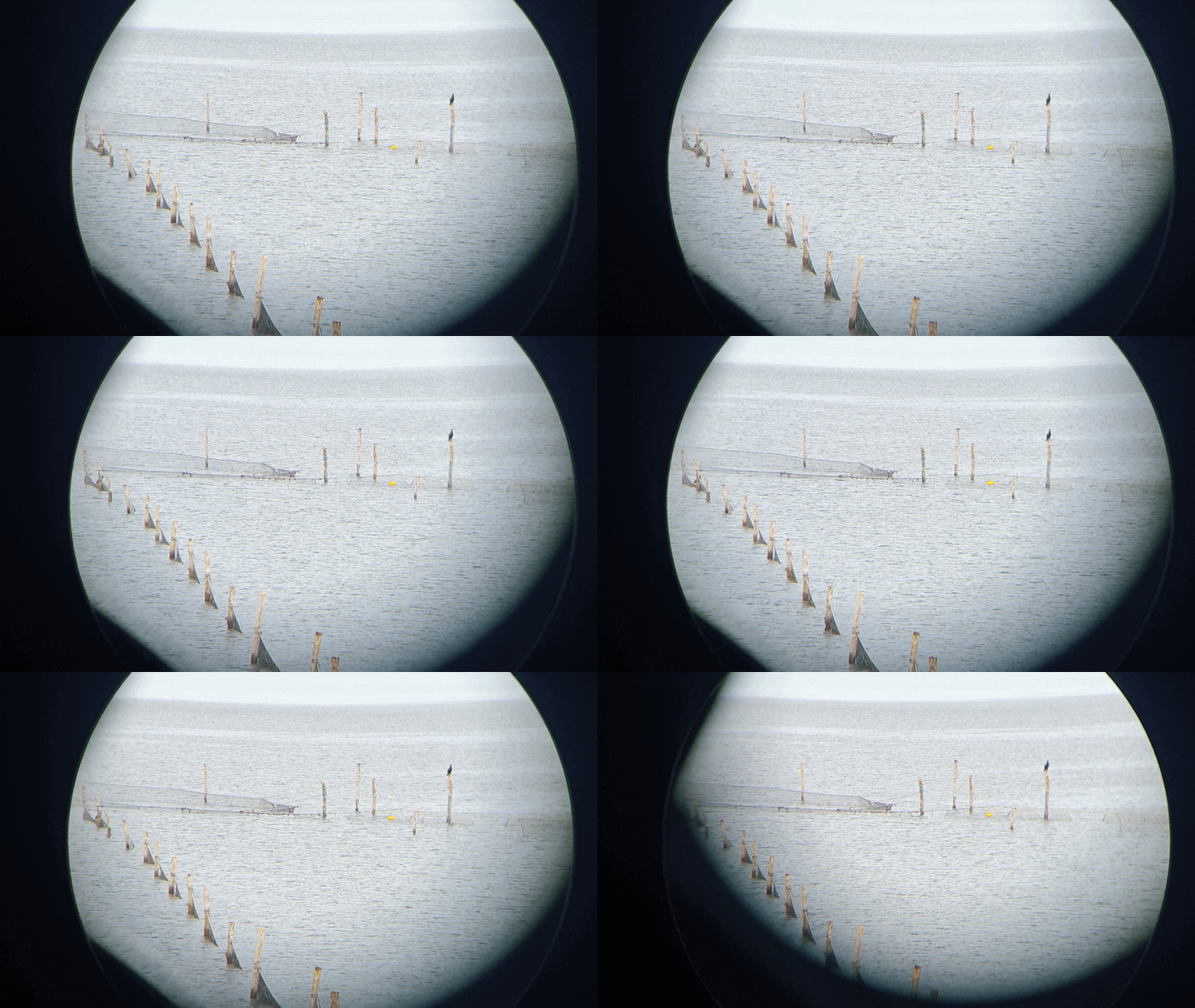
While the idea might sound simple, the birds had other ideas.
The experiment was carried out in Korsør in Denmark in spring 2021 and lasted 46 days. The team used two sites of pound nets that were set up to catch garfish. The sites were chosen because they were located in areas of importance for large gull species and great cormorants. The birds present at each site were counted between four and eight times per day with a note made of the species.
During the experiment, 1,037 birds were counted, covering at least nine species.
“On day 9 of the field trial, 4 days after the LEB introduction at the treatment site, significantly fewer great cormorants and large gulls (by almost four times) were observed at the treatment site compared with the control site, indicating that the LEB would have influenced bird presence,” explain the authors.
While there was a reduction in bird numbers for cormorants and large gull species after the implementation of the LEB, it seemed that the birds became used to the presence of the buoy relatively quickly and numbers returned to normal levels after a month. The authors suggest that the LEB had a short-term effect in reducing bird numbers around the nets.
The authors acknowledge the limitations of their study including the small sample size and the inclusion of only one pair of pound nets. The team also explain that they did not know the density of the catch rates at the sites, which opens up more questions about whether that affects bird numbers at different locations.
The study is published in Royal Society Open Science.



 1
1