Nature
 PUBLISHED




What you'll discover in this article
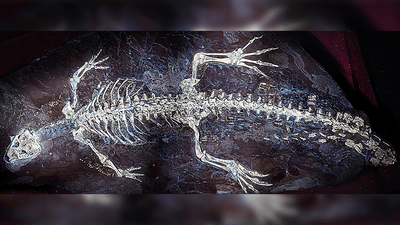
- Scientists have taken a fresh look at an exceptionally preserved fossil of a crocodile-like animal called Montsecosuchus.
- They've revealed the oldest-ever examples of crocodilian soft tissues, showing its scale pattern and coloration.
- A far cry from modern crocs, study co-author Óscar Castillo-Visa told IFLScience, "It was cute, like a house cat basically."
Prowling along the edge of an ancient lake 125 million years ago, a small crocodile would have been stalking anything else that moved on the shoreline.
Measuring less than a meter (3 feet) in length, Montsecosuchus was maybe not the most fearsome predator around at this time, but it had other attributes.
“It was cute, like a house cat basically,” Óscar Castillo-Visa, coauthor of the study, told IFLScience. “Not very heavy too, maybe it was 4 kilograms [8.8 pounds] at most.”
It’s a mystery for now that we’ll have to answer in future studies.
Óscar Castillo-Visa
It was not, however, the size of the early crocodile that caught Castillo-Visa's attention.
While looking at the original, beautifully articulated fossil used to first describe Montsecosuchus in 1915, the researcher and his colleagues wanted to see if they could find out anything new.
“We decided to just throw an ultraviolet light on it, because on other fossils from the same site, we know that there were exquisite fossils preserved with soft tissues in species like insects,” explains Castillo-Visa. “So why would this crocodile also not have any?”
In the glow of the UV light, the team was blown away.
An ancient Iberian ecosystem
The fossil was initially unearthed in the La Pedrera de Meià formation in northeastern Spain. At the time the animal was alive, the Iberian Peninsula was still an island, and this location would have been a shallow coastal lake.
The exceptional preservation conditions of this lake mean that a whole ecosystem can be revealed. From tiny termites and the plants they might have fed on, to frogs, fish, and even early birds. It seems likely that Montsecosuchus would have fed on most of these.
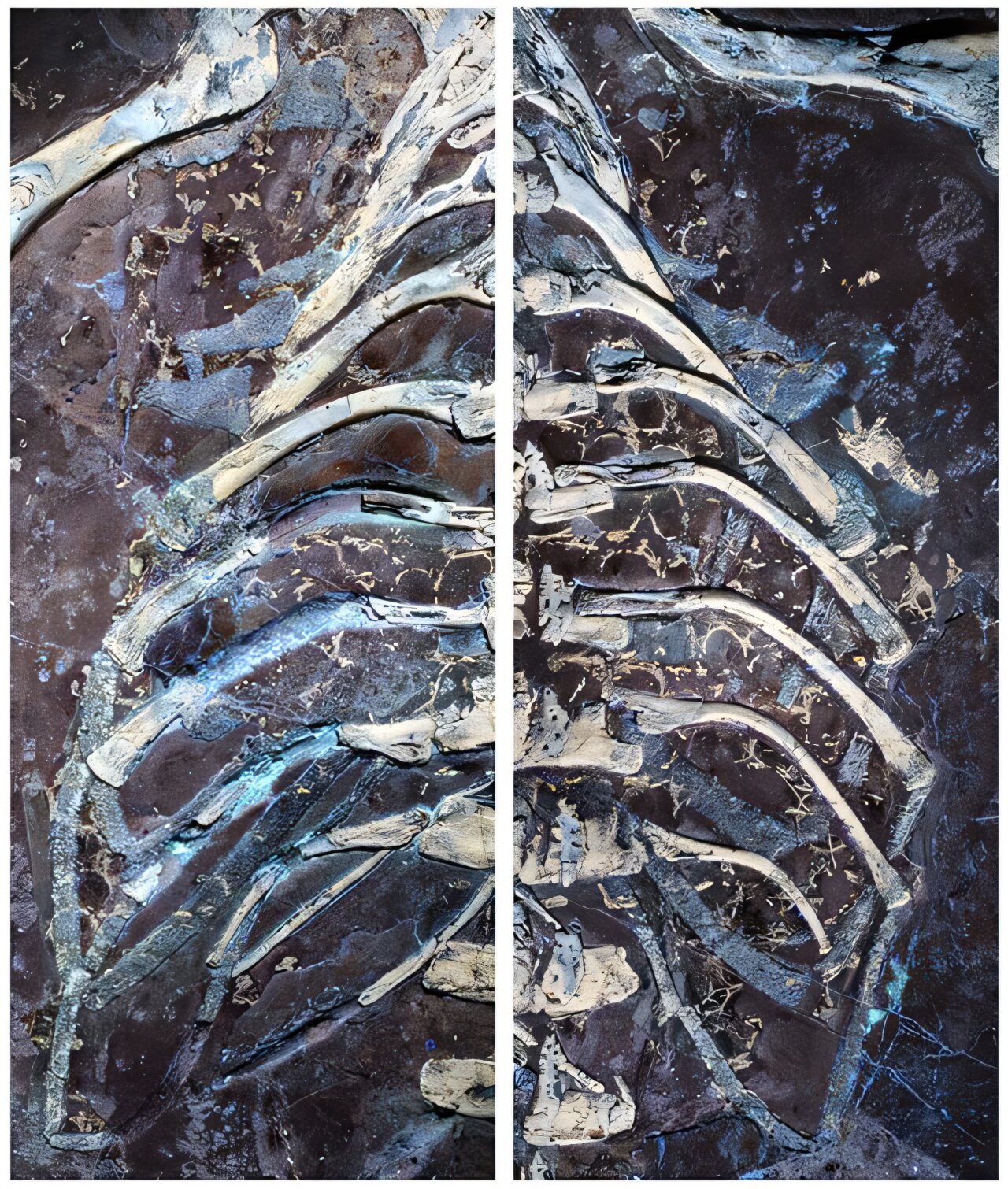
But when the little crocodile died, its body ended up sinking to the bottom of the lake, where it was covered in a fine layer of sediment.
It is this event that enabled the researchers to uncover an astonishing level of soft tissue preservation over 100 years after the fossil was first described.
“We discovered that indeed it had some scales,” says Castillo-Visa. “But we didn’t focus only on the scales because we saw that the thoracic cage and the arms also contained some cartilaginous structures, which are very rare to find in the fossil record.”
Why did this small crocodile, which lived in an almost aquatic environment, not have these structures that helped to swim?
Óscar Castillo-Visa
“Here we have one of the oldest crocodilians in the world, which is probably one of the first ones to preserve cartilaginous structures and skin remains.”
Fossilized color and sensory organs
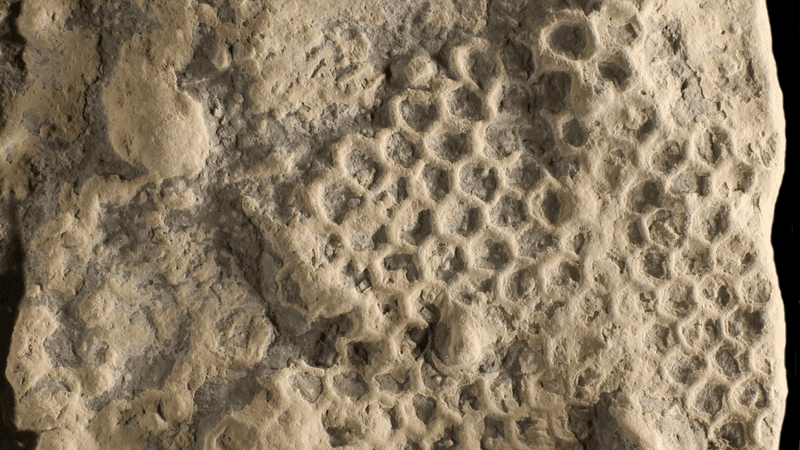
From this, the researchers were able to see exactly how the pattern of scales covered the ancient animal. For example, they could see that the scalation on the arms was smaller than that on the legs.
But more than that. They could even see what looked like the possible presence of sensory organs in the scales. In modern crocodiles, these function as receptors for touch and temperature, and are found all over their bodies.
In this fossil, however, they were concentrated in the neck and arms. This could suggest that the sensory organ first evolved locally on the body, before spreading out across the rest of the skin.
In addition to that, the team also found that unlike in modern crocodiles, Montsecosuchus lacked the parallel sails that run along the top of the tail usually thought to help them swim.
“Why did this small crocodile, which lived in an almost aquatic environment, not have these structures that helped to swim?” asks Castillo-Visa. “That’s one of the things that is strange.”
“Probably this crocodile was not really that adapted to swimming, and maybe it was more a running animal. But at the same time, the hands and the legs have very elongated fingers, which is very typical for aquatic animals.”
“So it’s a mystery for now that we’ll have to answer in future studies.”
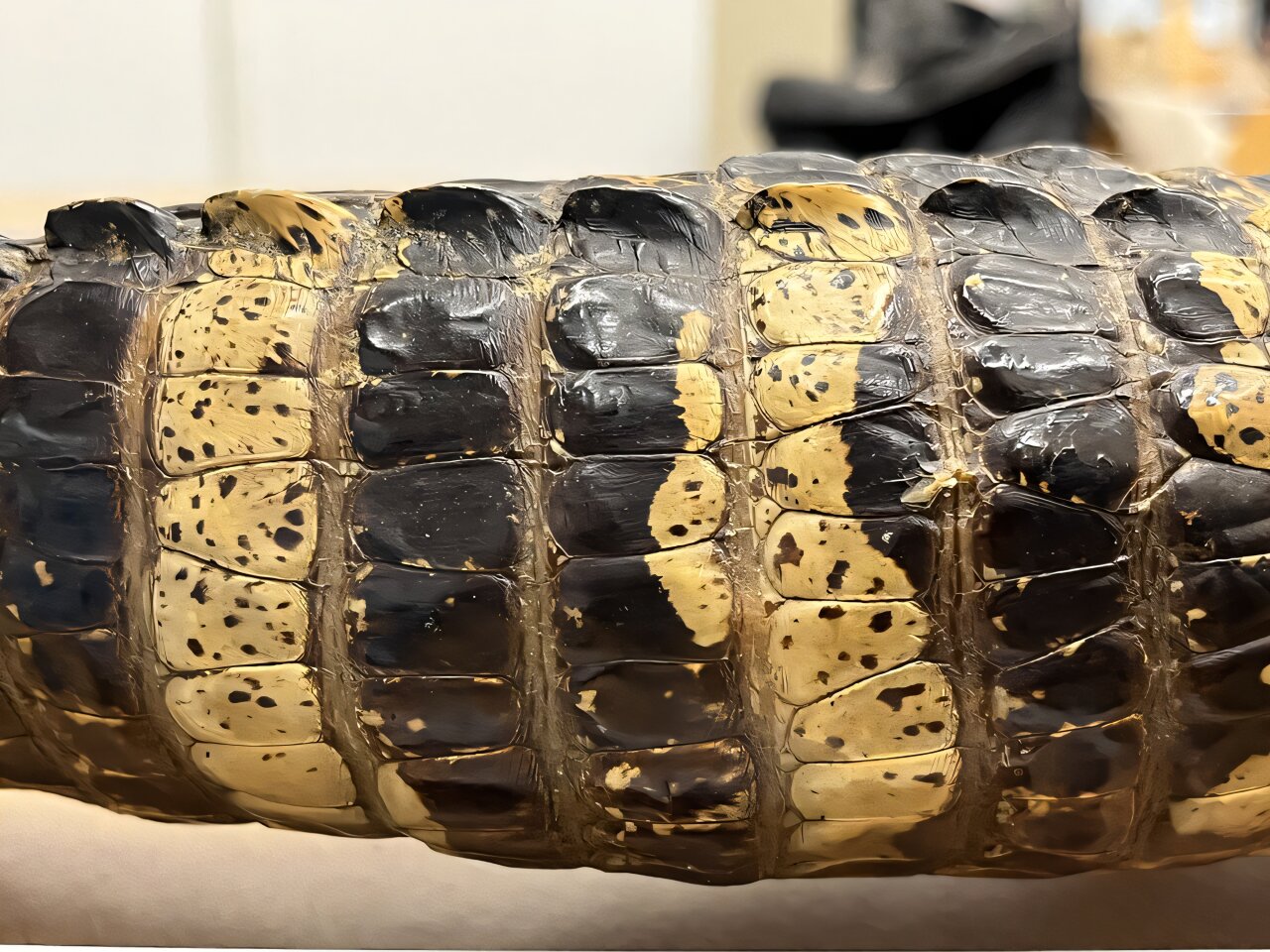
Finally, there was also some evidence of what color Montsecosuchus might have been. Or, at least, the patterns it might have had.
Along the length of the tail, the team could see distinct bands of lighter and darker skin. This would have formed a striped pattern, not dissimilar to what is seen in the babies of modern alligators.
“Perhaps,” muses Castillo-Visa, “this is proof that this evolutionary trait of crocodilians having these lines in the tail is something that goes back to the beginning of the evolutionary tree of the crocodilians?”
That will be something else for palaeontologists to pick up on, then.
The study is published in the Zoological Journal of the Linnean Society.