Nature
 PUBLISHED


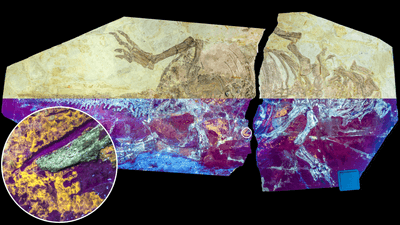


A new fossil of the partially feathered dinosaur Psittacosaurus has revealed that these animals had bizarre skin that included both bird-like feathers and reptile-like scales. The first-of-its-kind fossil provides new insights into the evolution from scales to feathers, demonstrating that these animals exhibited “zoned development” in their skin.
The first Psittacosaurus fossil was discovered in 1922, but a more recent discovery was able to reveal – for the first time – quite how peculiar their skin was. Dating back to the early Cretaceous, between 135 and 120 million years ago, it lived at a time when dinosaurs were starting to evolve into birds.
Psittacosaurus is thought to have had feathers only on its tail, and now this new research suggests that the skin across its whole body differed depending on whether it was feathered or not. Softer skin like that of modern birds appears to have been associated with feathered areas, while the bald patches were scaly, demonstrating that retaining reptilian skin during the early stages of feather evolution may have improved the function of the skin.
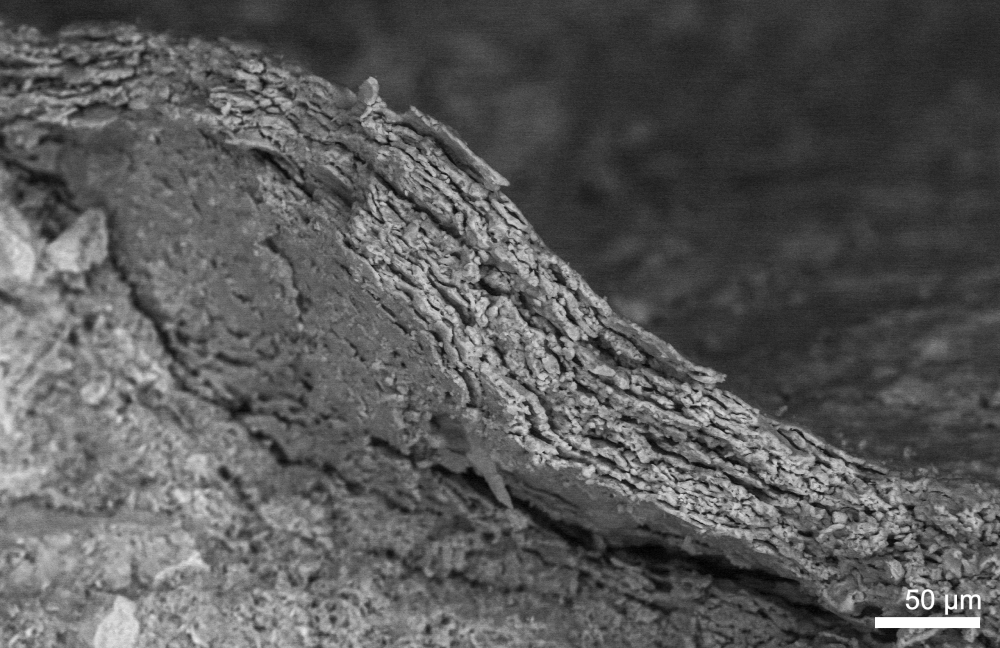
The fossil skin couldn’t be seen by the naked eye, but with the aid of ultraviolet light, a team of researchers were able to identify patches on the Psittacosaurus specimen. They then used X-rays and infrared light to look even closer, revealing details of the skin’s preserved cellular structure.
“The fossil truly is a hidden gem,” said University College Cork palaeontologist Dr Zixiao Yang in a statement. “The fossil skin is not visible to the naked eye, and it remained hidden when the specimen was donated to Nanjing University in 2021. Only under UV light is the skin visible, in a striking orange-yellow glow.”
“What is really surprising is the chemistry of the fossil skin. It is composed of silica – the same as glass. This type of preservation has never been found in vertebrate fossils. There are potentially many more fossils with hidden soft tissues awaiting discovery.”
The team states that their discovery indicates that bird-like skin only developed in select, feathery patches of dinosaur skin, while the rest remained scaly and reptile-like. Skin is a large organ that carries out many functions, and so it could be that developing specialized skin specific to feathered and bald regions, these dinosaurs were better able to protect themselves against injury, dehydration, and parasites.
The study is published in Nature Communications.