Nature
 PUBLISHED
 2
2



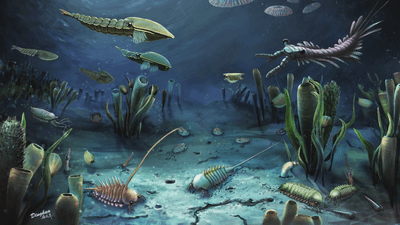


If we're going to figure out how the planet might react in response to big environmental changes, it's important to figure out what drove big changes in the past. It's a quest for knowledge that recently raised an interesting question: Have you ever thought about a world before poo?
The earliest lifeforms actually scooted around the oceans without an anus, instead making do (or should that be doo-doo) by pushing digested food back out the same way it came in. Then along came a revolutionary invention, the through-gut, giving digested food a back exit and changing the face of our planet forever.
New research led by Flinders University in Adelaide, South Australia, has investigated how this “explosion of excrement” might have marked a pivotal change in the evolution of life on Earth. The work concludes that an event dubbed the “faecal revolution” sparked the Cambrian explosion around 540 million years ago – widely regarded as evolution’s “big bang."
The dawn of the anus
To understand how it unfolded, we have to go back 600 million years to the Ediacaran Period. The first complex animals were moving around and eating but their "blind-gut" meant any food that went in their mouth had to be regurgitated back out the same way.
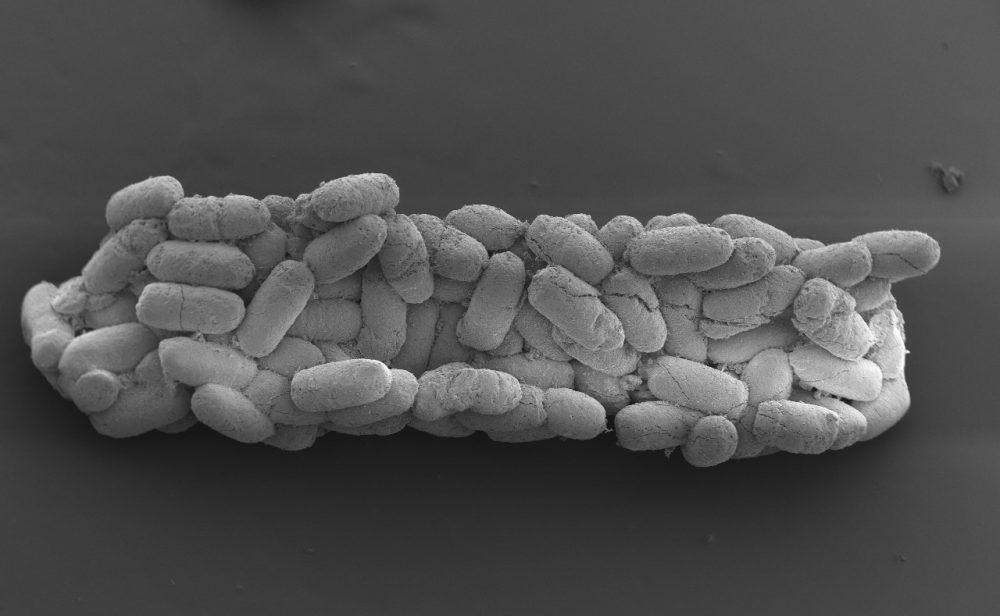
This slowed down their consumption as you had to wait to process what you’d already eaten before you could eat some more.
Then, a series of genetic mutations saw body plans elongate and the gut with it, until it found an exit at the opposite end of the body: a little thing we like to call the anus.
No anus, no head
Chris Packham
“The minute you’ve got a through-gut – so food going in one end being constantly processed and going out the other – it means you can eat almost constantly,” TV presenter and naturalist Chris Packham told IFLScience in a recent interview.
“That means you can access more energy, which is going to give you a greater capacity to grow.”
In order to capitalize on your new internal plumbing, you’re going to want to have your mouth at one end and your anus at the other. Then, you need to gather all the sensory organs required to find food.
It’s a setup we take for granted, but a moment in evolution we should be very grateful for because, to borrow Packham’s words, “No anus, no head.”
A small bowel movement, a quantum leap for evolution
And so began a new era in Earth’s history. The environment was changing, with once widespread microbial mats being hoovered up at rates never seen before (in fact, the evolution of the anus may have even triggered one of the planet’s first mass extinction events).
The ancient ecosystem was also experiencing organic matter and nutrients pouting into the ancient oceans at never-before-seen rates, starting from the end of the Ediacaran through to the Cambrian. We see this change in the fossil record in the form of coprolites – trace fossils of poo.
There’s little in the way of coprolites from the early Cambrian, but they increase in abundance towards the middle of the period. As life diversified, the fossils reveal, so too did the complexity, shape, and size of poo.
The authors saw this in coprolites taken from 35 deposits across the globe. Together, they say, these paint a clear picture of a change taking place in tandem with the rapid diversification of marine organisms.
To put it simply:
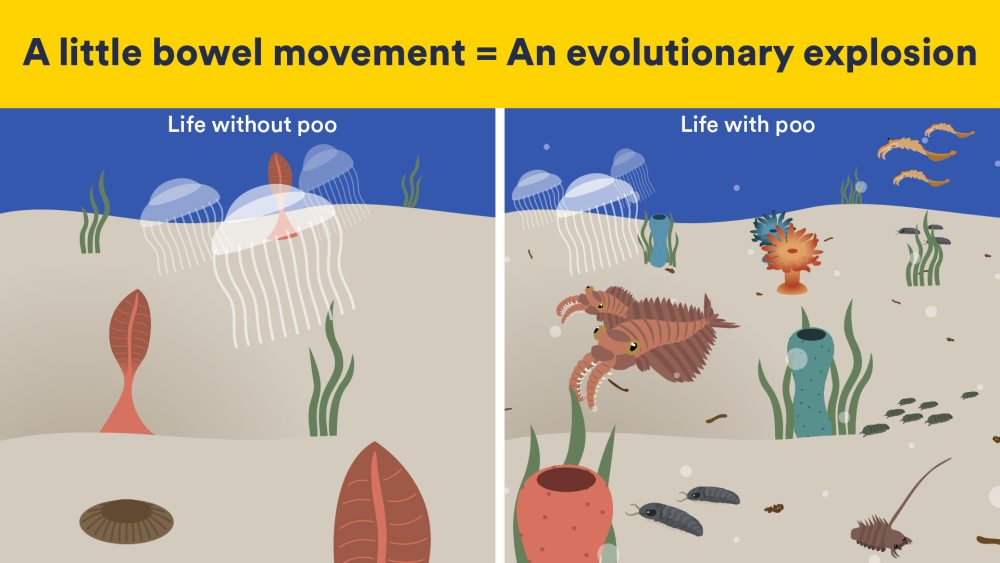
“The faecal matter includes microscopic pellets through to centimeter-scale coprolites containing shells and other animal fragments,” said Dr Russell Bicknell, an evolutionary biologist and palaeobiologist at Flinders University’s College of Science and Engineering, in a release.
“With this shift, we see increasingly complex digestive systems, particularly in early anthropods which evolve specialized foreguts and digestive glands capable of processing a wider variety of food.”
“It becomes clear in the fossil record that the evolution of feeding strategies aligns with the production and distribution of organic carbon and nutrients to start creating conditions we see in modern oceans and later on land where fertiliser today is used to produce our food.”
We have historically attributed the Cambrian explosion to numerous changes in environmental conditions, such as rising oxygen levels. What this new data tells us is that the rise of faeces in ancient ecosystems was also a significant driver of diversification.
This perhaps marks the first time in history that the words “poo” and “explosion” have indicated something positive.
The study is published in the journal Trends in Ecology & Evolution.