Nature
 PUBLISHED



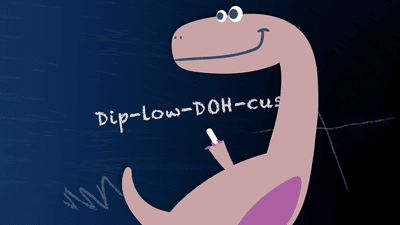


There’s nothing quite like the feeling of being schooled by a 5-year-old on how you are pronouncing Diplodocus wrong. You know how to say it, thank you very much... you think. Wait, do you? Dip-low-DOC-us or Di-PLOD-o-cus? A secret third option?
There’s a litany of reasons why you may be pronouncing a dinosaur name differently to your peers (and by peers, we mean everyone, from small children to professional palaeontologists).
Perhaps you read it in a book when you were young and had never heard anyone say it aloud, or heard it for the first time in a movie, confidently mangled by a Hollywood star? But is there a “right” way to say them, and does it actually matter?
Much of dinosaur taxonomy comes from Ancient Greek and Latin, but since no one alive today speaks either as a native language, we can’t just ask them. So, we did the next best thing and posed the question to palaeontologists.
You’ll be pleased to know they are not immune to being tripped up by their own personal taxonomic nemeses.
Why so many different pronunciations?
“The one I struggle with is Parasaurolophus,” Professor Susannah Maidment, a palaeontologist at the Natural History Museum, London, tells IFLScience.
“I always pronounce that in my head, Para-saur-oh-LOW-phus, and then I heard it being pronounced as Para-saur-OLL-o-phus and was like, oh, right. So I had to kind of change the way that I pronounced it, because then I thought, maybe I'm doing it wrong.”
[T]here are names based in African languages that I cannot say because they require a click... And I, despite lots of practice, cannot do the right kind of click. I always sound a bit like Gollum when I try and say it.
Professor Paul Barrett
I heaved a sigh of relief and shared my own nemeses: Carcharodontosaurus and Giganotosaurus. We’ll get onto them in a bit. I also share that I’m not quite sure where to put the stress on Diplodocus, despite it being the name of the most famous dinosaur specimen in the UK.
Dippy, the iconic cast of said specimen, was a resident of the museum for 112 years and I have heard it spoken aloud a million times since I was a child. Unfortunately, never the same way twice.
“I usually say Di-PLOD-o-cus, because it’s made up of two syllables, which are Diplo and Docus,” Professor Paul Barrett, another palaeontologist at the Natural History Museum, London, says.
“So for me, it's obvious the stresses are on the two Ds, Di-PLOD-o-cus. But it's based on Greek, and that C sound should probably be more like a K sound if you're doing it as a classicist, so it would be something like Dip-low-DOK-us rather than Dip-low-DOH-cus, which might be the actual Greek way of saying it.”
This hard K sound with a Greek C is also going to come back to bite us.
“And then there's the way my American colleagues say it, which is to slur it in the middle,” Barrett says brightly, and proceeds to pronounce it how I can only describe here as Dip-LAWT-a-cus.
“I call it Dip-low-DOH-cus,” Maidment grins.
Now, these are two British palaeontologists, based at the same research institute, and yet their pronunciation of the same name is completely different. How come?
Both point out that where you are from influences the way you pronounce linguistic sounds or place a stress.
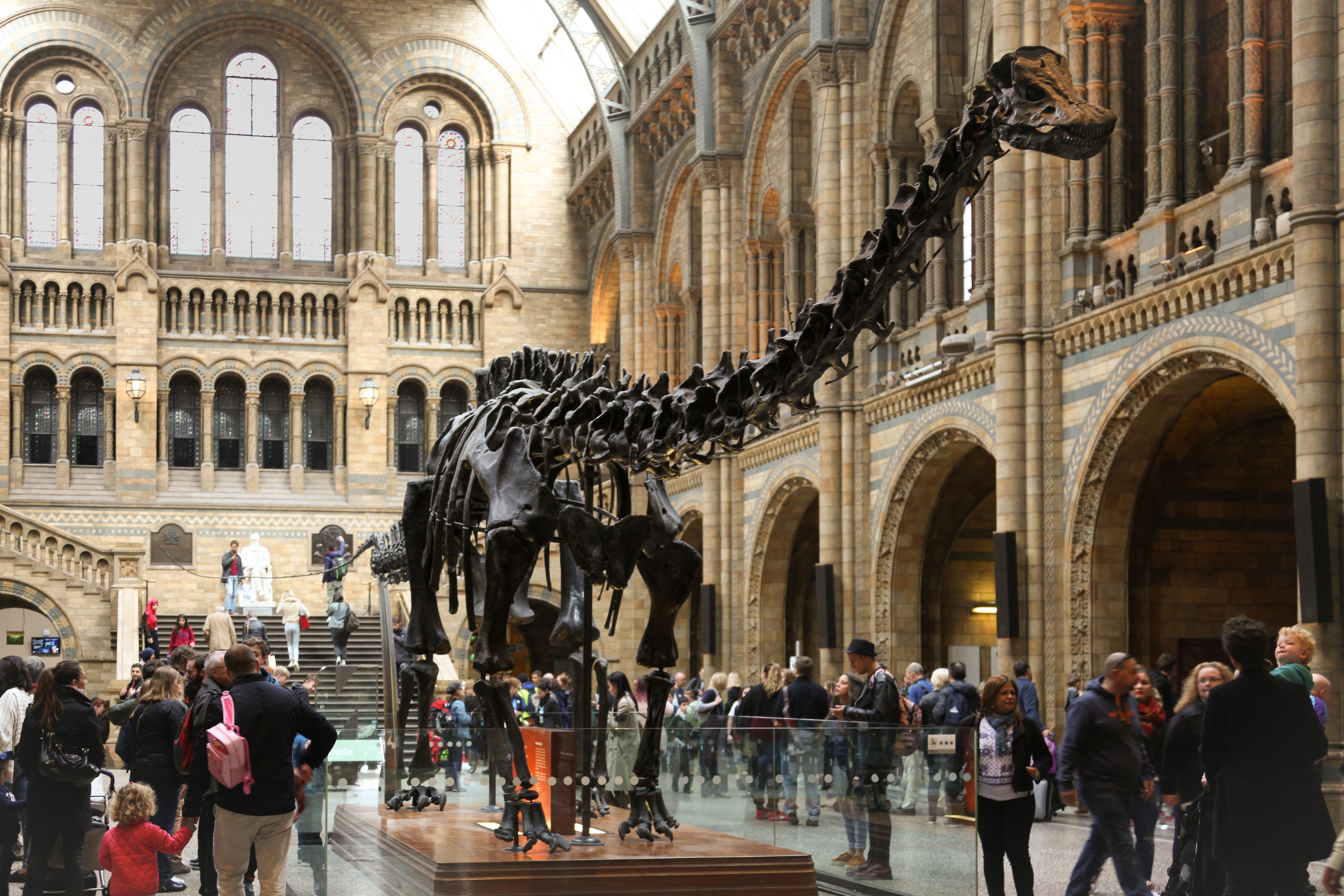
It can even change depending on where you are or who you are talking to in that moment, Barrett says. Ancient Greek is often used in taxonomy, but in the UK and the US we tend to soften the C sound, though not always, and often not even for the same words.
One example Barrett gives is the word for the group of horned dinosaurs, Ceratopsians, based on a Greek word, karas, for horn.
“So it should be a K sound, not a C sound,” Barrett says, “but my American colleagues say it with a soft C, and so I tend to call them SERR-uh-top-see-uns when I’m there, whereas here, I often call them KERR-uh-top-see-uns.”
So, there’s no real rule on sticking to how we imagine native ancient Greeks would say it.
In fact, because the “birthplace of palaeontology” is considered to be in Britain – the first dinosaur was found here – when it comes to taxonomic names, we often break them into syllables according to the rules of English rather than according to the words that compose them, despite their usually non-English origins.
Where do dinosaur names come from?
Listening to me mangle Carcharodontosaurus is probably making Barrett wince, but he has a very practical approach to how this one should be pronounced.
“The first two syllables are about equally rated, so it's kar-kar-odon-toe-saurus,” Barrett says. “Carcharodon is the same genus name as the great white shark.” As he explains, the name’s Greek roots include karcharos (sharp), odon (teeth) and sauros (lizard), so understanding the meaning of the composite words that make up these names can help.
We have Carl Linnaeus, an 18th-century Swedish biologist, to thank for the way we name and classify the natural world. Known as the “Father of Taxonomy”, he invented the two-part naming system of genus and species we still use today.
European scholars of the 18th century used Greek and Latin precisely because they were dead languages – they served as universal academic languages, allowing scientists to share their discoveries without language barriers, and their meanings remained stable rather than evolving into new slang.
The first dinosaur, Megalosaurus, was named just over 200 years ago – 20 years, in fact, before the term “dinosaur” was actually coined. Many people will be able to tell you dinosaur means “terrible lizard” but in what language, Greek or Latin? (*You’ll have to see to the end for that.)
In the early days of establishing dinosaur genera, names often came from descriptive characteristics like “mega” (great) and “giga” (giant) for large creatures or ending in “saurus” (lizard) or “don” (tooth). So, if you know the word's origin, it can help you pronounce it – in theory, at least. Giganotosaurus begs to differ, as we’ll get to.
“Often, those rules are kind of ignored, particularly for the kind of names that are completely made-up from Latin and Greek, which people don't really know how to pronounce correctly anyway,” Barrett says. “You often get Latin and Greek combined, which is a chimera. It's not a real language. It's two things lost together.”
The hardest names
So it seems a key component of why some dinosaur names are so hard to say is because we’re trying to wrap our tongues around words that do not come naturally to us, thanks to the long-dead language aspect.
I asked Maidment and Barrett which name they think is the hardest to say, or at least which is the one they hear mangled the most.
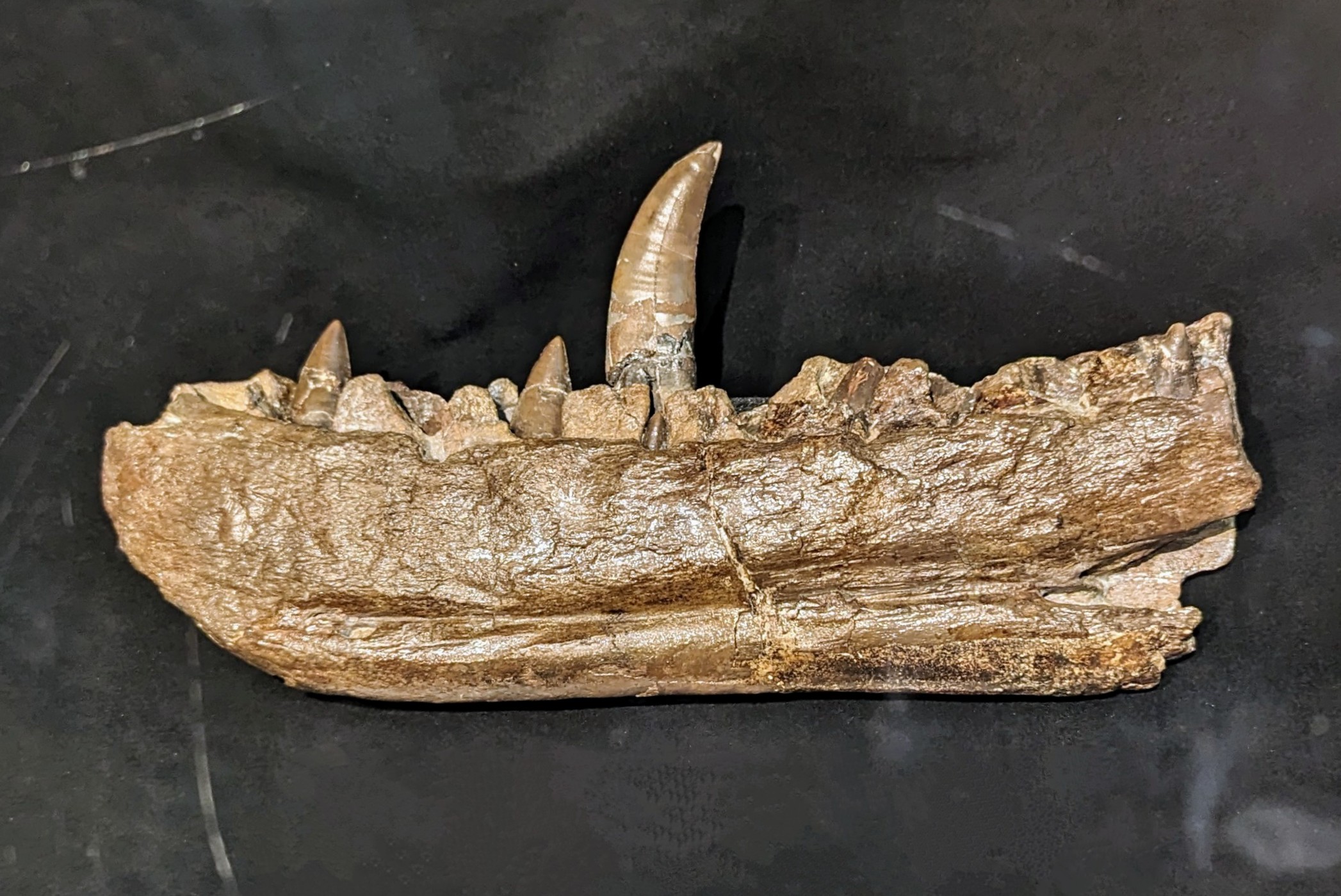
“I quite often hear people struggle to say Ankylosaurus,” Maidment told IFLScience.
“People often say Ank-LEE-oh-saurus, and that's difficult to say, right? So people then end up saying An-KEELO-saurus or something like that. Whereas, if you pronounce it with an I rather than E, then it's easier. An-KI-lo-saurus is easier than An-KEELO-saurus. That's quite common.”
“I don't trip up on it, but an interesting one is the longest dinosaur name, which is Micropachycephalosaurus,” Barrett says. Impressed with how easily that rolled off his tongue, and curious, I try it out and find it quite easy myself: micro-packy-seph-a-low-sore-us.
“It's because all the syllables are quite hard syllables, so it's easy. There's no shush sounds or anything like that for it to go wrong,” he explains, although he’s quick to point out there are definitely names he struggles with.
I think it's definitely become more prevalent to try and honour either the actual local area itself, the geography of where you are, or the culture of the area in which you're in.
Professor Paul Barrett
“If I’m being honest, there are one or two names based in African languages that I just cannot say because to say them correctly, they require a click in the correct part of the name. And I, despite lots of practice, cannot do the right kind of click. I always sound a bit like Gollum when I try and say it.”
For example, Nqwebasaurus thwazi, a Cretaceous theropod from South Africa, has the "nq" click consonant derived from African languages. People struggling with names that are derived from languages that are furthest from their own is a theme Barrett warms to.
“Chinese dinosaur names can be quite difficult for people who don't know the stresses that the transliteration of Chinese characters have when they're anglicized and turned into non-Chinese fonts,” he explains.
“I'm quite lucky, I've been to China a lot, so I have picked up on some of the more common things, like a ZH sound in Chinese is more like a J sound to an English ear. So if I see a ZH, I know it's kind of a jong sound, not a zong.”
Of course, for Chinese speakers, the same is true. Mandarin has no dental fricatives, the sound made when you press the tip of your tongue against your upper teeth to produce a “th” sound, so often substitute with s, t or d sounds.
Probably the easiest Chinese dinosaur name for Westerners to get their tongue around is also the shortest dinosaur name: Yi qi, which means “strange wing” in Mandarin and is pronounced ee chee.
What’s in a name
Today, the International Commission on Zoological Nomenclature is the global governing body that dictates rules about how we name things.
It has to be proposed in print and it has to have a genus and species, for example. One important rule is that you can’t use a name already in existence. Surprisingly, there are no rules that stipulate you have to use Greek or Latin. Luckily, there are over 7,000 languages in existence.
As Maidment tells me, we are finding on average a new dinosaur a week, globally, and while naming them still often includes describing characteristics, these more often than not reflect the location and culture of their place of discovery in languages very much alive rather than long dead.
“I named a dinosaur from the Middle Atlas Mountains of Morocco, and I called it “mountain lizard”, which has been used before,” Maidment said, “but I named it in Amazigh, which is the language of the Berbers who live in that region. So it was called Adratiklit.”
It’s really in the last decade that this has taken off, and now we have dinosaur names that honor Indigenous languages and leaders, local palaeontologists, myths, deities, and even pop culture, from rock stars to cartoon characters.
Barrett thinks naming dinosaurs after characteristics is actually less popular now, and there is more of an emphasis on creating more of a relationship with the place it comes from. “I think it's definitely become more prevalent to try and honour either the actual local area itself, the geography of where you are, or the culture of the area in which you're in.”
While palaeontologists are embracing opening up the world of nomenclature to include multiple languages, it opens up a whole new world of potential mispronunciations and accidental mangling of scientific names. So, does it matter if you get it right? Short answer: yes, and no.
Is there a “correct” way?
As we’ve learned, lots of different factors influence the way we pronounce dinosaur names: our native language and the way we break down composite words or place a stress on syllables, our understanding of the etymology of a name, how we’ve heard it pronounced by others, even our physical ability to pronounce certain sounds.
Nothing exemplifies this more than Giganotosaurus, probably the name I have heard pronounced differently the most in my research.
Reading it, it looks straightforward enough, right? And yet, I give you, GIG-a-naught-oh-saurus, JIG-a-naught-oh-saurus, JYGER-note-oh-saurus, GYGER-note-oh-saurus, gig-an-OH-toe-SORE-us, jig-an-OH-toe-SORE-us, and JY-GANT-oh-saurus, which confusingly, is actually a completely different long-necked herbivorous dinosaur, Gigantosaurus.
So, when it comes to dinosaurs, is there really a “right” or “wrong” way to pronounce them?
“I think the pronunciation doesn't matter, does it?” Maidment says.
“Of course, there are times when it does,” she caveats. “If it’s somebody's surname, you want to make sure that you pronounce it right. There are some [names] where there is going to be a correct answer; if it's named after a place, we pronounce that name in a specific way.”
“I come down on the side of, in general, no, especially with words that are chimeras,” Barrett agrees, “but we should be mindful of when those names are named after particular places or people, try and make the effort to get it right.”
Those older dinosaur names that are based on made-up composites of dead languages no one alive has any idea how to pronounce are less important.
“I mean, they don't know, do they? Who cares?” Maidment says. After all, as we say in the UK, it’s all *Greek to me.
This Deep Dive first appeared in Issue 47 (June 26) of our digital magazine CURIOUS. To access exclusive CURIOUS content first and receive the quarterly digital magazine, become an All Access Member.