Nature
 PUBLISHED



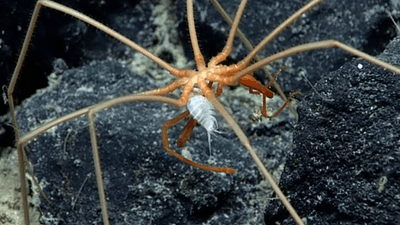


The freaks in the deep sea are always up to something, and now it seems that crustaceans have taken up the taxi services of sea spiders by clinging to those long, spindly legs.
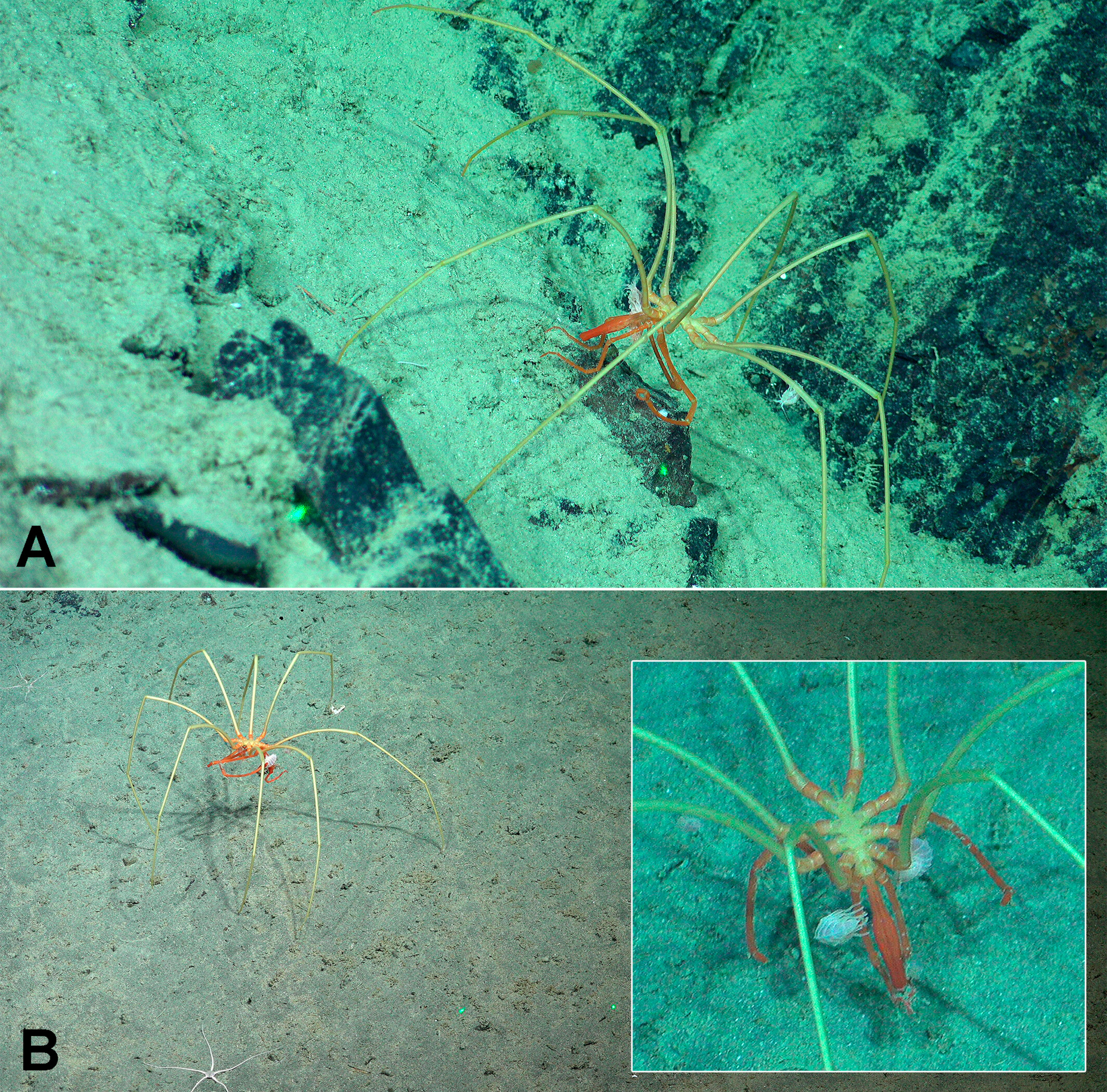
In November 2024 a team of scientists aboard the research vessel Falkor (too) were exploring the Chilean Margin in the Southeastern Pacific Ocean. Using the remotely operated vehicle SuBastian, the star of almost all the deep-sea discoveries, the researchers spotted some sea spiders clambering about at around 3,160 meters deep ( 10,367 feet).
But what they also saw clinging to the pycnogonids were a couple of crustaceans known as amphipods.
During the course of the expedition, the team found the same ride-share happening again, this time on flat sedimented seafloor. The two instances were separated by a distance of 225 kilometers (139 miles), suggesting that this behavior might be a more common occurrence.
Deep sea spider bus
Pycnogonids, or sea spiders, are pretty weird little guys that have specially adapted structures along their thin legs.
Some of these adaptations relate to breeding and reproduction, such as specialized legs called ovigers which are used to carry eggs. But a lot of sea spider behavior and ecology is poorly understood given the difficulties in finding and studying them.
How they came to be some kind of amphipod taxi service is an interesting question.
The biological phenomenon of animals hitching rides on each other is called phoresy. In these cases, the rider usually gains some kind of benefit while the animal being ridden doesn't gain anything, but it doesn't lose anything either.
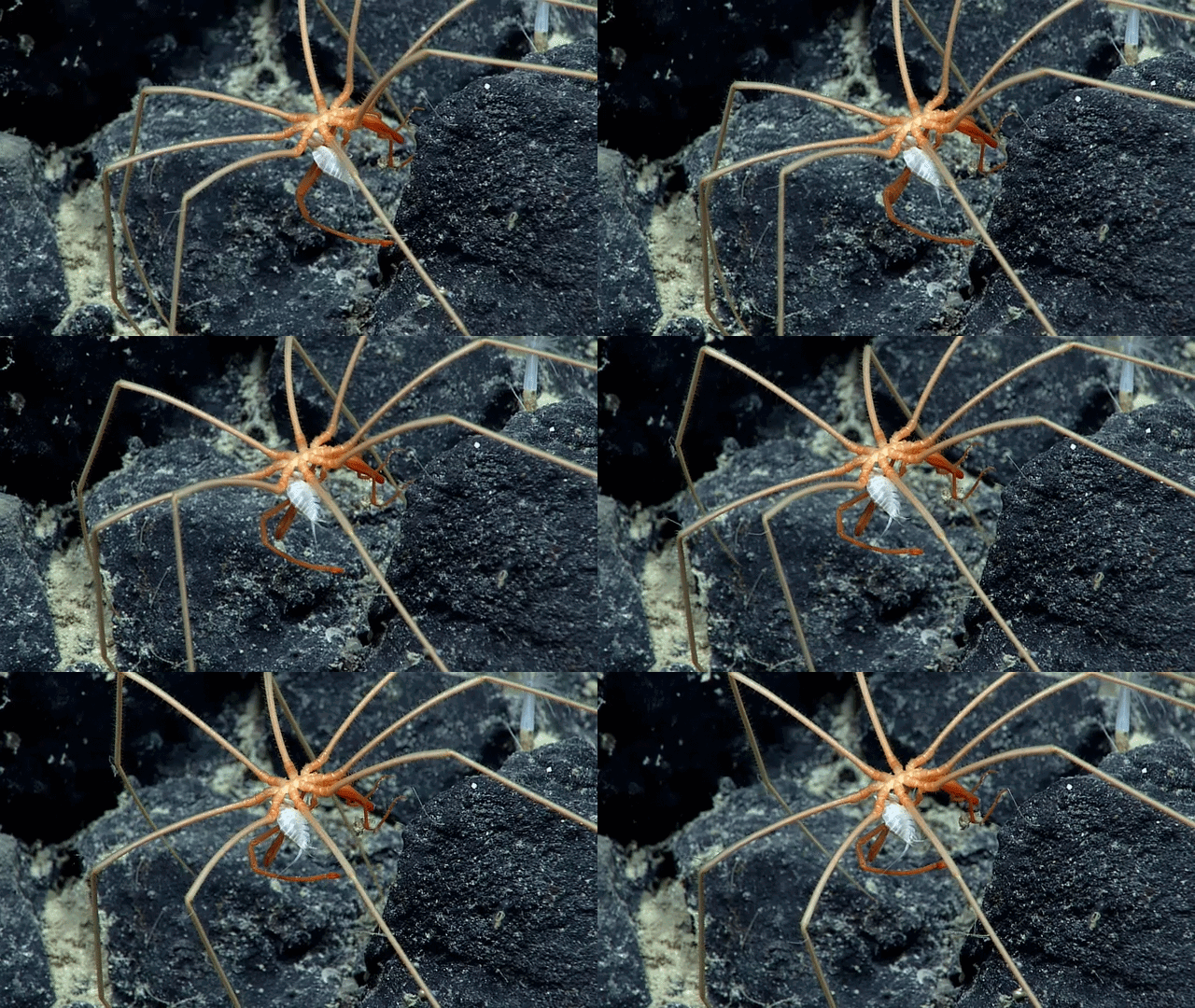
The amphipods in this case, Mesopleustes abyssorum, can move independently but are not strong swimmers, so could maybe benefit by covering more ground to look for food or mates by using the sea spiders to get about.
The sea spiders, of the genus Colossendeis, can travel either by walking with their long legs or be carried long distances by sea currents as they hold their legs spread apart.
Interestingly, however, each sea spider host seemed to carry both a male and female amphipod. This suggests that maybe the spiders could be acting as a kind of mobile amphipod singles bar for the crustaceans.
It also suggested that perhaps clinging to the leg of a sea spider might be quite a nifty place to hide from other potential predators, in addition to the added benefit of being exposed to a different selection of ocean detritus to snack on.
The little amphipods aren't alone in catching a ride in the oceans. Earlier this year, an octopus was spotted seemingly hitching a ride on the back of a Risso's dolphin, gripping onto the fin with one arm as it caught some air. But the reality revealed that the dolphin was actually just trying to get an eight-legged snack instead.
The paper describing the sea spiders is published in Ecology.


 1
1