Nature
 PUBLISHED


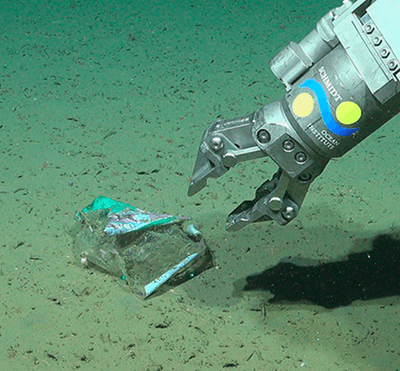


Deep-sea explorers photographed the murky depths of the Mar Del Plata Submarine Canyon for the first time last year. When they reached the ocean floor, however, they discovered a less-than-savory human presence had got there first.
Using a remotely operated sub, Argentinian scientists completed 17 dives through the canyon in the southwestern Atlantic at depths between 878 and 3,820 meters (2,880 to 12,532 feet) during July and August of 2025.
The team documented a trove of wildlife, including otherworldly squids, Barbie-pink lobsters, and a sea star with a devilishly perky ass. Among these sights, the team also spotted around 40 species that may be new to science.
However, it wasn’t just the biodiversity that struck the researchers.
Instant noodles and plastic bags
Across 10 dives, the researchers observed 29 pieces of human-made trash, including fishing gear, plastic bags, food wrappers, an instant noodle packet, a Korean sausage wrapper, and even a boot.
"For me, the most striking individual piece of litter was a single boot, lying on the seafloor," Daniel Laurett, study author and marine biologist from Grupo de Estudios del Mar Profundo de Argentina, said in a statement.
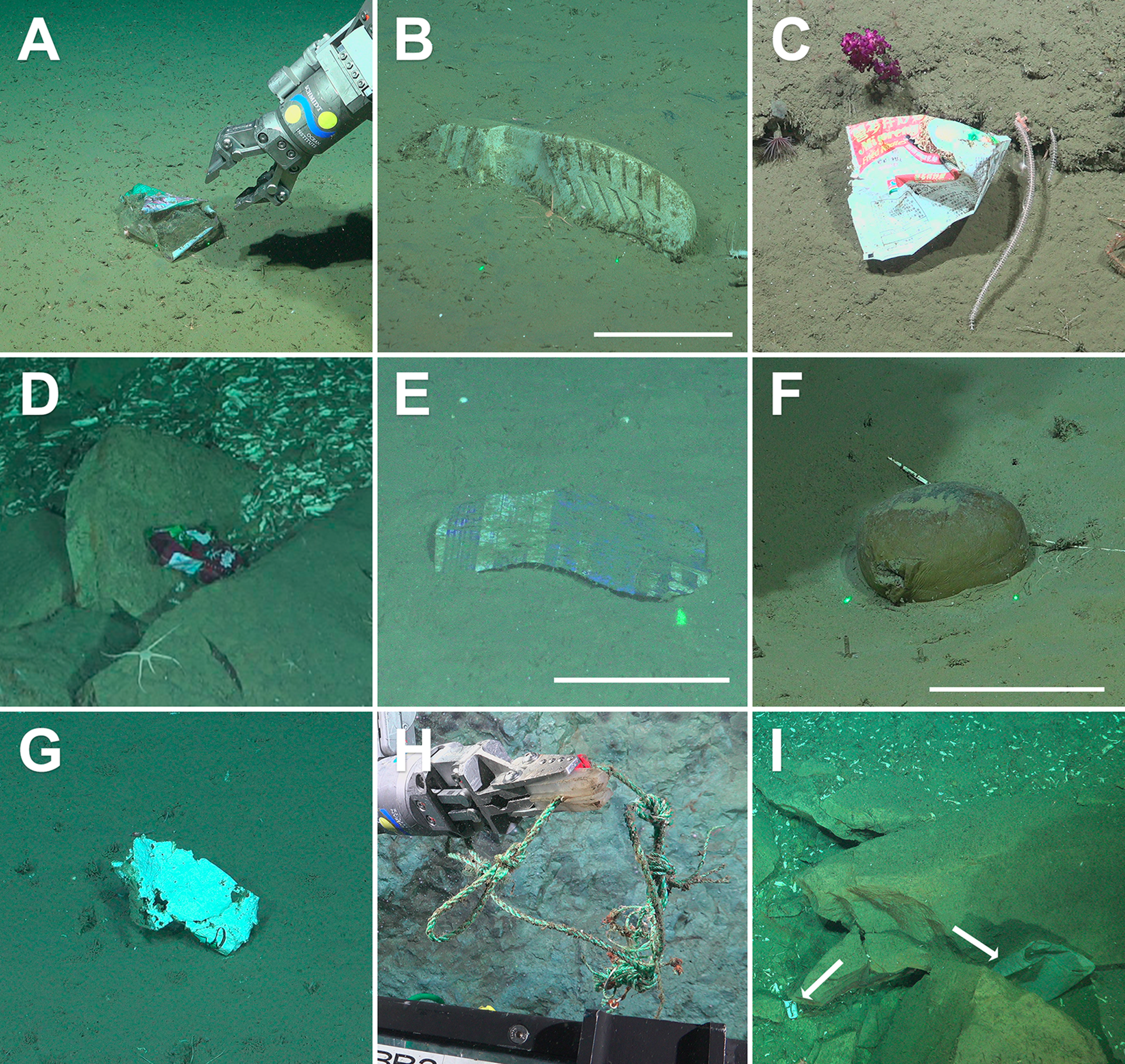
"What struck me most was a fishing rope that suddenly appeared directly in front of the ROV, forcing us to stop immediately to avoid colliding with it," added marine biologist Diego Urteaga. "It was a striking reminder that even at great depths, human debris can become an unexpected hazard for scientific exploration."
The impact on biological life is unknown
In some instances, wildlife had latched onto the pieces of junk. For instance, a sea star was seen attached to a white plastic bag, while a bundle of fishing ropes had become colonized by a bunch of deep-sea worms.
"The colonization of litter by sessile organisms can turn human debris into an artificial substrate in the deep sea, potentially altering local communities. It may also provide a means for organisms to be transported beyond their natural distribution, although the ecological consequences of this process are still poorly understood," explained Urteaga.
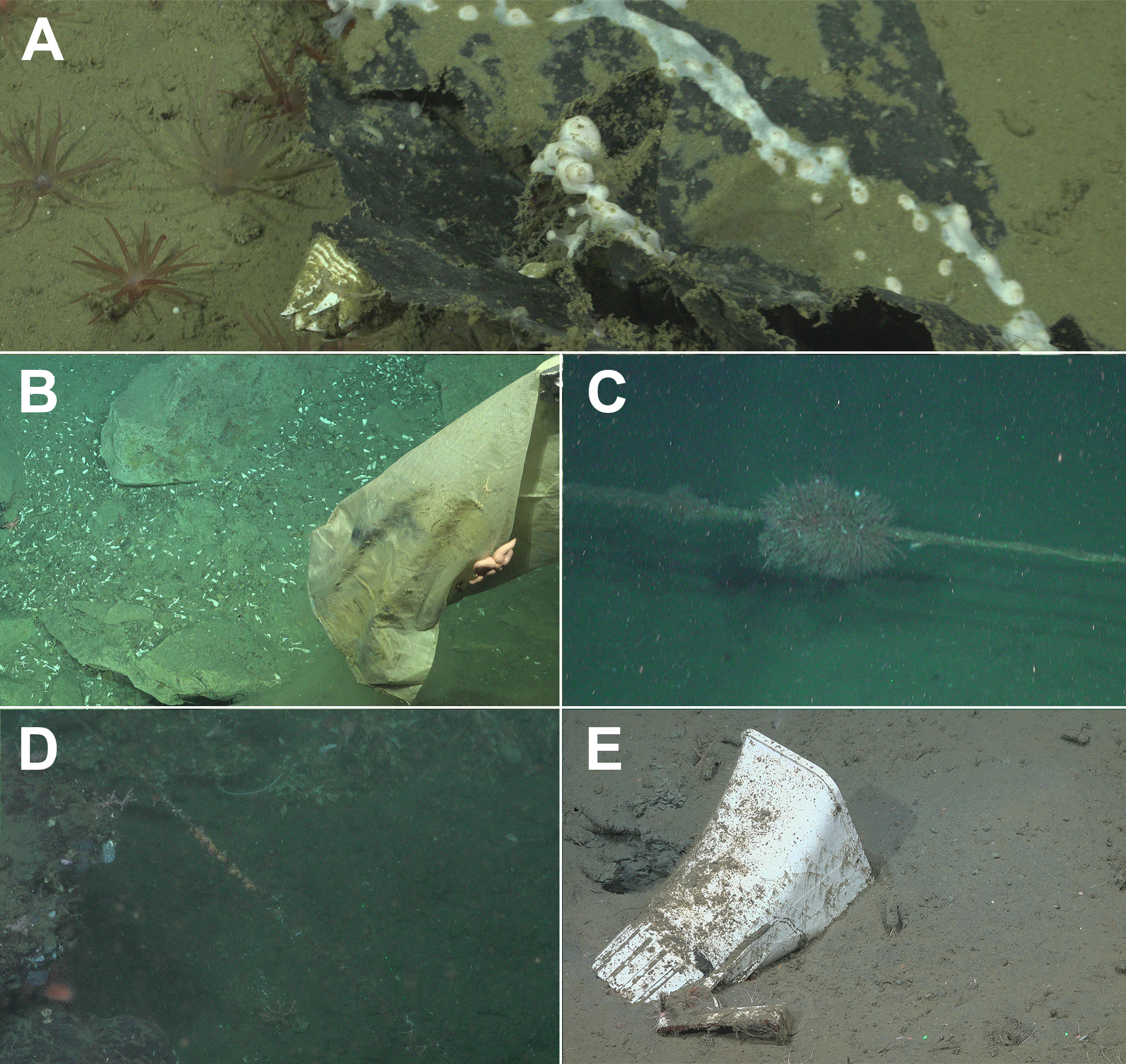
The researchers argue that most of the debris is linked to commercial fishing, not necessarily urban sources along the coast, since the canyon is isolated and distant from the land. But ocean currents mean they can't entirely rule that out.
"Although fishing activity appears to be the most likely source based on the type of litter we observed, other sources are also possible, including commercial shipping, recreational vessels, and land-based activities. Ocean currents can transport debris over long distances, making it difficult to determine exactly where individual items originated," added Urteaga.
Plastic planet
The Mar Del Plata Submarine Canyon is far from the first deep-sea habitat to become riddled with plastic pollution. Researchers have documented human-made waste at the deepest point in the Mediterranean Sea, as well as in the Mariana Trench, the deepest oceanic trench on Earth, located in the western Pacific Ocean.
The planet's plastic problem is only getting worse, yet solutions remain thin on the ground – paper straws aren’t going to solve the problem alone, unfortunately.
In 2024, nearly 200 nations met in South Korea to discuss a global plastic treaty. Expectations were high, but it ended with no solid agreement due to a small minority of states impeding the discussions.
Until the issue is addressed at a global level, it seems inevitable that increasingly obscure patches of the ocean floor will continue to be plagued with plastic litter.
The new study is published in the journal PLOS One.