Nature
 PUBLISHED


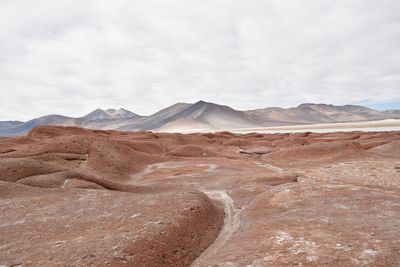


The Atacama Desert is widely considered to be the world’s oldest continually dry region, with arid conditions thought to have dominated here for the past 40 million years. However, the discovery of a fossilized tooth belonging to a rather surprising character indicates that this desolate expanse may once have been home to one of South America’s most charming wetland animals.
Dated to about 8.8 million years ago, the ancient molar originated in the mouth of a prehistoric capybara. The largest rodents on Earth, capybaras are semiaquatic animals that presently reside in the Amazon basin, surrounded by all their friends.
Aside from the fact that the Atacama is way too dry for capybaras, it’s also separated from the Amazonian lowlands by the Andes, which represent an insurmountable barrier to these charismatic creatures. Explaining the appearance of a capybara tooth at Bahía Inglesa on the Chilean coast is therefore something of a challenge.
"Finding a capybara tooth in a marine deposit in what today is one of the driest regions on Earth is just freakish," said Priscilla Martinez from the University of Arizona in a statement.
“If capybaras originated east of the Andes in this foreland region, how in the world could these short-legged rodents make it across?” she wonders.
Describing this surprising discovery in a new study, Martinez and her colleagues outline two possible explanations. The first is that capybaras embarked on a major migration through the central Andes of Bolivia and Chile at some point during the Miocene, which began some 23 million years ago.
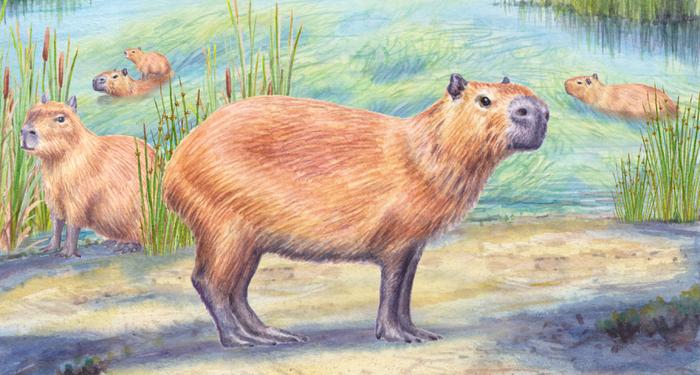
However, given the challenges that such a journey would have entailed - and the fact that capybaras are famously chill - it seems somewhat unlikely that the ancient ancestors of these water-loving rodents would have bothered with such an arduous odyssey.
The study authors therefore lean towards an alternative hypothesis, which posits that the northern Andes were much lower than they currently are during the Miocene, and that the inhabitable range of capybaras extended from the northwestern Amazon all the way down the Pacific coast of South America and into what is now the Atacama.
Rather than relying on a single ambitious migration event, this theory suggests that capybaras were able to reach the region via “a continuum of connected, suitable habitats.”
Support for this idea comes from the discovery of ancient plant remains called phytoliths, which indicate that palm trees were present at Bahía Inglesa during the Miocene. "Think sunny Southern California full of palm trees," explains Martinez.
"You don't really expect the Atacama Desert to have palms, and we're not sure if they were blooming extensively there, but they were definitely there," she adds.
Overall, the combination of capybaras and palm trees points towards a considerably warmer and wetter climate in the Atacama Desert nine million years ago, challenging the idea that it has always been dry and inhospitable.
According to the researchers, the region may have been crisscrossed with rivers and other freshwater bodies, while the local vegetation would have been suitable for sustaining large populations of semiaquatic animals.
Commenting on these findings, study author Mark Clementz said, "Finding this capybara – which I think everyone can agree is not a desert animal by any means – at that location is going to challenge many of the ideas about the Atacama's history."
The study is published in the journal Scientific Reports.