Nature
 PUBLISHED





What you’ll discover in this article
- For the first time, T. rex's body temperature has been calculated revealing it had a similar body temperature to modern humans.
- Some other high-profile dinosaur species were similarly warm-blooded, but that doesn’t mean all of them were.
- “Hot body temperatures would imply greater requirements for food to maintain them,” Dr Robert Eagle told IFLScience, so yes, they really were as ravenous as they’re portrayed.
The long-standing debate as to whether dinosaurs were warm- or cold-blooded may finally have been settled for the most famous member of that giant clade.
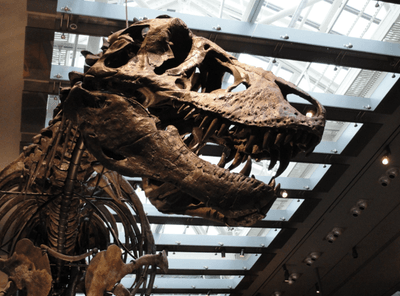
Teeth from a T. rex named Thomas grew at temperatures very similar to those inside a human body, and it almost certainly wasn’t because the air temperatures in which Thomas lived were that hot.
From the days when they were given the name “terrible lizards”, dinosaurs were seen as reptiles, and assumed to be what scientists refer to as ectothermic, what most people call “cold-blooded”. Ectothermic animals need an external source of heat, usually sunlight, to raise their body temperatures to the point they can move easily, forcing them to live in hot parts of the world or to hibernate during the winter at higher latitudes.
As evidence emerged that not only are birds dinosaurs, but that many of the famous extinct dinosaurs were more bird-like than we realized, there’s been increasing discussion of their possible endothermy, or “warm-bloodedness”.
However, it’s one thing to watch an animal’s behavior or to stick a thermometer where they’d prefer you didn’t, it's quite another to answer the question for creatures dead for the last 65 million years.
How to take a T. rex’s temperature
Professor Robert Eagle has helped develop a new approach, relying on the fact that the bonds between heavier isotopes of carbon and oxygen are more common in colder temperatures.
Eagle and his colleagues have shown that measuring 13C-18O bond abundance can be quite a reliable technique for determining the body temperature of an animal. For endothermic animals, that’s the temperature they maintain when healthy. For ectotherms, it’s an average, taking into account both hot days in the sun and colder nights.
“In theory, we can make measurements using any part of the skeleton, but the bones in our body are constantly being remodeled and dissolved and replaced,” Eagle said in a statement.
“Tooth enamel has large crystalline structures that are extremely durable, making it the part of the skeleton that most resists chemical alteration by the environment over the eons.”
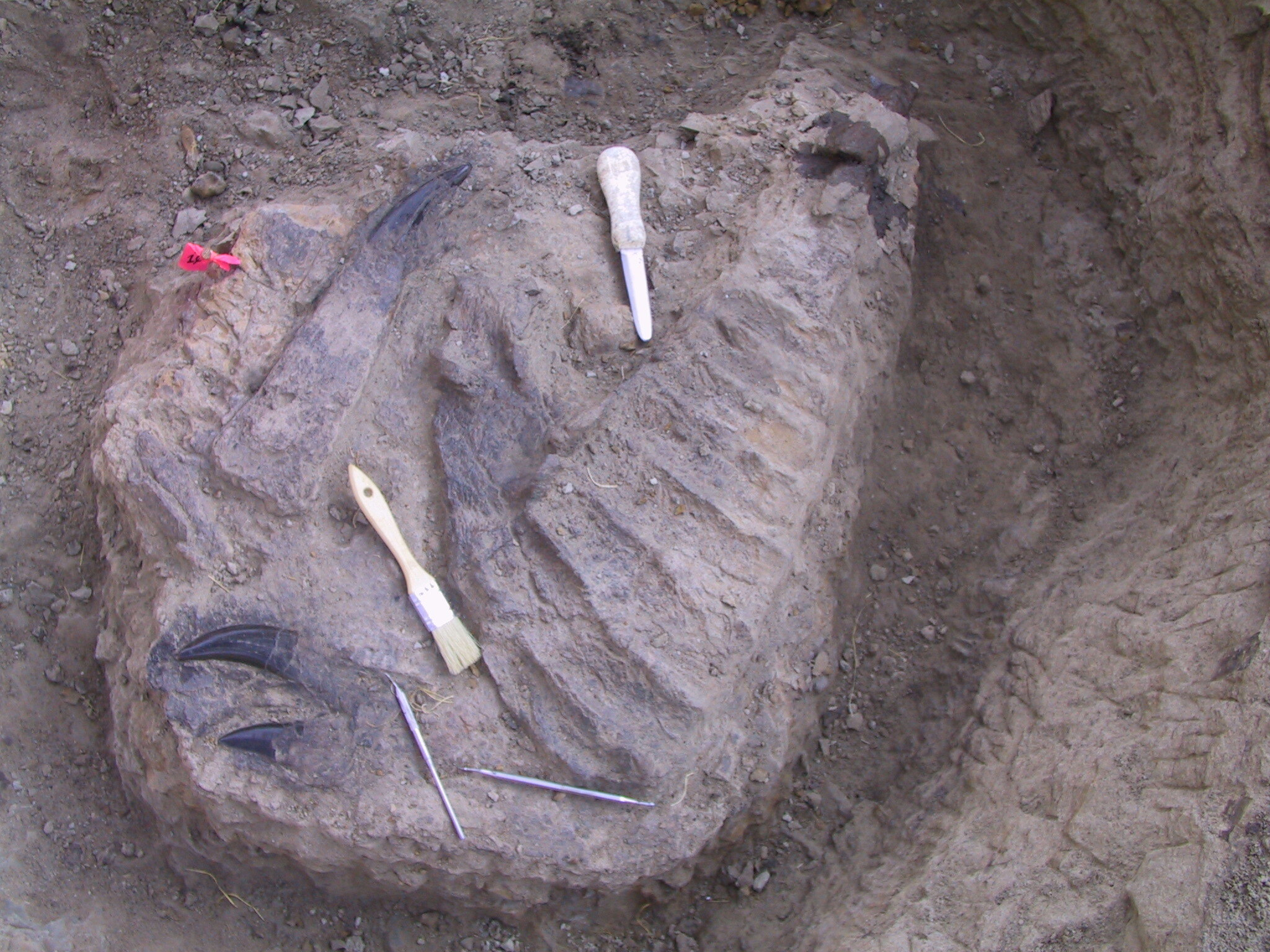
Better still, while dinosaur teeth are rare and precious, they’re more common than their bones, making museums more likely to part with them even when knowing they won’t get the whole specimen back.
“We’re asked for fossils for use in destructive analysis all the time,” said Professor Luis Chiappe of the Natural History Museum of Los Angeles County.
“The museum contains tens of millions of specimens of minerals, animals and fossils that are irreplaceable. We have to make decisions that balance the damage to the specimen against gaining knowledge about the natural world.”
“Sacrificing small portions of two teeth to learn about T. rex’s body temperature is definitely worth the trade-off.”
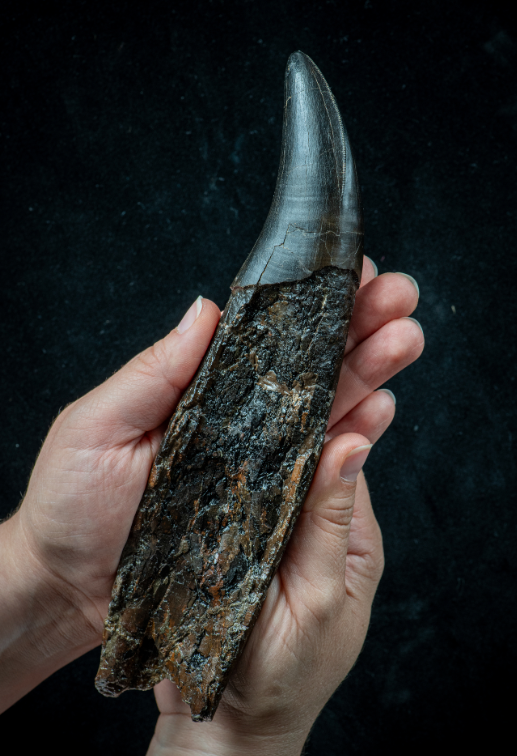
This allowed the researchers to show that the teeth of Thomas the T. rex formed at a temperature of 36.3°C (97°F), give or take a couple of degrees, very similar to that of a human.
To check that this didn’t just reflect the sweltering conditions at Hell Creek, Montana, where Thomas died, the authors performed similar measurements on crocodilian teeth found at the same place. The crocs’ body temperatures of 30°C (86°F) indicate a warm environment, but are still well below Thomas’s results.
Even allowing for the fact that Thomas may not have been an exact contemporary of the crocodilians, the difference in temperature still suggests that T. rex produced its heat internally.
Why we’re still arguing about this
The case for endothermy in dinosaurs has long been argued based on a number of reasons.
Some point to the extinct creatures' similarities to living birds, others to the high-latitude locations in which dinosaur fossils have been found (meaning they were living in chilly environments), and then there are the growth rates of bones. Evidence that endothermy evolved among dinosaurs 180 million years ago has even been found.
Nevertheless, it’s thought likely that dinosaurs were not all the same, and so were not all warm-blooded. The evidence regarding individual species has also often been indirect, relying on things like growth rates and eggshells.
This new technique, however, is probably more reliable.
Implications of a hottie rex
The confirmation that T. rex was likely a warm-blooded animal has implications not just for its lifestyle, but also for how the wider group of Tyrannosaurs might have evolved and migrated around the world.
“Hot body temperatures would imply greater requirements for food to maintain them,” Eagle told IFLScience. It would also mean that “an endothermic T. rex would be capable of more sustained” pursuit.
That Jurassic Park vehicle couldn’t afford to lose speed, then.
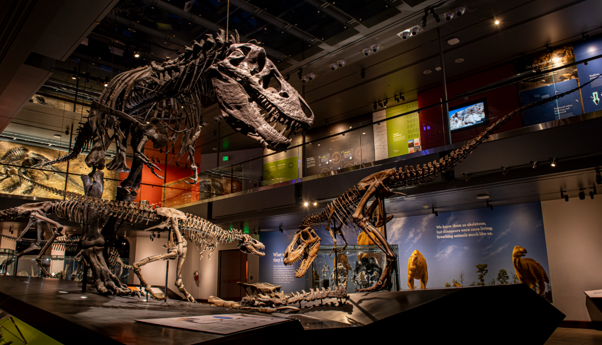
But Thomas isn’t the first dinosaur to get this treatment.
“We originally pioneered the approach in 2011, but back then we needed so much material for the analyses we were severely restricted to herbivores with thick tooth enamel, so we started with sauropod dinosaurs,” says Eagle.
That work revealed giant Jurassic sauropods also maintained human-like body temperatures. Fortunately, the technology is now far more efficient, and so the team are now eyeing up many other ancient animals in the hope of establishing when the ancestors of birds warmed up.
One of the reasons scientists have suspected tyrannosaurs of endothermy is that their remains have been found in Alaska, which even at that time got very cold in winter. Being cold-climate adapted could be a big part of their story.
“There is a lot of interest about how much dinosaurs, including theropods and ancestors of T. rex, may have exchanged across the Bering Strait from Asia,” Eagle told IFLScience. “Hot body temperatures and endothermy may have made this exchange more viable for the ancestors of T. rex.”
The study is open access in Science Advances