Nature
 PUBLISHED





The turquoise coastlines and powder-white sands of Trinidad and Tobago may be the optimal habitat for rum-sipping tourists, but surprisingly little is known about the deeper reaches of its seas.
In a new project, local researchers hoped to change that by mapping 13 percent of the country's uncharted seafloor and documenting the fascinating collection of marine life that call these waters home.
The Caribbean-led expedition was launched this July from the Schmidt Ocean Institute’s R/V Falkor (too) with the help of their remotely operated submersible SuBastian.
Over 11,335 square kilometers (4,376 square miles) of Trinidad and Tobago’s uncharted seafloor was mapped in total, and as the footage below shows, the nation's ocean depths are just as bustling as its famously lively shores.
The team identified 25 submerged fields along the seafloor that leak mineral-rich fluids from the Earth's crust, known as cold seeps. These systems pump out methane and hydrocarbons, providing the ingredients for chemical energy that fuels a wealth of fascinating and bizarre marine ecosystems.
New species lurking in the deep
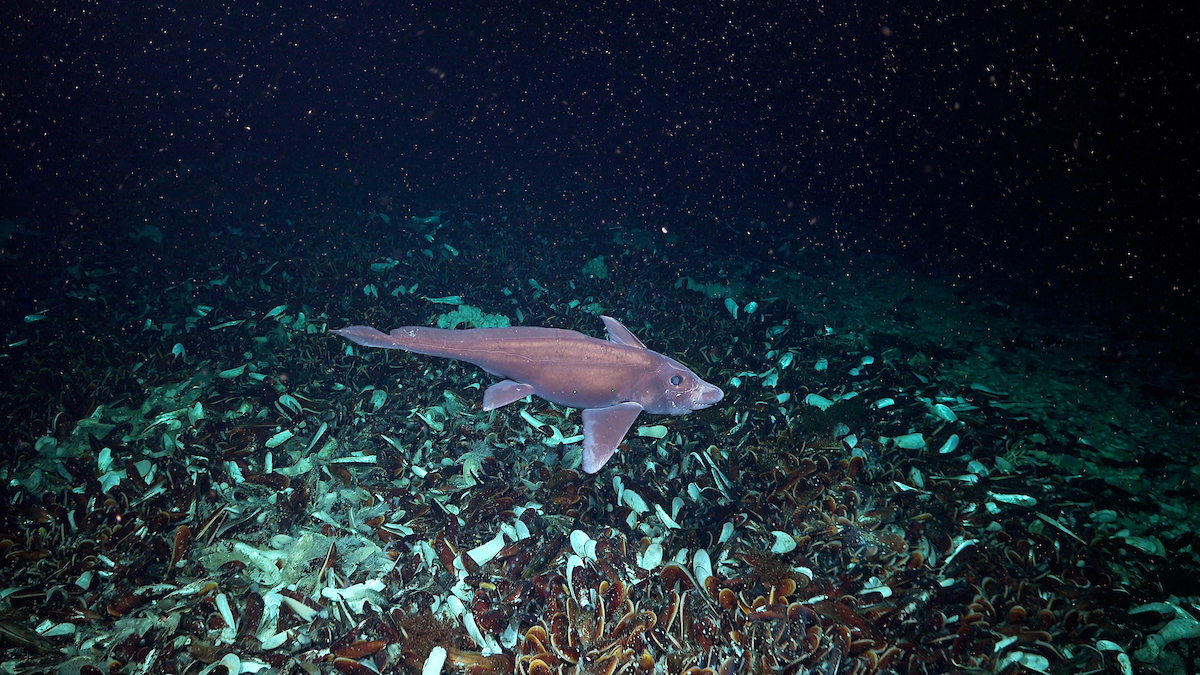
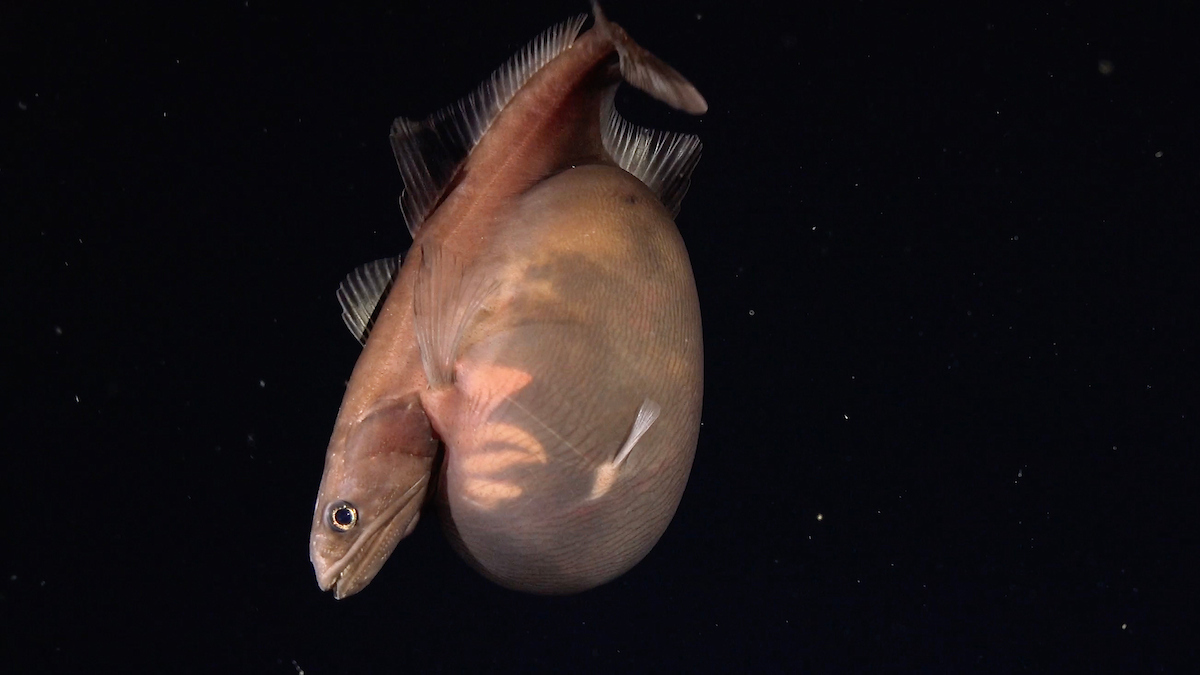
Over the course of the month, the researchers discovered at least 20 suspected new species.
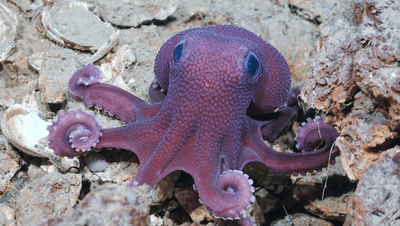
One of the possible new species is a cheerful-looking purple octopus. It was actually first spotted in 2014 when scientists suspected - but couldn't confirm - if it was undescribed. With the new information collected during this expedition, they hope to prove whether it is a new species once and for all.
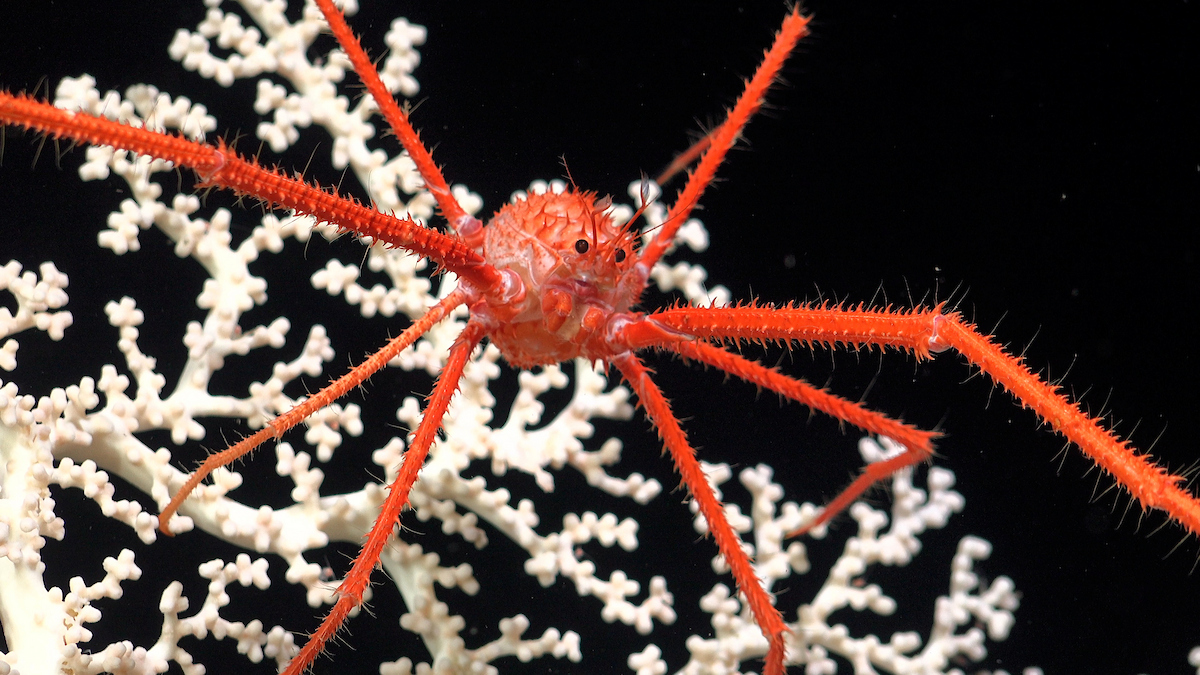
The team is additionally reviewing the data on several corals, carnivorous sponges, and squat lobsters they believe might also be previously undocumented species.
“As the first locally led deep-sea expedition in Trinidad and Tobago’s history, these discoveries are proof that Caribbean scientists can uncover our own deep-sea backyard,” Dr Diva Amon, the expedition’s Chief Scientist who also serves as co-director of the non-profit SpeSeas, said in a statement.
“Every new discovery we make, whether ecosystem, species or behavior, deepens our understanding of what’s at stake and strengthens our ability to be true stewards of this largely unseen but critical part of our country,” she added.
A rare find in the deep
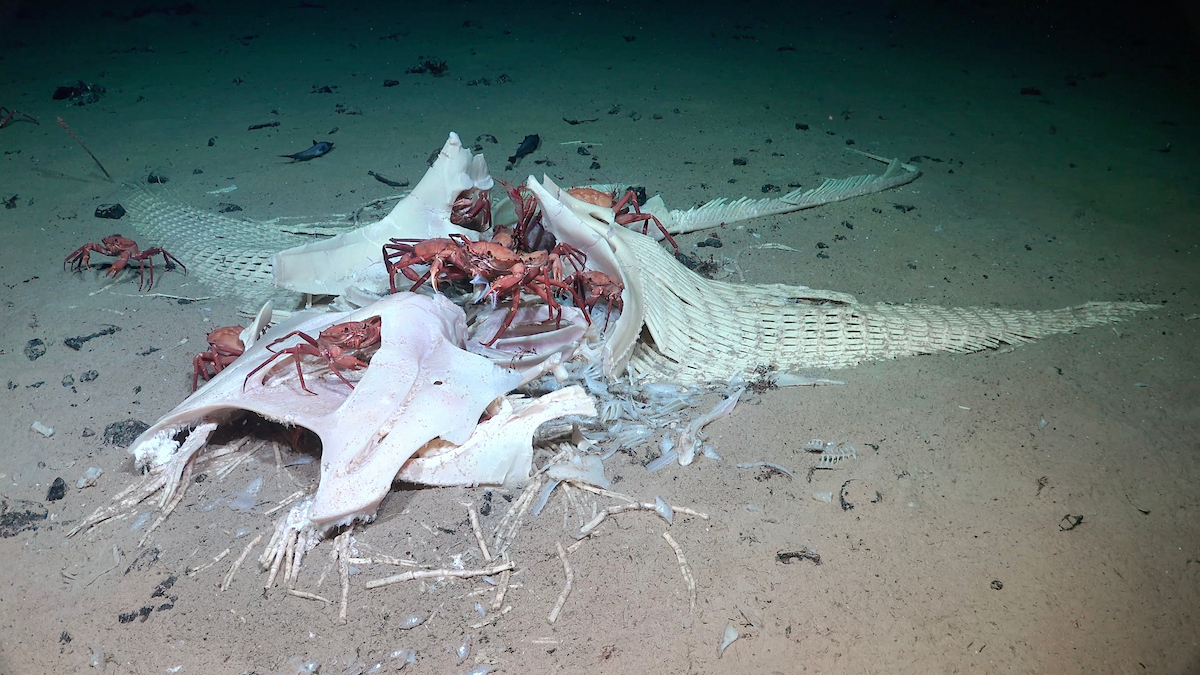
Another captivating part of the expedition was the discovery of a Mobula ray carcass that had died and fallen to the seafloor at a depth of 1,025 meters (3,362 feet).
As you can see in the image below, crustaceans, worms, and other deep-sea animals used this opportunity to feast on the ray’s tissues and obtain much-needed nutrients, which are in short supply in this environment.
This phenomenon is well-known with whales, when their massive, blubbery body falls to the seabed and provides a much-needed banquet of calories for the ocean’s inhabitants. However, it’s much rarer to see it with rays and other large cartilaginous fish.
On top of their observations, the team collected 700 specimens and used a novel cryoprotectant method to preserve their tissues. All of the specimens will now be housed at the Zoology Museum at the University of the West Indies in St. Augustine, a town in the northwest of Trinidad.
“Being part of this expedition was an incredible opportunity to help create the first ‘frozen zoo’ in the Caribbean,” said Dr. Megan Conkling, a research scientist from the Harbor Branch Oceanographic Institute at Florida Atlantic University.
“By cryopreserving tissues from more than 86 species of deep-water sponges, corals, and sea cucumbers, we’re preserving living biological resources that provide an invaluable baseline for understanding future ecosystem change.”
Hopefully, the specimens collected from the depths can help to protect all the marine life living in the rich, diverse waters off the coasts of Trinidad and Tobago.