


 Nature
 PUBLISHED




What you'll discover in this article
- The highest-latitude sauropod nest in the world has been discovered, with over 250 eggshell fragments.
- This is the first evidence that titanosaurs nested this far from the equator, located near the Drake Passage today.
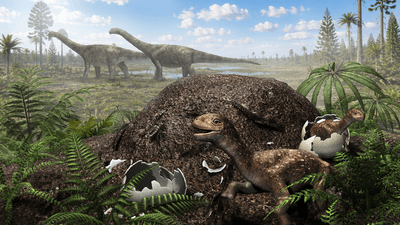
- It also suggests some titanosaurs incubated their nest in a similar fashion to hadrosaurs, using vegetation to create compost heat rather than relying on the Sun like other sauropods.
- "It’s wild to think that the biggest dinosaurs of all were not only living there but actually hatching their young there, too,” lead author Darla Zelenitsky told IFLScience.
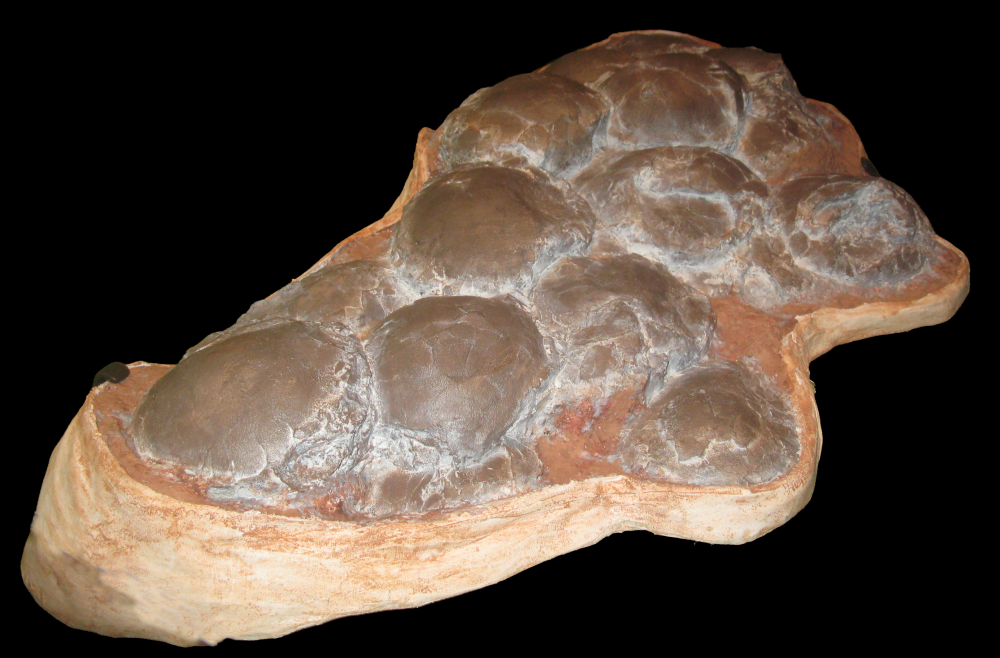
A new study has described a record-breaking nesting site for sauropods after scientists discovered more than 250 eggshell fragments in Patagonia’s Chorrillo Formation. These fossils were found far south at a site about 300 kilometers (200 miles) north of the Straits of Magellan, which is estimated to have been at latitudes between 55–60° south some 68 million years ago.
Dating back to the Late Cretaceous, it represents the highest palaeolatitude area for egg remains from the Southern Hemisphere. It’s also the highest-latitude nesting environment known for sauropods worldwide, and the first indication that titanosaurs nested at relatively high latitudes.
The eggshells’ high porosity (a common feature in titanosaur eggs) suggests they were fully covered during incubation. So, what kind of incubator do you use when you’re one of the largest dinosaurs ever to live on Earth? As study author Darla Zelenitsky told IFLScience, your options are limited.
It’s amazing to me that dinosaurs this massive could nest so far from the equator.
Darla Zelenitsky
“Birds can nest at high latitudes because they warm their eggs with body heat, but if titanosaurs brooded like birds, the nest would basically have turned into one giant omelette, so that seems unlikely,” she said.
“I also don’t think sunlight alone could have provided enough heat for these eggs in this latest Cretaceous environment, which was near where the Drake Passage is today.”
Instead, it seems likely these high-latitude sauropods were relying on a kind of incubation that’s been attributed to large hadrosaurs (duck-billed dinosaurs) whose eggs have also been found at high-latitude sites, though in the Northern Hemisphere. The approach harnesses the power of decomposition by creating mounds of rotting vegetation.
Since egg-laying/non-brooding reptiles usually have a hard time nesting at higher latitudes, it’s wild to think that the biggest dinosaurs of all were not only living there but actually hatching their young there, too.
Darla Zelenitsky
As that vegetation broke down, it heated up like a compost heap. This heat could have sustained the embryos throughout their development and is, says Zelenitsky, the most plausible way to explain how dinosaurs were able to nest in the cool conditions found at high palaeolatitudes.
The eggshell fossils have been assigned to the oogenus Fusioolithus. Not a specific animal, but the name given to eggs laid by some kind of titanosaur.
Though similar in their nesting approach, these titanosaurs were a long way off from hadrosaurs. About five times heavier at around 75,000 kilograms (11,810 stone), the group includes such giants as Argentinosaurus and Patagotitan. Giants, Zelenitsky says, that are incredible to imagine at these latitudes.
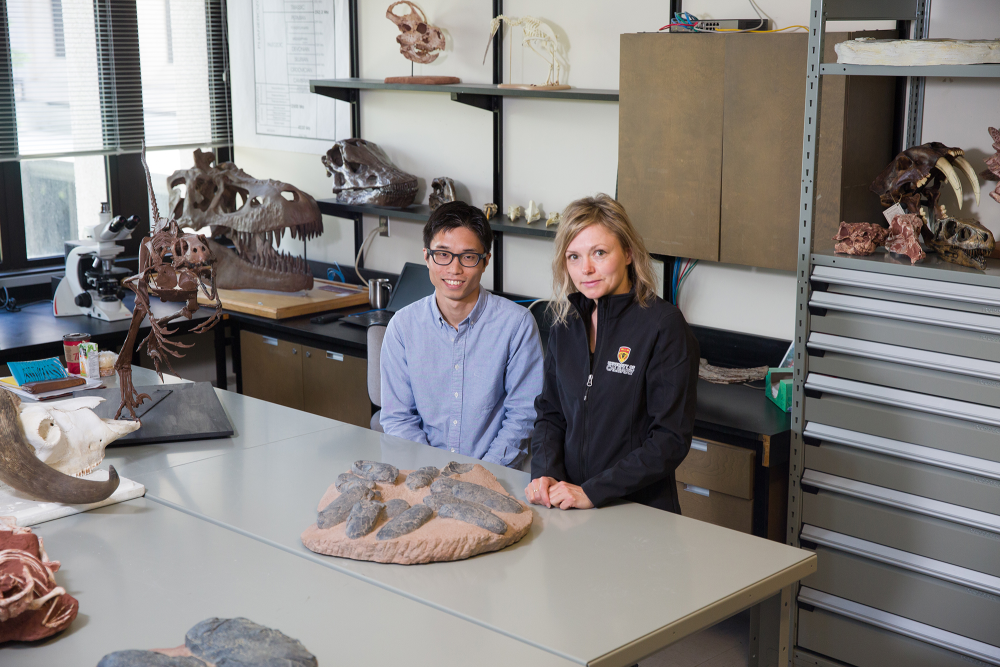
“It’s amazing to me that dinosaurs this massive could nest so far from the equator,” she said. “Since egg-laying/non-brooding reptiles usually have a hard time nesting at higher latitudes, it’s wild to think that the biggest dinosaurs of all were not only living there but actually hatching their young there, too.”
The discovery is a nod to these dinosaurs' behavioral reproductive plasticity, as at the same time other titanosaurs were nesting at lower latitudes and relying on solar radiation for their eggs. Just like sea turtles do today.
The discovery broadens the map of known nesting areas for titanosaurs and raises interesting questions about how Earth’s ancient giants could improvise when their world got chilly.
The study is published in the journal Royal Society Open Science.

 1
1