Nature
 PUBLISHED


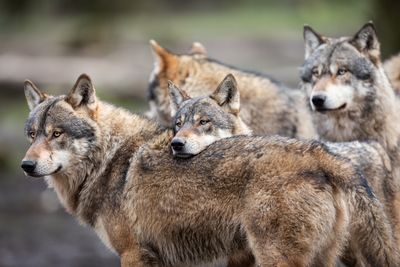


President Donald Trump has signed an executive order that could make it easier for people to hunt gray wolves and their critically endangered subspecies, the Mexican wolf.
The order comes as US cattle herds have fallen to their lowest level in 75 years and is seen as an attempt to appease ranchers and farmers who are concerned about the increasing pressure on the industry that has resulted in record-high beef prices.
“This is a huge distraction to placate a handful of ranchers and make them believe that wolves are a greater threat than President Trump’s own policies,” said Greta Anderson, deputy director of Western Watersheds Project, in a joint statement from a range of conservation organizations.
“The impact of wolves on the livestock industry pale in comparison to the impacts of recent trade agreements and the reality of ranching in the arid West under changing climate conditions.”
About more than the wolves
At the beginning of the 20th century, the gray wolf had been hunted to extinction across most of the contiguous US. Only one population survived in northeast Minnesota.
As a result, the gray wolf was listed under the Endangered Species Act initially as a subspecies, before being elevated to species level in 1978. This meant it was illegal to harass, harm, hunt, or capture wolves across most of their range.
There are now thought to be around 18,000 gray wolves living in the US, largely concentrated in the northern and eastern states.
As is often the case when wild predators come up against people, this has led to human-wildlife conflict and the scapegoating of the wolves for a series of problems currently impacting the US beef market.
The US administration is seemingly trying to bolster the cattle industry in the wake of a move to temporarily reduce tariffs on imported beef in an attempt to bring domestic prices down.
This has angered the ranchers and farmers who feel like it is undermining the industry. As a result, Trump has signed the executive order that instructs the Secretary of the Interior to look into the endangered species status of the gray wolf with a mind to delist them, which would pave the way for ranchers to then be able to shoot any wolves which threaten their herds.
The dire state of the Mexican wolf
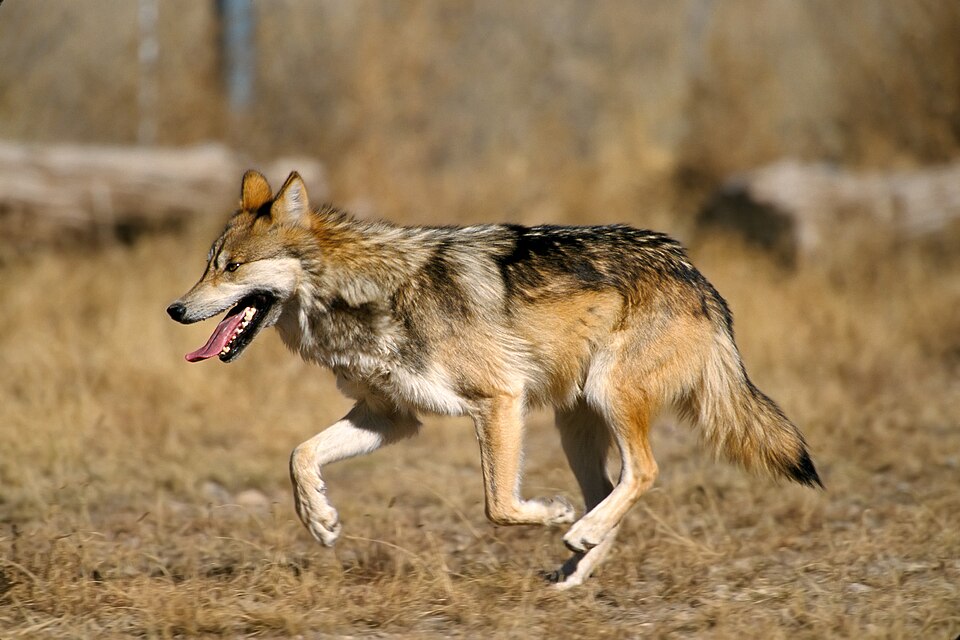
The Mexican gray wolf is in a slightly different position. It is not doing anywhere near as well as the wider gray wolves in the north. A subspecies native to Arizona and New Mexico, by the 1990s they were reduced to just a few dozen individuals. Intensive captive breeding and release programmes brought this number up to 319 wolves in 2025.
It is thought that these wolves are responsible for around 0.65 percent of cattle deaths in the region, compared to the average calf mortality rate from other causes reaching about 6 percent. And yet still they are viewed by some farmers as a major threat to their cattle.
“Mexican wolves aren’t the problem, but the administration’s approach to solving purported conflict is,” said Regan Downey, director of education and advocacy at the Wolf Conservation Center, in the joint statement.
“If the administration truly wanted to support ranchers, they would prioritize increasing funding for non-lethal initiatives to create long-lasting solutions.”
Trump on repeat
This is not the first time that the US government has attempted to de-list the gray wolf.
In 2020, the Trump administration removed federal protections for wolves, only for them to be restored in 2022 after wildlife organizations challenged the decision in court. If this new removal goes ahead, it is fully expected that it will also be taken to court and challenged.
“Mexican wolves desperately need more care and less persecution and Trump’s executive order does the opposite,” said Michael Robinson, a senior conservation advocate at the Center for Biological Diversity, in the statement.
“We’re prepared to prove in court that downlisting Mexican wolves and a steep increase in killings would not only be cruel but also deeply unwise and illegal.”
The Secretary of the Interior has 90 days to make the assessment and report back on whether or not this motion will go through.