Nature
 PUBLISHED




A Californian proposal to ban the sale of animals genetically modified purely for their looks has failed.
The Assembly Bill (AB) 1382 “Ethics Over Aesthetics Act” was aimed at “designer pets”, specifically animals that are artificially created for their appearance, including glow-in-the-dark rabbits, as opposed to those modified to improve the animals' health or promote hypoallergenic traits.
The lawmakers are arguing that while the industry for these kinds of pets is limited so far, they should get ahead of it as the market is only expected to grow.
Making healthier pets and people
The invention of CRISPR gene editing has led to a whole range of incredible medical breakthroughs.
The technique allows scientists to quickly create cell and animal models in a way that had never been possible previously. It has also allowed many others to experiment in a range of other non-medical settings.
This includes genetically modifying pets.
Some of these uses are to help correct problems that have been bred into animals through conventional selective breeding. For example, some dog breeds are more susceptible to particular diseases or genetic conditions, and gene editing allows scientists to fix these.
Other uses include making pets that are healthier for humans. One of the most well-known of these is the creation of hypoallergenic dogs. This uses CRISPR to edit out the specific protein that triggers allergic reactions in some people.
So far, there have been successes in this field. “As someone who lives with dog allergies, this work is deeply personal,” explained Matt Walker, a scientist involved in creating some of the first hypoallergenic dogs, in a statement.
“For most of my life, I assumed I'd never have a dog but have lived with Bailey for almost two years. She's a happy, healthy, and incredibly sweet dog who reminds me every day why this work matters.”
Genetically modified glow-in-the-dark pets
But other companies are exploring using the technology to create genetically altered pets purely for aesthetics.
Most of the examples so far seem to involve the addition of a fluorescent protein that, theoretically at least, will make the animal glow. This has already been achieved in a range of species, from monkeys to mice, but so far mainly in a laboratory setting and not for commercial reasons.
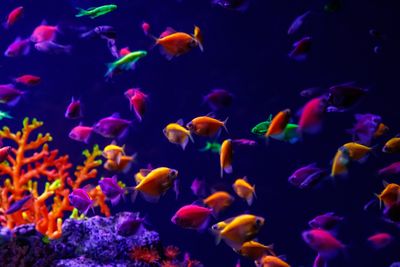
A notable exception to this are GloFish. These are genetically edited fish of differing species originally created in 1999 for research purposes, but now found commonly in the ornamental fish trade. Unfortunately, some of these have now escaped into the wild.
Other companies, however, are seeking to expand this. One such venture that has caught media attention is the Los Angeles Project, so named as a direct reference to the Manhattan Project. Because why wouldn’t you want to associate your start-up biotech business with a project that led to the deaths of hundreds of millions of people.
The founders of the Los Angeles Project have been explicit in their goals to create a range of modified pets, starting with glow-in-the-dark rabbits. They even made some throwaway comments about creating a real-life "unicorn", although no further details were provided.
Preemptive ban
It is these kinds of businesses that the bill in California was trying to block.
It specifically mentioned traits such as “novel fur, skin, feather, or scale coloring, the removal of claws or vocal cords.” It also covered the addition or removal of physical features, while still permitting the development of genetically modified pets for health reasons.
It was argued that the bill is necessary to prevent the production of living animals just for novelty reasons, while we still don’t know the long-term effects these alterations might have on the animals in question.
This would have applied to animals such as dogs, cats, rabbits, but also birds, reptiles, amphibians and fish. Because the trade is already so well established, GloFish were to be exempt.
There are also concerns that the experimentation on pets is simply a precursor to genetically modifying humans.
In fact, the co-founder of the Los Angeles Project, Cathy Tie, told The Guardian, “Initially, the idea was to use animal embryology to understand human embryology better, which has always been my mission.”
“That was one of the ways in which I tried to explore this field in a compliant way.”
It appears that there was no single reason why the bill failed, although reasons such as opposition to regulating something based only on aesthetics rather than science, and the court costs that might result from the ban have been cited.
The lawmaker who introduced the bill, Leticia Castillo, is not done, however. She has promised to continue fighting for the protection of genetically modified pets.