Nature
 PUBLISHED




What you'll discover in this article
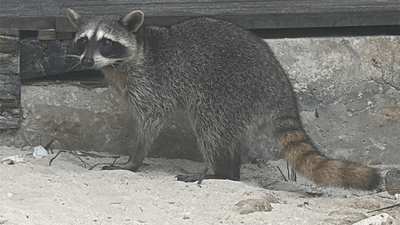
- On a Caribbean island off the east coast of Mexico, the raccoons are playing football.
- Two critically endangered pygmy raccoon sisters were seen taking paper waste from the garbage, dipping it in water, and then rolling it in sand to create a ball that they then played with.
- "Raccoons are very tactile and use their sensitive paws to learn about the environment. So in all likelihood it happened ‘accidentally’ and then became a more interesting activity for them and so others wanted to participate," study authors Nessie O’Neil and Dr Michelle Szydlowski told IFLScience.
- Ingesting trash and toxins from humans is seriously affecting the population.
Observations on Cozumel Island have revealed that the critically endangered population of pygmy raccoons (Procyon pygmaeus) have learnt to roll paper in water and sand, forming little balls.
These raccoons are genetically distinct from their cousins on the mainland and are only found on this island. These observations represent a new behavior and aspect to their culture.
While studying the effects of tourism on the raccoons, the researchers observed two female raccoon siblings retrieving waste paper, dipping it in water, and then rolling it in sand to form balls. They then used those balls to play.
One juvenile performed the whole ball-making process, while the other watched and tried to copy. After the sister was removed from the site, the remaining female was able to make the balls independently of her sibling.
At a different site with similar access to paper and water, the juvenile raccoons showed no signs of the same behavior.
These raccoons are facing the loss of their habitat and regularly interact with tourists and staff at beach clubs and hotels. While they typically feed on crabs, fruit, and insects, they have largely unlimited access to garbage, human food, and being fed directly by visitors.
There are less than 200 left on Earth, and wonderful new behaviors like making toys may quickly disappear due to the raccoons dying.
Nessie O’Neil and Dr Michelle Szydlowski
While previous studies have looked at feeding behaviors, no research has been done on play behavior or object manipulation in the species; indeed, despite their critical status, they are an understudied group.
“It appears that this was the first observed occurrence [of the ball making behavior]! We hope to return and see if the behavior can be observed again, and see if it arises in different locations or is passed to other individuals outside this family,” study authors Nessie O’Neil and Dr Michelle Szydlowski told IFLScience.
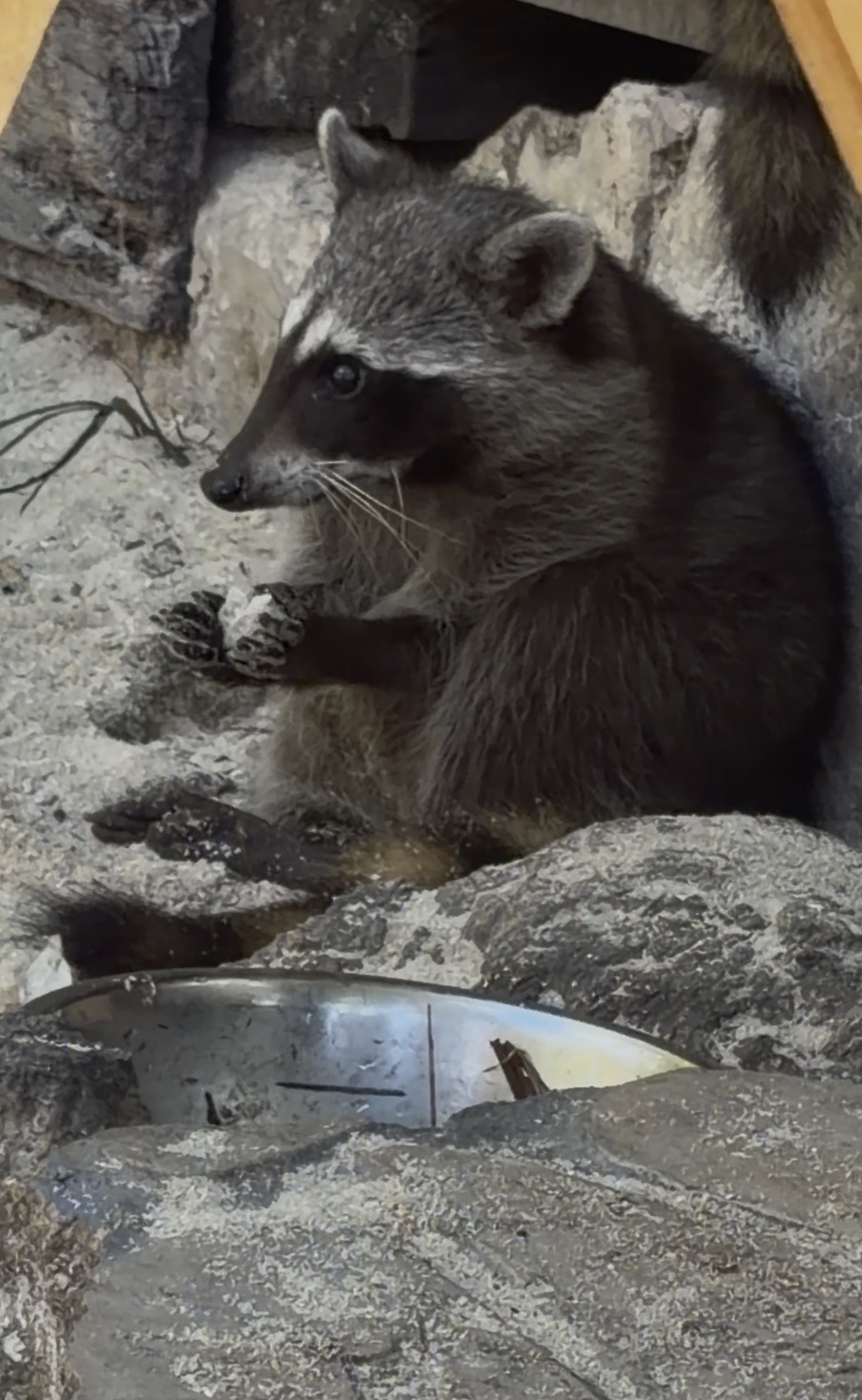
The team also witnessed the mother of the two juvenile females attempting to make a ball. However, “the mother raccoon appeared to make one attempt at constructing a ball, though quickly abandoned the sequence after being unable to retrieve the paper towel she placed in the bowl of water.”
“The success of the mother during this attempt might have been influenced by her earlier consumption of one ounce of a margarita, which appeared to lower her dexterity,” explain the authors.
After being made by the raccoons the ball was seen being played with a total of six different times.
On one particular occasion, two juvenile dwarf coatis (Nasua narica nelsoni) joined the two young raccoons in playing with the ball. Some of the interaction involved growling to keep possession of the ball, batting the ball back and forth to each other and chasing it.
The raccoons were never seen trying to ingest the ball, though some exploratory mouthing behavior was recorded.
"Raccoons are very tactile and use their sensitive paws to learn about the environment. So in all likelihood it happened ‘accidentally’ and then became a more interesting activity for them and so others wanted to participate," O'Neil and Szydlowski said.
The young raccoon would call out for her family at night, and it was a horrible thing to hear.
Nessie O’Neil and Dr Michelle Szydlowski
Sadly, the initial juvenile that first showed the ball-making behavior died in rehabilitative care, likely due to malnutrition or from ingesting toxic human substances. Only the two females and briefly the mother were seen making the balls, suggesting that this behavior was one of solo innovation rather than a cultural trait.
“There are less than 200 left on Earth, and wonderful new behaviors like making toys may quickly disappear due to the raccoons dying. As we mentioned in the study, the sister who initiated this behavior died due to health complications due to pollution and malnutrition,” the authors told IFLScience.
“She actually died in the home of my (Nessie’s) research partner and co-author Noel Rivas-Camo, who oversees Cozumel’s Municipal Ecology Department, and their wildlife rescue and rehabilitation program. The young raccoon would call out for her family at night, and it was a horrible thing to hear.”
The team suggest that long-term field based study of this critically endangered population would be beneficial to observe their behaviors especially at tourist sites with waste and food sources.
If you would like to support the raccoon research more information and donations are welcomed here.
The study is published in Wild.