Nature
 PUBLISHED



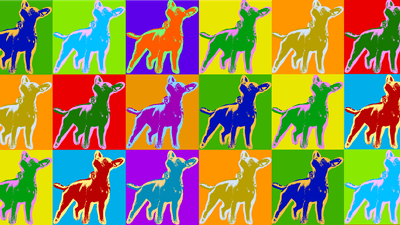


Pets, as energetic and youthful as they might sometimes seem, sadly don’t live forever. But what if we could give them immortality?
Not in the traditional sense – that’s still far beyond current science – but in a more roundabout way. One that requires time, money, and maybe even a suspension of your moral beliefs: cloning.
Since the first successful cloning of Dolly the sheep three decades ago, scientists have made an incredible amount of progress, and there are now companies offering cloning services for cats, dogs, and even horses. But if you are going to spend tens of thousands of dollars to clone your pet, are you even getting the same animal?
Animal cloning 101
Before we find ourselves wading through any ethical debate, it’s first important to understand how animal cloning works – if it wasn’t already drummed into your head during high school biology, that is.
Dogs and cats, like humans, are more than merely their genetic makeup. Even aside from any other issues, cloning a beloved dog or cat does not result in that dog or cat being reborn.
Dr Josh Milburn
You’ll need two kinds of cell. The first is a somatic cell, which is any cell in the body other than a sperm or egg (often a skin cell), from the animal you want to clone. The most important part of this cell in this process is the nucleus, which contains the recipe for reproducing the original animal: its DNA.
The nucleus from that somatic cell is taken out and placed into a second cell – an egg cell with its own nucleus removed, so you don’t wind up with the DNA of another animal. This process is known as somatic cell nuclear transfer (SCNT).
With all the genetic information it needs to eventually end up as an adult organism, you can then give the freshly nucleated egg cell a quick zap of electricity, and it’ll start dividing and developing into an embryo.
This embryo can be placed into the womb of an adult female animal, left to gestate for however long is necessary, and then, eventually, the surrogate will give birth to the cloned animal.
From Dolly to dogs (and cats)
It all sounds surprisingly simple, but the success rate of animal cloning – how many SCNTs lead to live births – is low.
It took scientists 277 attempts before they successfully got Dolly the sheep, the first mammal to be cloned in this way, back in 1996. Even today, with 30 years of refinement, the efficiency of the process depends on which species is being cloned, with success rates ranging anywhere from just 0.1 percent to 16 percent (though some claim higher).
Still, it’s enough that science has moved on from simply proving that cloning animals, and in particular mammals, is possible. As well as cloning for conservation, it’s now possible to clone our companion animals, with the first cloned pet – a cat that was amusingly, albeit inaccurately dubbed “Carbon Copy” or CC – born in 2001.
And now, 25 years later, it’s a fully-fledged business.
In the US, this market is dominated by ViaGen Pets & Equine. For the low, low (*coughs*) price of $50,000 dollars, they’ll take a skin sample from your cat or dog – living or very recently dead – and use it to produce a clone of your pet. Big names such as Barbra Streisand, Paris Hilton, and Tom Brady have all cloned their pets with ViaGen, and it has now become so popular that the company reportedly has a 5–7-month waitlist.
It seems business is booming – but should it be?
The same animal?
Given that $50,000 is no small amount of money, you’d like to think it’d be guaranteed that you’re going to get an exact copy of dear Mr Fluffy. But it’s not – physically or personality-wise.
Remember how we said DNA is like a recipe? It’s an apt analogy in this case.
The instructions go a reasonable way to the end product, but you still need the ingredients and a decent oven. Much like an animal’s environment, both of those things are variable. You can follow the instructions to a T, but if your oven’s different to the one used by the person who wrote the recipe, or your baking powder is long past the best before date, you can end up with a different end product.
“Dogs and cats, like humans, are more than merely their genetic makeup. Even aside from any other issues, cloning a beloved dog or cat does not result in that dog or cat being reborn. It results in a different dog or cat being born, and the new dog or cat might not even be that similar to the 'original' dog or cat,” Dr Josh Milburn, Senior Lecturer in Political Philosophy at Loughborough University, told IFLScience.
The surrogate might have issues related to pregnancy and parturition [giving birth] too. Some clones are known to be excessively large, which is clearly potentially problematic.
Dr Jacqueline Boyd
The clearest physical example of this is in cat coat patterns; the cloned kitty CC showed significantly different markings to its calico-colored donor.
That’s because, in cats, the environment in the womb influences coat color and patterning, and CC developed in a different womb to the original animal.
But even if someone cloning their pet did end up with an animal that looked the same as its genetic donor, it’s unlikely that they’ll have the exact same temperament. Again, genetics isn’t everything; right from the get-go, there could be changes ranging from subtle to significant that could affect a pet’s behavior.
“The impact of lived experience and shared experiences is also part of what makes our pets unique. Clones would not experience identical conditions as their 'parent', which will also result in differences,” explained Dr Jacqueline Boyd, Senior Lecturer in Animal Science at Nottingham Trent University.
Maybe they were born into a litter where they weren’t the most dominant. Maybe they spent those crucial first few weeks of life exposed to sights and sounds the original pet wasn’t. Maybe an owner of a cloned dog will have learnt from the mistakes they made during the puppy stage last time and make shifts in how they train.
Even if you tried your level best, precisely replicating the experience of the original animal is nigh on impossible – and even the people who want you to drop your hard-earned dollars on pet cloning admit this.
The many, many ethical issues
What do people think of cloning animals? According to a 2025 Gallup poll, only 34 percent of those asked believed that it was morally acceptable to clone animals, while 59 percent considered it to be morally wrong.
In an earlier 2002 poll, 82 percent of those asked opposed cloning dogs, cats, or other animals people keep as pets.
Of course, pet cloning was barely a thing at that time. If ViaGen’s waitlist is anything to go by, it would seem at least some attitudes have changed as the technology has evolved.
“Ironically, I completely understand the desire to clone a loved pet,” said Boyd. “Our pets almost always have a lifespan shorter than our own and their loss can be linked with severe grief and feelings of loss. The wish to keep a loved pet alive is a very real desire observed in pet caregiving, and cloning, for some people, offers that as an option.”
That desire is where the ethical issues of cloning begin to crop up. “What factors are driving the desire for cloning? [What is] the intended ‘purpose’ of the clone/s?” Boyd posed.
“Some pet cloning is simply the desire for a much-loved pet to 'live forever' (even though cloning is not a guarantee of an exact replica at all), but there could be commercial and potentially nefarious purposes for cloning that are not in the best interest of the pets involved,” she added.
Then there’s the matter of health and welfare for the animals, from the original pet through to its eventual clone. Does the process cause them what is – given that no one actually needs to clone their pet – unnecessary suffering?
For example, a tissue sample being taken from the original pet could cause the animal pain and distress, though it could be argued that this is no more so than with many standard veterinary procedures.
Dogs and cats are sitting in shelters, waiting to find a home, and many of them face being killed if they can't find one. Rather than paying lots of money to create a new dog or cat, people should adopt a dog or cat who needs a home.
Dr Josh Milburn
The story gets more complex for surrogates and donors, however, which “might have more potential welfare concerns relating to the approaches needed to support the recovery of eggs and potentially invasive procedures for the transfer of the 'fertilised' eggs – both of these procedures might involve use of hormonal treatments also,” said Boyd.
None of the animals involved are able to consent to any of this either. We might be happy to have a “duplicate” of our beloved pet, but are they all losing their agency in the process?
“The surrogate might have issues related to pregnancy and parturition [giving birth] too,” Boyd pointed out. “Some clones are known to be excessively large, which is clearly potentially problematic.”
These clones might also go on to have health issues – cloning is an “imperfect science,” said Milburn – although it’s worth noting that this is a problem faced in regular reproduction too, and, like non-cloned animals, cloned animals can age normally and healthily too.
Outside of the science of it all, there’s the money. If we’re being real for a second, pet cloning isn’t exactly affordable for the average individual – and there’s an argument to be made that cash spent on cloning would be better spent elsewhere.
“There are specific ethical concerns about pet cloning when there are many, many unwanted pets seeking good homes and the money involved in cloning procedures could actually help those animals,” said Boyd.
The aim [or] intent of the company offering the service should also be considered. What is their motivation? That could be a major green or red flag.
Dr Jacqueline Boyd
It’s a sentiment echoed by Milburn. “Dogs and cats are sitting in shelters, waiting to find a home, and many of them face being killed if they can't find one. Rather than paying lots of money to create a new dog or cat, people should adopt a dog or cat who needs a home.”
“They could instead spend the very large amount of money they would have spent on cloning an animal on making the world better for the animals who already exist.”
Technology is also quickly advancing to a point where we can help existing pets to live longer, and healthier too. Biotech company Loyal, for example, has been developing lifespan-extending drugs for dogs; two of these products – one for big dogs, and the other for senior dogs – have reached key milestones on the road to FDA approval.
This approach comes with its own ethical issues, but some may see it as a more desirable alternative to cloning, even if it’s still not a way to cheat pet death entirely.
It’s up to you
The ethical questions covered above are only the tip of the iceberg – and they, together with the question of whether or not you should clone your pet, don’t necessarily have answers, or at least not a single one. Opinions and decisions ultimately come down to the individual.
But if someone does decide that pet cloning is for them, what are the kinds of things it’s recommended they look out for? The “green” and “red” flags, as my fellow GenZers would put it.
For one, it’s important to make sure that a company knows what it’s doing. Boyd says that fully qualified staff, using up-to-date evidence, clear and thorough recordkeeping, and proper management of biological samples are all “essential”.
Do they stick to the rules? “Ultimately, compliance and adherence to local/national legislation about animal welfare and all associated procedures would be critical in exploring cloning as an option,” said Boyd. “The origin, care, and management of any surrogate animals need to be fully verified also – even afterwards.”
That’s the kind of stuff that usually comes with a hefty price tag attached; Boyd suggests that a company presenting itself as cutting costs “would [in my humble opinion] be a red flag!”
“The aim [or] intent of the company offering the service should also be considered,” she added. “What is their motivation? That could be a major green or red flag.”
So, should you clone your pet? We’ve given you the lowdown on how it works and the questions to ask – some of them of yourself. The final decision? We’ll leave that up to you.
This Deep Dive first appeared in Issue 47 of our digital magazine CURIOUS. To access exclusive CURIOUS content first and receive the quarterly digital magazine, become an All Access Member.