Nature
 PUBLISHED



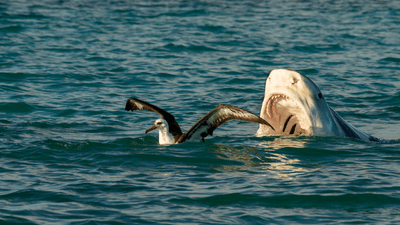


As Sir David Attenborough once said in his film OCEAN, “We believed that if you removed the sharks, there would be more fish. Now, we are learning how wrong we were.”
While it's true that, as top predators, sharks do consume their fair share of fish, they're also considered a keystone species. Remove them from an ecosystem, and the whole thing could fall apart.
For this reason, it’s important to understand what sharks eat to get a better idea of what might happen if they disappeared due to pressures such as habitat loss and overfishing. So, how do you find out what a shark eats?
A 2017 study published in PLOS One gathered the stomachs of 778 tiger sharks (Galeocerdo cuvier). The animals had died as incidental catch as part of the bather protection program of the KwaZulu-Natal Sharks Board in South Africa.
Though global shark attacks remain rare, tiger sharks are considered one of the most dangerous in the world – second only to the great white.
They’re incredible hunters, but they also have a reputation as the “garbage cans of the sea”, eating just about anything that bobs into view. It’s perhaps unsurprising, then, that all those stomachs yielded an unusual haul.
Still, there’s no denying the list of stomach contents got really weird.
Dolphins, fish, and... porcupines?
Of the 778 stomachs examined, 628 contained food revealing a diverse range of 192 prey items. They ranged from small things like shrimps and bivalves, to larger species including bits of sperm whale and humpback whale.
Other sharks and rays, known as elasmobranchs, were a popular menu item. Fish were especially important to smaller tiger sharks, with 67 species included in the haul. But curiously enough, their findings weren’t limited to marine species.
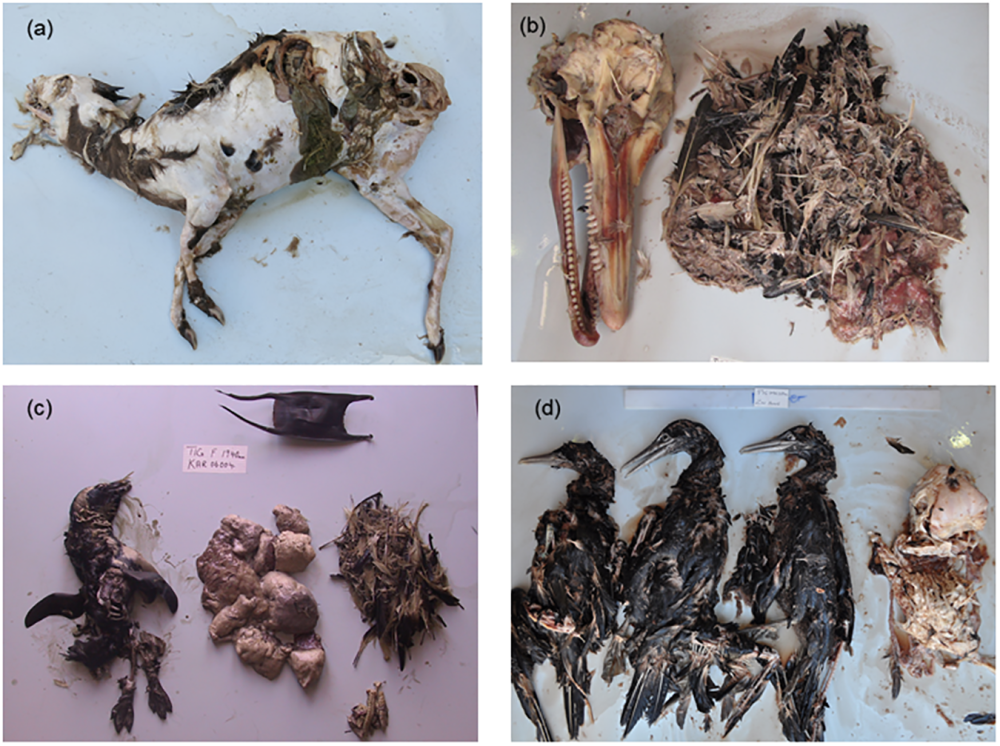
Some of the terrestrial mammals that made it into the mix were rather unexpected. They included a mole rat, porcupine, and the blue duiker – a kind of forest-dwelling antelope.
Unfortunately, humans were also on the menu, represented by a tibia, fibula, and pelvis bones found in the stomachs of two sharks that were both over 2 meters (6.5 feet) long.
So how did the land-dwelling mammals wind up in a shark’s stomach?
Cigarettes, and penguins, and condoms, oh my!
We know tiger sharks will opportunistically scavenge food, so it’s likely that the bodies of these terrestrial mammals were already dead when they entered the water. They were probably washed out to sea following flooding, which is thought to be the same way some of the trash ended up in the sharks’ paths.
That trash included crisp packets, cigarettes, condoms, and leather. As the tiger sharks’ nickname suggests, garbage can gonna’ garbage can.
Other notable finds included turtles and birds, including lots of gannets and an African penguin.
The expansive diet of these sharks suggests they exert significant influence across multiple components of marine ecosystems, say the study authors.
“Knowledge of the diet and trophic ecology of G. cuvier is key for the effective implementation of ecosystem as well as species management initiatives in South Africa and the [Western Indian Ocean],” they concluded. “The key question that remains, however, is whether the trends observed in this study are indeed indicative of the larger population.”
So thank you for your service, tiger sharks. We appreciate your efforts to tidy up the ocean, even if we do wish doing so didn’t involve so many crisp packets.