Nature
 PUBLISHED




What you’ll discover in this article
- North America used to be home to a now-extinct big cat popularly called the American cheetah.
- New genetic data has proven once and for all that it was actually more closely related to living pumas that still roam across its former range.
- Researcher Molly Cassatt-Johnstone told IFLScience that the extinct big cat “probably hunted differently than any living cat”, which is reflected in the unusual diet of some populations.
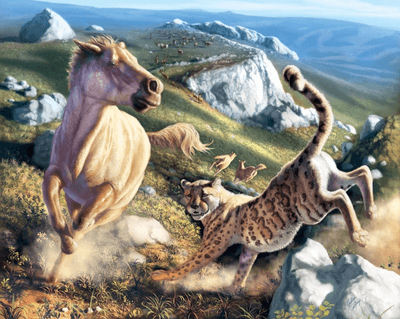
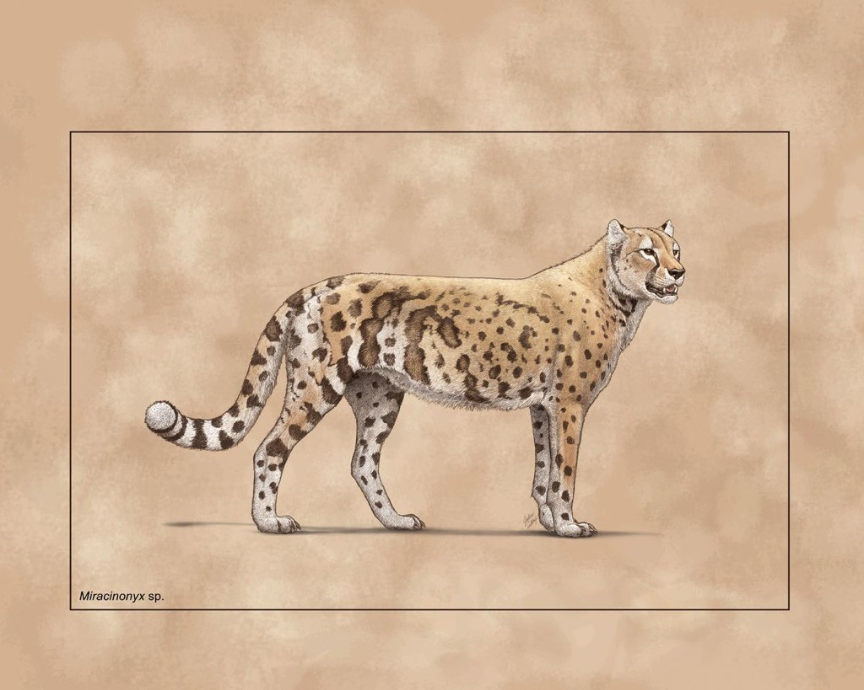
Known as Miracinonyx trumani, the American cheetah lived between about 2.5 million and 16,000 years ago.
The fossil remains of M. trumani were first called the American “cheetah” because of its anatomical similarities to the living cheetahs found in Africa and Asia. This comparison, however, has recently started to slip.
“They had really very similar convergent morphologies at a broad level,” says Molly Cassatt-Johnstone, a researcher at the University of California, Santa Cruz and first author of the study, to IFLScience.
“They have really elongated forelimbs. I believe they have increased nasal capacity, so bringing in oxygen rapidly while you’re running, things that we know provide adaptive advantages and high-speed pursuit.”
“But they also weren’t exactly just a cheetah analogue. They had the ability to still grapple prey and move their wrists, so they probably hunted differently than any living cat. It’s not easy to make that clear one-to-one comparison, and they probably just did their own thing.”
But it was while peering into their genetics that the team were able to confirm this.
Ancient DNA from an extinct cat
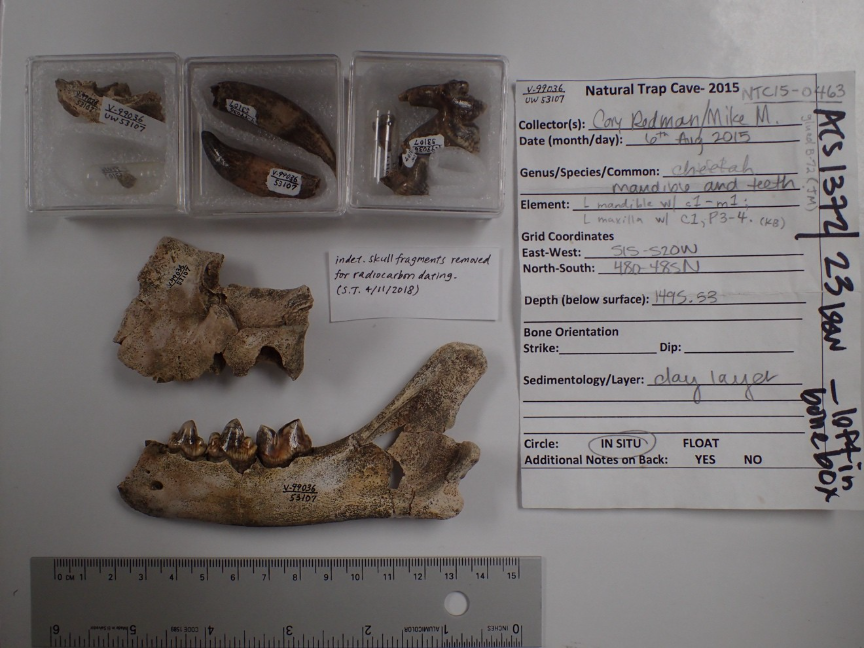
It came about as Cassatt-Johnstone’s colleagues were studying fossil remains from a cave in Yukon, Alaska. Originally identified as coming from a puma, genetic tests on the bones revealed something unexpected: they actually belonged to the American cheetah.
This in itself was notable, as it wasn’t thought that the big cat ranged this far north. Along with the genetics from M. trumani fossils from Wyoming, the researchers could sequence the most complete ancient DNA from this species.
They found that the American cheetah DNA sat very firmly with the puma. It revealed that the extinct cat last shared an ancestor with the modern cheetah some 4.7 million years ago, but only diverged from the pumas around 2.6 million years ago.
While this was expected, it was great to finally be able to prove it.
What’s more, the DNA of the cats was able to shed light on other aspects of their biology. For example, the team were able to see that two of the genes related to their circadian rhythm were nonfunctional, a possible adaptation to living in the far north.
They’re sitting in a position right between orcas, which are exclusively fish eaters, and outer island wolves from British Columbia.
Molly Cassatt-Johnstone
They were also able to look at population sizes, and found that they seemed to be fairly stable even towards the end of their existence.
“We see that their genetic diversity is really evenly distributed across their genome, which means that they didn’t go through a big population collapse,” says Cassatt-Johnstone. “They’ve just maintained a small population size for a long time.”
The fossils were also able to give insights into the animals’ diet by looking at the levels of nitrogen preserved within the bones.
Adapted for hunting pronghorn or… fish?
There has long been something of a Just So story when it comes to the pronghorns of the Midwest. These curious antelopes are capable of running at extraordinary speeds of up to 88 kilometers per hour (55 miles per hour), much faster than any predator that lives in the US today.
This is where the American cheetah comes in. It was suggested that, perhaps, the pronghorn evolved alongside the big cat, each species pushing the other to run ever faster. When the cheetahs then went extinct, the pronghorns were left with their extreme ability to outrun a predator that no longer exists. An evolutionary ghost echoing through time.
It now seems that isn’t quite the full story. The remains found in the Yukon of Alaska push the known range of M. trumani much further north, and way outside the range of pronghorns.
If the cheetahs had evolved in lockstep with the pronghorns, this then raised the question of what they were eating in Alaska. At the time, the land would have been filled with a range of other herbivores, including bison, horses, and caribou.
But the data gleaned from the bones show, extraordinarily, that that is not what they were eating.
“They’re not just eating mostly fish,” explains Cassatt-Johnstone. “It seems like they’re eating almost exclusively fish.”
“When we compare our data to published modern data of carnivores that we know eat exclusively aquatic marine resources, we see that they’re sitting in a position right between orcas, which are exclusively fish eaters, and outer island wolves from British Columbia, which are commonly known as sea wolves because they eat almost exclusively fish.”
Amazingly, this is actually backed up by the fossil evidence, as the bones of the cat were found alongside those of fish, such as salmon and pike.
In comparison, the nitrogen levels in the fossils from Wyoming showed that the cats living there had a much broader diet, and likely encompassed a wide range of herbivores. This suggests that they were perhaps not as specialized hunters as previously thought, and had much greater dietary flexibility.
The study is published in the journal Current Biology.