Nature
 PUBLISHED



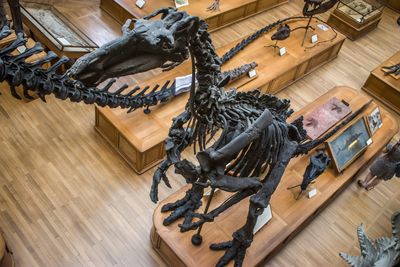


Ancient fossils can reveal a lot about the lifestyle, age, and ecology of their long-dead owners. Now the leg bone of an iguanodon has revealed information about the health of the dinosaur it once belonged to.
A fossil leg bone found in the Arcillas de Morella Formation in the northeast of the Iberian Peninsula, Spain, showed an unusual bony overgrowth along its length. The shin bone, known more technically as the tibia, was identified as belonging to a fairly well-studied dinosaur called Iguanodon bernissartensis.
Given the extra growth on the bone, the team wanted to get a better look so they could begin to work out what might have caused the lesion. They used a hospital CT scanner to create 3D images of the bone that allowed them to look closer at the overgrowth and learn more about it.
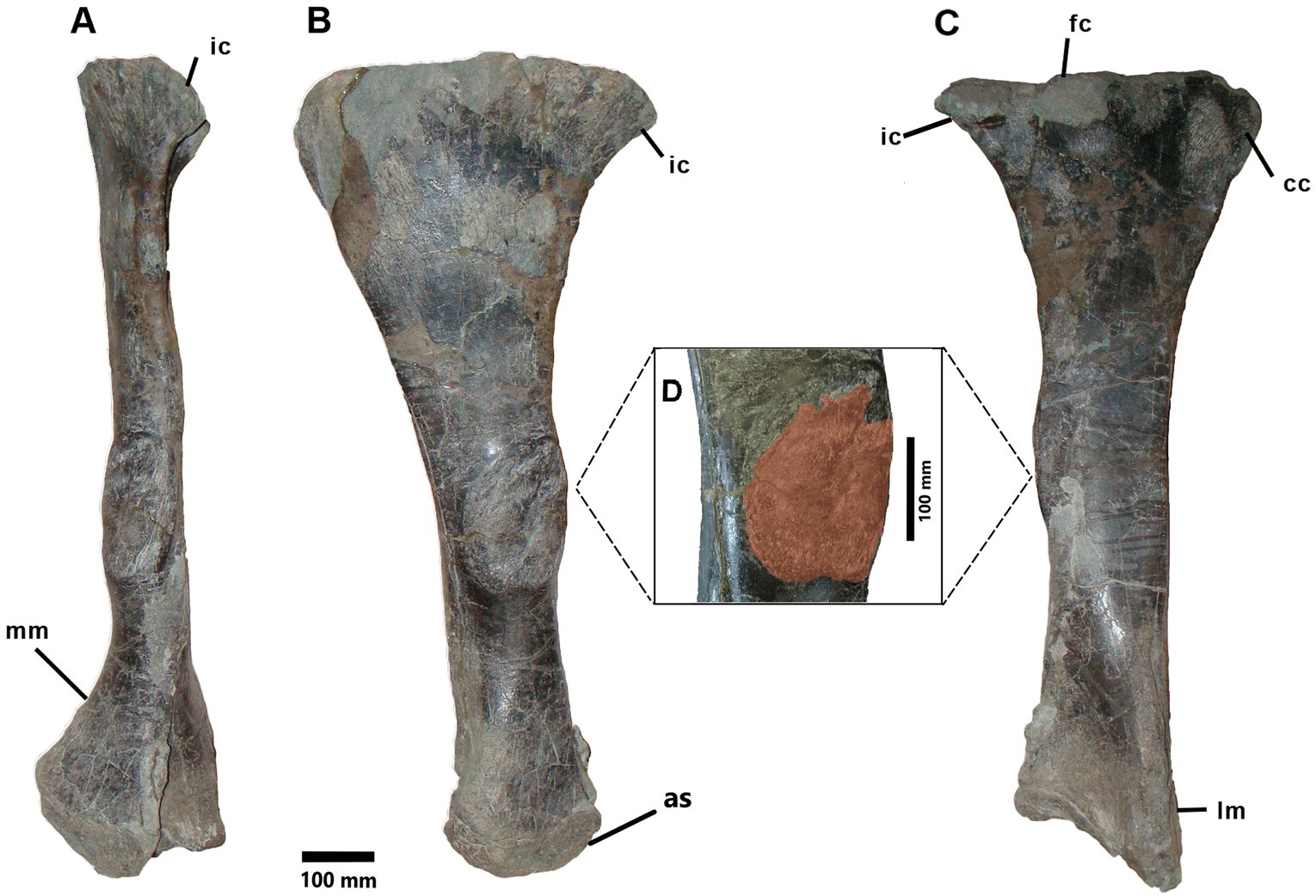
The overgrowth is described as having a "smooth and swollen surface, measuring 174 mm in length and 117 mm in width, with a maximum thickness of 17.3 mm”, and accounts for around 17 percent of the total length of the tibia bone.
The CT scan also revealed that the growth didn't extend into the cavity on the inside of the bone.
The results also allowed the team to rule out that the overgrowth was caused by a fracture that had been repaired, since no break was seen on the scan. Typically, a growth after a fracture would also extend the entire length of the bone.
The team could also discount several other potential explanations such as bone bruises, osteomas, and osteofibrous dysplasia based on the CT scan results and the positioning of the growth on the bone.
Instead the scans point to a skin lesion - possibly from a bacterial infection - causing a skin ulcer that spread into the tissue towards the bone causing inflammation and triggering the remaining overgrowth.
“This lesion represents, to our knowledge, the first documented case of this bacterial infection in a dinosaur,” write the authors.
The research suggest that the dinosaur would have been in some amount of pain from the inflammation and ulcer and could have even cause “a significant scarring that would lead some type of functional disability of the leg,” explain authors.
The iguanodon is not the only known dino with a leg injury. Pregnant T. rex Barbara was found with a footballer's injury to her metatarsal, while a complete loop made from fossilized dino footprints could suggest the animal that made them was limping.
The paper is published in Royal Society Open Science.


 1
1