Nature
 PUBLISHED


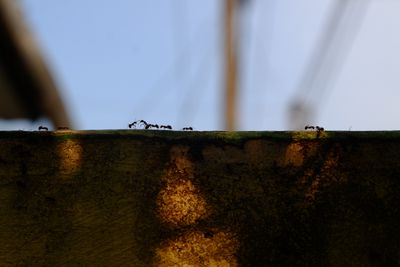


In San Diego, a violent war between rival ant supercolonies has been raging for decades, killing millions upon millions every single year. While the conflict plays out on a much more minuscule scale, the grim similarities with human warfare have been startling to some scientists.
The world domination of Argentine ants
The combat-ants in question are Argentine ants, which, as their name suggests, are native to South America, not California.
The species (Linepithema humile) is highly territorial and prone to aggression towards other insects, using their antennae and chemical signalling to identify whether others are an outside foe or related friend.
In the era of globalization and international trade, the ant’s complex social system was put into hyperdrive.
Throughout the 19th century, and perhaps before, the species was accidentally spread across the world through trans-Atlantic shipping. Ants would hitch a ride on some cargo in South America, then find themselves planted across the world, from Europe to Japan.
These far-flung parts of the world were seeded by a small number of ants, so their population was much less genetically diverse. The ants all “smelt” the same to each other, so nests treated each other as kin instead of enemies. Because they stopped fighting and killing each other, many nests with their own queens merged into one huge cooperative "supercolony" spread across vast areas of land.
Decades later, the supercolonies would find themselves transplanted into yet another corner of the world, creating a very sticky situation where they come into contact with other supercolonies that have strayed down their own path for generations.
The very tiny war of coastal California
As explained in a 2006 paper in the journal Molecular Ecology, southern California is home to five rival supercolonies of Argentine ants – and they do not get along.
The most dominant one controls a 1,000-kilometer-long (over 600-mile-long) patch of loosely connected nests in coastal California, bordered by at least three of the four smaller colonies, each controlling their own town-sized enclaves.
The scientists from UC San Diego explained that the miles-long borders between the territories were sharp, often divided by just a few metres. When the different groups of ants did come into contact, which they appeared to do regularly, violent clashes erupted.
Fights between supercolonies were reported in 40 percent of the site visits by the researchers, averaging around 15,000 deaths per battle.
Over months, the scale of death built up to astonishing levels. The researchers estimated that at least 15 million worker ants died in a single border skirmish around one of the smaller colonies near Lake Hodges in north San Diego, over their six-month study.
Based on this one incident, it's not a stretch to imagine billions of ants dying throughout the whole territory over the course of decades.
Trench warfare with no end in sight
What’s remarkable is that the borders barely moved over the months of research. They might have shifted back and forth from week to week, but neither side was steadily winning ground. The supercolonies were stuck in a forever war, losing massive amounts of life but gaining no new territory.
The stalemate has a striking resemblance to the Western Front of the First World War, where the Allied and Central Powers dug into trenches and ground each other down, with the front line barely moving over the course of years.
Unlike the soldiers of World War one, however, the supercolony stalemate might not have an end.
Writing for Scientific American in 2011, biologist Mark W. Moffett explained that Argentine ants are unusual because they don’t have the “dear enemy effect,” in which territorial animals show less aggression toward familiar neighboring rivals than toward unfamiliar strangers after long bouts of violence.
Through this effect, a kind of demilitarized zone can eventually emerge along the boundaries where violence does not occur. Under the right circumstances, the two territories can break away from each other, and the killing stops.
However, Moffett argued that Argentine ants do not have this privilege. In their native South America, the species will often battle it out over floodplains. Rival colonies will often battle, but the fighting will stop each time the waters rise. The conflict never resolves, so they’re programmed to just keep going, and going, and going.
Is the ant war still raging?
The San Diego ant wars have not been studied academically for around 20 years, as far as we could tell, so it’s unclear how the conflict stands today. Have the borders moved? Has the balance of power shifted? Is peace in sight?
If there are any myrmecologists-come-war journalists out there, we implore you to find out.