Nature
 3
3


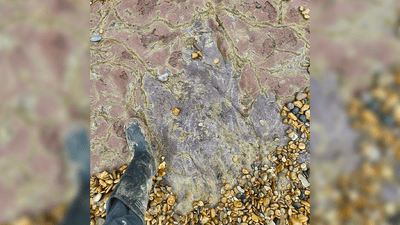


Fossil guide Joe Thompson was looking for dinosaur fossils on a beach on the Isle of Wight when he came across something perhaps even more extraordinary: A purple, three-toed dinosaur footprint almost 1 meter (3 feet) long.
"Anything that's that old and that exciting - it gives you such a rush, especially a huge, almost 1m-long footprint just lying on the beach," Thompson told BBC News. "It just makes you think about everything that happened before humans even existed."
The footprint was revealed amid the shingle on Shepherd’s Chine Beach. The footprint is thought to belong to an Iguanodon and could date back to around 130 million years ago.
Iguanodon were huge herbivorous beasts that weighed around 4,000 kilograms (8,819 pounds) reached around 10 meters (33 feet) in length, and had large thumb spikes as a defense against predators.
“Revealed by shifting shingle, this track comes from relatively high in the Wessex Formation’s strata, and was left as a large ornithopod lumbered across boggy floodplain soil. The maker was likely a large Iguanodon or related species, a dinosaur that has just celebrated the 200th anniversary of its discovery!” explained Wight Coast Fossils and South Coast Fossils on Instagram.
The purple comes from the minerals in the clay, explains the company.
Unfortunately, the footprint is not expected to last. "It's a shame they are not completely permanent - they do wash away after a period.” Said Thompson. "In the mud, it will only be around for a few months at the most.”
“They are amazing but ephemeral glimpses of an early Cretaceous world and its inhabitants, now lost to time.” finished the Instagram post.