Nature
 PUBLISHED
 6
6


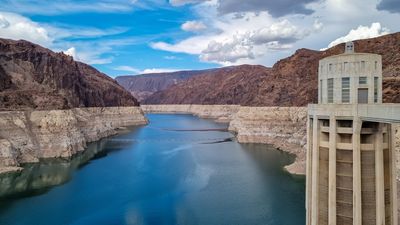


Ask a search engine or geography teacher to name the largest reservoir in the US, and you’ll get a quick and confident answer: Lake Mead. But for a while now, that’s been only kind of true. Since 1983, Lake Mead has been below its full capacity – that is, slightly empty – and in recent years, it’s been virtually entirely dried up.
Pretty soon, the water level is set to reach its lowest point ever – as in, throughout its entire existence. That’s a big problem, and not only because it’s evidence of how hard the climate is being ravaged. Lake Mead supplies water to some 25 million people across Arizona, Nevada, California, and some of Mexico – not just for drinking, but for agriculture, hydroelectric power generation, and of course, disposing of murder victims.
So we can only imagine how many sighs of relief were let out this week when the Metropolitan Water District of Southern California, the largest supplier of treated water in the US with a customer base of some 19 million people, announced its commitment to leave billions of gallons of water sitting in the reservoir this year.
“We're grateful to be in the position this year to help reduce the impacts of drought on the Colorado River system as it faces unprecedented challenges,” announced Shivaji Deshmukh, General Manager of Metropolitan, in a statement issued Tuesday.
It’s not just good luck: Metropolitan has long had an eye on water conservation, being one of the first agencies to sign up to the Colorado River Drought Contingency Plan back in 2018, and investing heavily in water recycling, recovery, and conservation techniques since the 1990s.
“Over the last 30 years, we've transformed how Southern California secures its water future,” said Metropolitan Board Chair Adán Ortega, Jr. “By investing in diverse water supplies, incentivizing conservation, and capturing and storing water whenever it's available, we've added resilience to our system.”
“Those decades of forward-thinking investments allow us to step forward and help stabilize the Colorado River when it needs us most,” he said.
Of course, they’re not only doing this out of the goodness of their hearts. Metropolitan gets a hefty payout for the move, receiving from the United States Bureau of Reclamation $325 for every acre-foot not taken – a total of up to $65 million.
Is it a lot? Sure – but when you consider the alternatives, it’s a veritable bargain.
Why? Because Lake Mead is scarily close to “dead pool” status right now – that is, so low that the water literally can’t flow downstream anymore. At that point, it may as well be dry: pumps for drinking water would be literally unable to reach it; no water flow would mean no hydroelectricity being produced; the natural flora and fauna would struggle to survive, and you can forget about agriculture.
Thankfully, even the most pessimistic models don’t currently predict Lake Mead becoming a dead pool any time soon. What does seem clear, though, is that it faces some increasingly dry times over the next few years – which is why Deshmukh is clear that short-term solutions like this one aren’t enough to cope with the ongoing megadrought in the southwestern US.
“While these agreements provide important near-term support, lasting progress will require long-term solutions,” he said.
“If we all commit to reducing our use, we can avoid deeper cuts and create lasting change that will benefit future generations who rely on the Colorado River Basin.”