Nature
 PUBLISHED


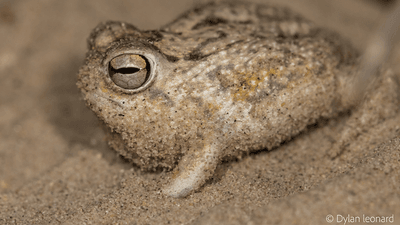


If you’re as chronically online as most of the IFLScience staff are, chances are you’ve come across the desert rain frog. These tiny, squat anurans found viral fame with their squeaky, high-pitched voices and delightfully grumpy expressions, but behind all the cuteness and memes are serious threats to the future of this unique species.
The desert rain frog (Breviceps macrops), going against most of frog-kind, has adapted to live its unusual life under the hot sand of the southern African desert instead of more typical moist rainforests and wetlands.
The species is only found in one place in the world: a very small range on the Namaqualand coast of South Africa and into Namibia, where it remains buried in the dunes, only surfacing to breed and feed.
With a round body, short limbs, little shovels for feet, a squeak like a dog toy, and a permanently grumpy expression on its face (it's not just you feeling judged), it's no wonder it's captured the hearts of those both on and offline.
Unfortunately, this may be contributing to the threats it also faces – diamond mining and infrastructure building in its unique habitat – that has led the IUCN to change the frog's risk status listing from Near Threatened to Vulnerable on its famous Red List.
“Without conservation action, the population is expected to decline by 20% in the next decade,” the IUCN said in a statement.
The tiny frog, around the size of a marshmallow, can hotfoot it – and by hotfoot we mean waddle – 38 meters (124 feet) in a single night. This is equivalent to a human walking a mile.
“Its legs are paddle-like, it almost waddles across the sand like one of those wind-up swimming frogs," Sarah Walsh, an assistant producer at BBC Studios Natural History Unit, told IFLScience when A Perfect Planet, featuring the desert rain frog, came out in 2024.
“Patience is a virtue, and these little frogs are really the most patient creatures I have met,” she added.
“They patiently wait underground for those foggy nights where they might be able to get some hydration and then patiently call out and hope they find a mate. The population is small and their habitat very vast, they really have to have the patience and hope that they get lucky... literally.”
The frogs' sand dune habitat is only 10 kilometers (6 miles) wide, so the entire desert rain frog population is increasingly at risk from habitat loss and changes to its environment.
The IUCN has changed the frog's Red List category to reflect the threats, like diamond mining, to this habitat and the potential implications on the population of desert rain frogs. The biggest impact is a green hydrogen project, which could impact one-third of the frogs' range within South Africa and two-thirds in Namibia.
Its viral fame may have brought attention to it for people to get behind conservation of the little weirdo, but it is also now potentially under threat from collectors seeking to fill the demand in the pet trade. Cute as they are, the desert rain frog has adapted to its very specific habitat; it's best to leave them where they are.
“Among all the frogs in the world, this one has got a really unique breeding, biology, physical features, morphology,” Louis du Preez of the African Amphibian Conservation Research Group, and North-West University told the Guardian.
“They don’t occur anywhere else in the world.”

 2
2