Nature
 PUBLISHED
 1
1



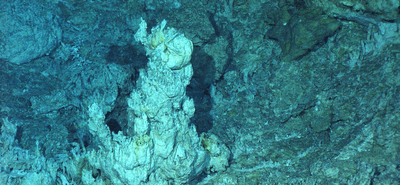


What lies beneath the Lost City, and how does it obtain its mighty power? This might sound like the start of a pseudoarchaeological investigation into the secrets of Atlantis, but it actually has more to do with Earth's geology and the strange life-forms that make their home at the bottom of the ocean.
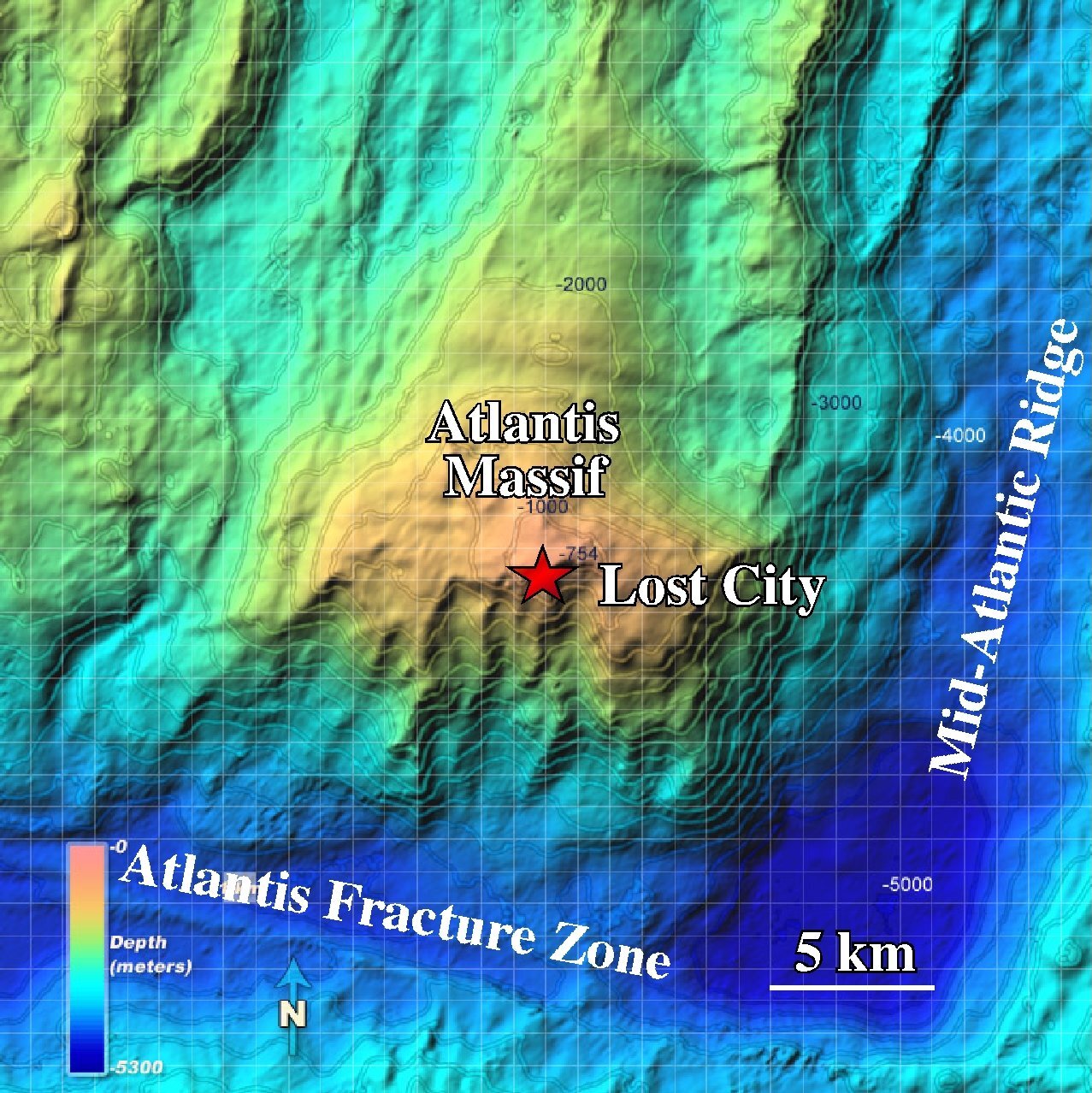
The Lost City in question is a rocky metropolis of hydrothermal vents that sits at the bottom of the Atlantic Ocean, where the North American plate meets the Eurasian and African plates, at a depth of up to 900 meters (2,950 feet).
These hydrothermal vents are like deep-sea hot springs where seawater seeps into the ocean crust, becomes superheated by underground magma, then spurts back into the ocean loaded with hydrogen, methane, and other chemicals.
Unexpectedly, life is able to live in and around these vents, despite the red-hot temperatures and absence of sunlight. It does this by ditching photosynthesis and, instead, relying on chemical energy from the vents to survive.
Keen to find out more about the forces that feed this system, a team aboard the JOIDES Resolution research vessel in 2023 took their equipment to the Atlantis Massif – a group of mountains in the middle of the North Atlantic, just 800 meters (2,600 feet) north of Lost City – and drilled almost 1.3 kilometers (0.8 miles) into Earth’s crust.
What they found was both odd and illuminating.
They bored to a depth of 1,268 meters (4,160 feet) below the seafloor and scooped out a sample that was brimming with peridotites, a form of rock that’s abundant in Earth’s upper mantle.
It's a material usually found far too deep to obtain, but it's reachable in this part of the seafloor thanks to tectonic forces that have pushed up and exposed sections of the upper mantle.
The sample was also rich in “formation water” that had become trapped in the pores of underground rock layers.
This water's chemical composition showed it had experienced prolonged interaction with hot rocks at temperatures of over 300°C (572°F). Importantly, its chemistry was very similar to the fluid that emerges at the Lost City.
Accordingly, the researchers believe they have identified the Lost City’s hidden plumbing system. They explain: “Our results provide the first direct evidence for deep, high-temperature fluid circulation through gabbroic and ultramafic lithologies beneath the Atlantis Massif."
“These findings demonstrate how seawater circulates deep into oceanic plates and transports chemical energy to shallower environments, potentially supporting microbial life."
Scientists had long suspected something like this was going on. The idea that seawater seeps deep into the crust, gets cooked by hot mantle rock, and re-emerges loaded with the chemical energy that powers the vents made a lot of sense on paper.
However, suspecting something and actually capturing solid evidence are very different things, especially in science.
The new study is published in the journal Geochemistry, Geophysics, Geosystems.