


 Nature
 PUBLISHED



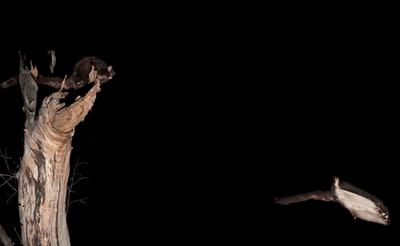


The fluffy oddballs known as greater gliders (Petauroides) should perhaps be called 'mediocre gliders', although the lead scientist on the research dismantling their reputation assured IFLScience: “They’re greatest in my heart.”
Greater gliders got their name because they are the largest of the Australian gliding possoms, which includes others such as the chaos gremlins officially known as yellow-bellied gliders and criminally cute sugar gliders.
I didn’t know they existed and became obsessed.
Dr Ana Gracanin
But it was widely believed that the name was also accurate because they were considered the best at gliding, at least if distance is the only measure of success. Descriptions of them frequently state that they can glide an impressive 100 meters (330 feet) between trees.
However, when Dr Ana Gracanin and co-authors investigated the source of that figure, they found it comes from a single 1940s observation which was almost certainly of a different species. A somewhat more reliable account reported a glide of 75 meters (246 feet), but it lacked any details.
Clearly it was time to fill the glider-sized hole in our knowledge.
Gracanin spent many nights filming gliders at five forest sites in New South Wales using infrared cameras. It was a slow task.
While other gliders feed on high-calorie foods like nectar, tree sap or insects, greater gliders instead live on eucalyptus leaves, which makes their activity levels closer to that of koalas. And we all know how much koalas love to nap.
Although Gracanin told IFLScience she has witnessed a glide of more than 50m (165 feet), the longest she was able to record for science was 49.6m (164 feet).
Far short of the historic record.
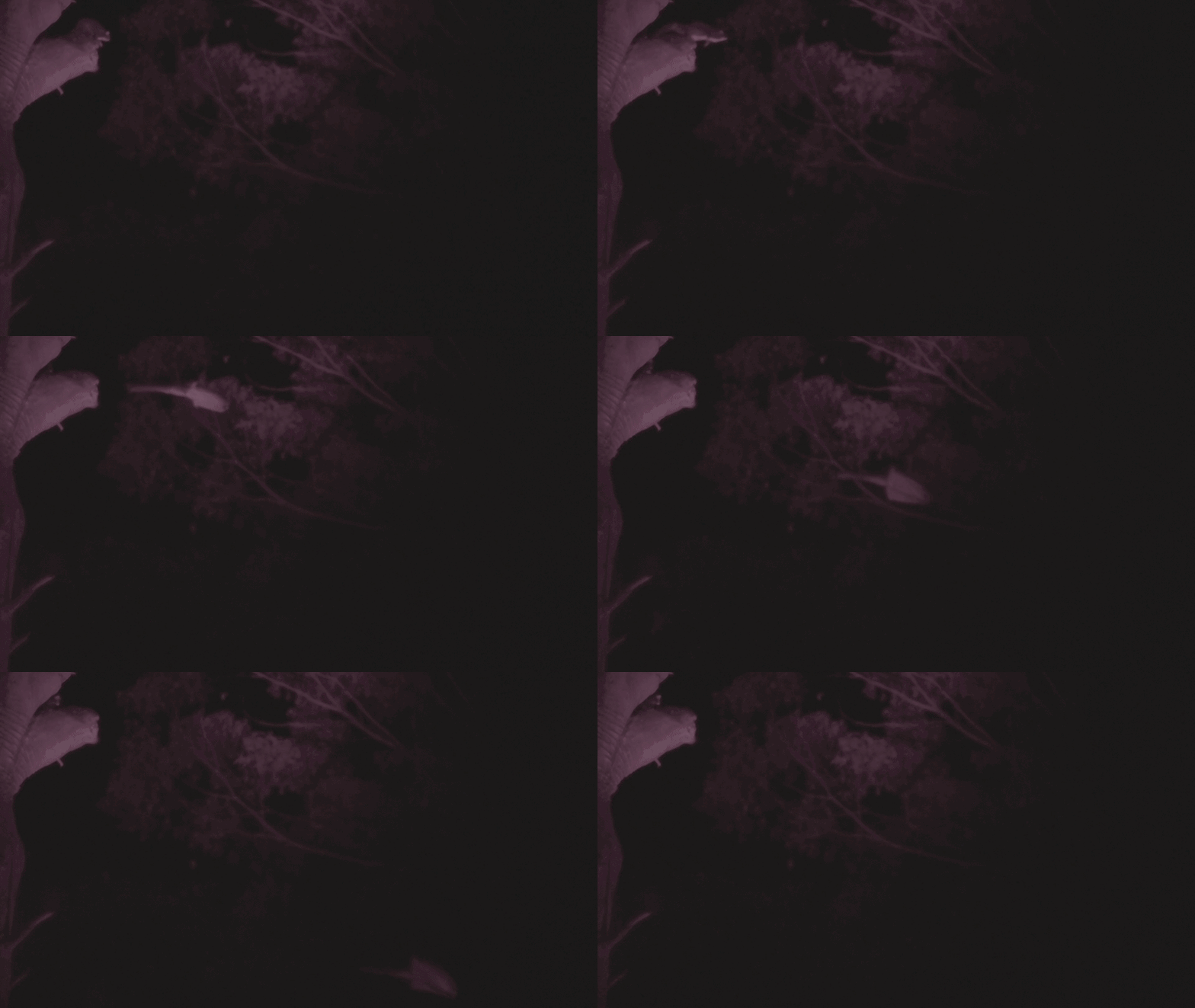
There might, however, be some nuance in this. “It all depends on the height they jump from,” Gracanin explains.
She found that the southern greater gliders managed to move 1.1 meters horizontally for every 1 meter they fell. And since the animals are clumsy and vulnerable on the ground, the gliders try to always stay arboreal and so reach their destination with a couple of meters of tree to spare.
This means, theoretically at least, trees in Australia could grow tall enough to allow for a 100-meter leap. But trees that size would always have been rare, and have now been almost entirely logged out.
Consequently, the 100-meter report would be dubious anyway, even if it had not been accompanied by descriptions of cackles and shrieks like those of a yellow-bellied glider. Greater gliders prefer dignified silence.
How far can a glider glide?
Smaller Australian gliders have been recorded crossing spaces as wide as 145 meters (476 feet), thanks to the fact that some species can achieve an even better 2:1 glide ratio.
But even that pales in comparison to the world’s best practice, with giant flying squirrels achieving an impressive 3:1 ratio. “One was reported in Borneo crossing almost 200 meters,” says Gracanin.
Of course, distance isn't the only measure of greatness. But Gracanin added that smaller gliders have been seen masterfully adjusting their flight paths to evade branches or even uninviting trees, and she doubts greater gliders are as maneuverable.
The findings aren’t just about species bragging rights, though. This research could have implications for their conservation.
Greater gliders are classified as endangered, and need to be able to cross any breaks in their territory.
From relative obscurity, greater gliders have recently achieved modest fame as conservation icons, with logging programs posing a massive threat to their survival.
“Because greater gliders are not particularly efficient gliders, gaps in the canopy can become major barriers to movement,” Dr Kara Youngentob, a co-author of this new study, said in a statement.
“If individuals can’t move between forest patches, populations become isolated and access to food, shelter and breeding opportunities is reduced.”
By knowing exactly how far these gliders can now glide, the researchers hope that conservation plans can now be better informed to aid in their survival.
“They always make me smile. I hope people can be inspired to protect them.”
Much less is known about greater gliders than smaller Australian species because they are both less common and tend to live higher in the trees.
In fact, it was only six years ago that we discovered what was thought to be a single species of great glider is actually made up of three. Even then, like Gracanin’s work, most research since has been on the southern gliders.
It’s not altogether surprising that greater gliders are not great at gliding.
Besides their extra weight, they’re also simply less aerodynamic. Where other gliders use membranes that stretch from wrist to ankle, greater gliders rely on a sail that starts at their elbows.
“They have to tuck their paws under their chins when they start,” says Gracanin, inducing an instant cuteness overload.
The evolutionary basis for this approach is unknown, but greater gliders are more closely related to ringtail possums, including the newly discovered New Guinea glider, than to other gliders and evolved their aerial skill independently.
IFLScience interviewed Gracanin while she was on her way to film some greater gliders for fun, rather than her research, so her commitment to the species cannot be questioned.
She’s the researcher who, by managing to place a camera inside a nesting hollow, revealed to the world that greater gliders can grip things with their tails, and that the fathers sometimes help raise the young.
Hopefully those two discoveries will mollify any of her research subjects upset that Gracanin has trashed their athletic reputations.
“I saw one once as an undergrad,” Gracanin recalls. “I didn’t know they existed and became obsessed.”
While studying, Gracanin saved money to do a tree-climbing course and says, “They always make me smile. I hope people can be inspired to protect them.”
The study is published in Australian Mammalogy



 1
1