Nature
 PUBLISHED





What you'll discover in this article
- A trace fossil known as Paleodictyon has hinted at the existence of an unknown creature in Earth's oceans for over 500 million years.
- Scientists now believe it is the burrow system of arthropods that are still alive today.
- As lead palaeontologist Andrea Baucon told IFLScience, the team now hopes to build underwater observatories to witness the creation of these strange hexagonal structures in real-time.
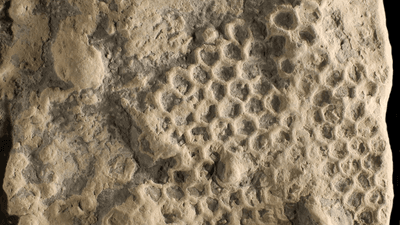
The mystery of a peculiar hexagonal fossil that’s been cropping up on Earth over the last 500 million years is one step closer to being solved. A new study has described what the creator behind the trace fossil Paleodictyon looks like, highlighting two of the strongest candidates.
Considered one of palaeontology’s longest-running cold cases, Paleodictyon has been confusing scientists for centuries. In 1850, Italian palaeontologist Guiseppe Meneghini named the fossil from Eocene-aged deposits.
Thing is, he wasn’t describing an animal, but a bizarre print left behind by an unidentified creature.
Their terrestrial and shallow-marine relatives are surprisingly familiar
Andrea Baucon
We’ve since found Paleodictyon – the name given to this variety of trace fossil – in the form of fossils on the tops of mountain ranges to fresh tracks at the bottom of the sea.
Whatever animal was behind the structures has been living on Earth for half a billion years and is still alive today. So, what is it?
Mountain top to ocean floor
A team of scientists led by palaeontologist Andrea Baucon at the University of Genoa had a theory that some kind of arthropod was behind it all. Arthropods are invertebrate animals with segmented bodies and hard exoskeletons, and we’ve named millions of species from terrestrial and marine ecosystems.
To figure it all out, they scoured the literature for examples of Paleodictyon and went out into the field to search for new fossil specimens. It entailed spending days on their knees as they searched the Apennines and the Alps for minute traces.
While it might seem a strange place to search for something we know lives in the sea, these landscapes were once ancient ocean floors.
Here, we find ancient examples of Paleodictyon, but underwater vehicles have filmed modern versions on the seafloor – not fossils, but complex burrows excavated by organisms that are still alive today.
Both the fossil and modern structures are made up of straight tunnels with sharp corners. This structural pattern is associated with arthropods because their rigid exoskeletons and jointed appendages dictate their range of movement, and the team have highlighted two key candidates.
Living fossils
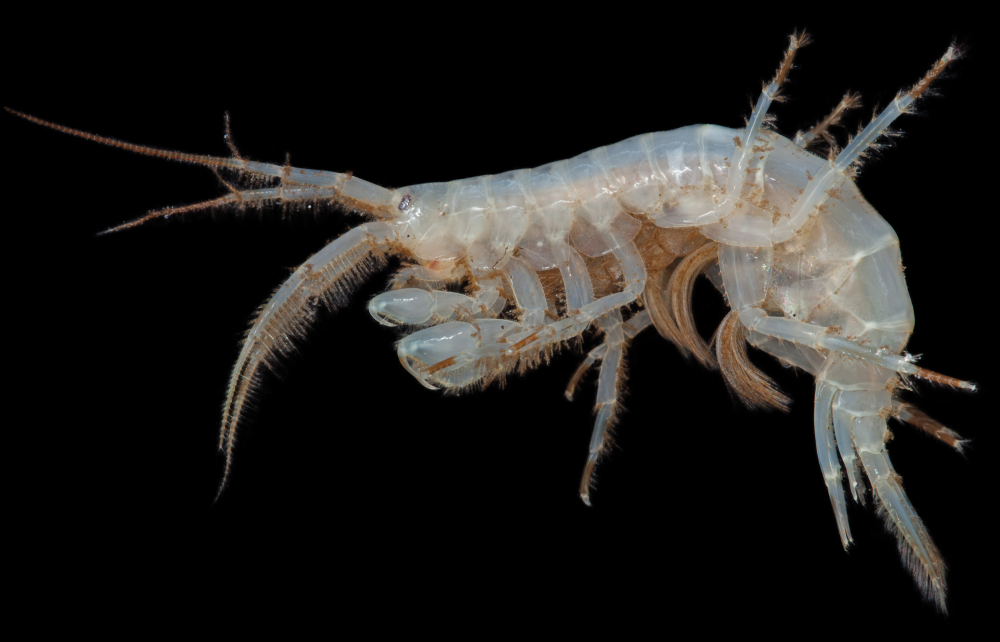
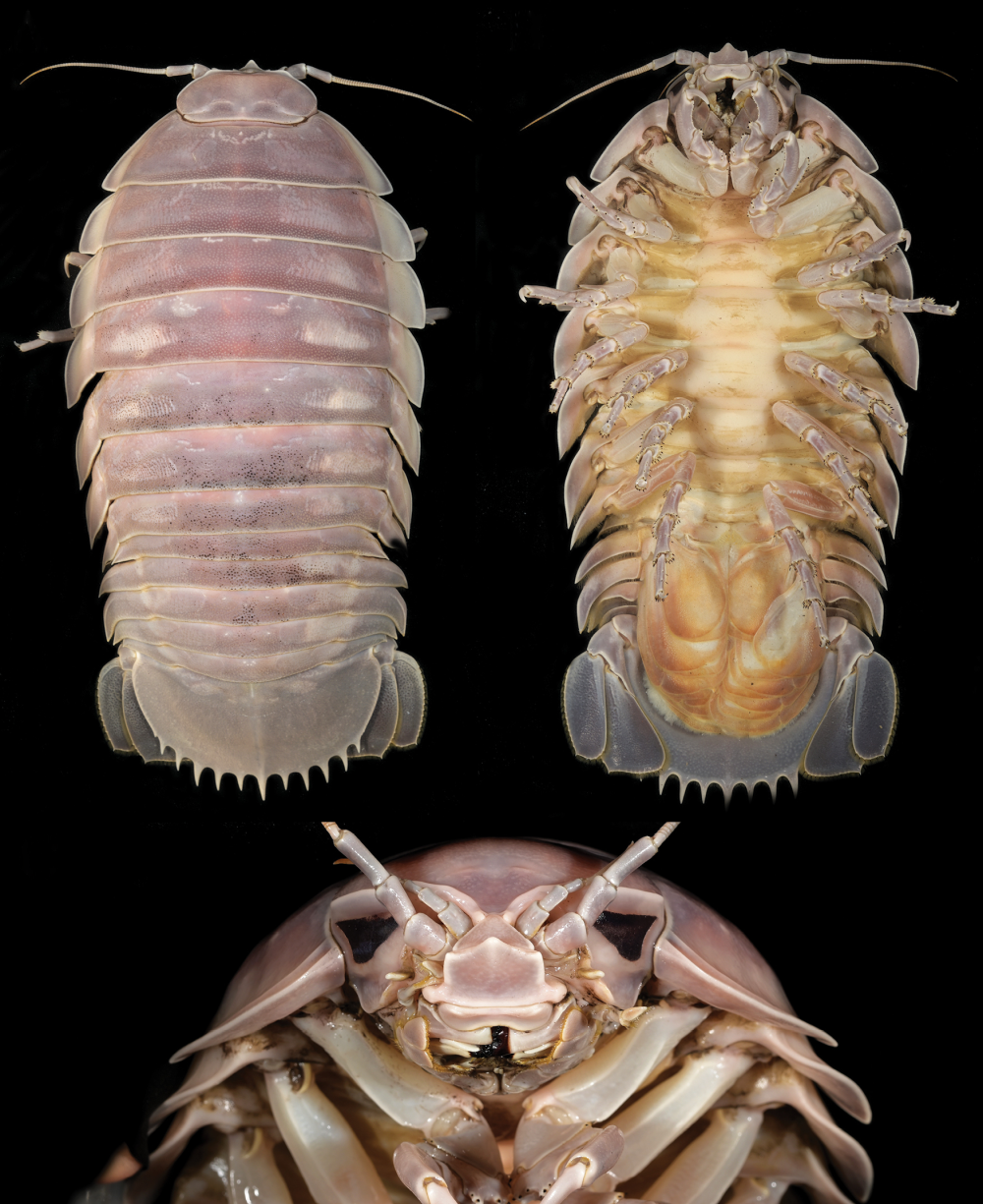
“Our work suggests that arthropods were the most likely producers of Paleodictyon,” said Baucon to IFLScience. “Among arthropods, deep-sea isopods and amphipods are the main candidates.”
The next step in our research is to build underwater observatories on the ocean floor to observe Paleodictyon (and its producer) in its natural environment
Andrea Baucon
“Their terrestrial and shallow-marine relatives are surprisingly familiar: you can find isopods, or pillbugs, under plant pots — small crustaceans that curl into a ball when disturbed. On beaches, you may also have seen amphipods hopping around in the sand (some of them are called sandhoppers or sand fleas).”
We can start to build a strong visual of the creator of Paleodictyon, but precisely what they’re using this structure for remains unanswered.
Past theories have suggested it could be a system for farming bacteria, but this new research suggests instead that it could be a communication network for a colony of animals.
These hexagonally organized tunnel systems could facilitate the transfer of chemical, hydraulic, or acoustic signals. It’s hard to know for sure without seeing it in action, but the scientists are working on that, too.
“The next step in our research is to build underwater observatories on the ocean floor to observe Paleodictyon (and its producer) in its natural environment,” said Baucon. “Being able to watch the producer alive as it creates these structures would be like travelling back in time — giving us the chance to observe directly how one of the most enigmatic patterns in the fossil record is made.”
Forget your rocket launch watch parties. Finally seeing Paleodictyon in action will be my Moon landing.
The study is published in the journal Earth-Science Reviews.

 1
1