


 Nature
 PUBLISHED




What you'll discover in this article
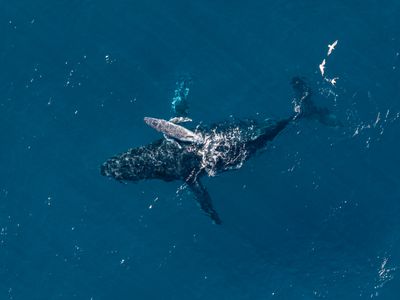
- A drone operator has captured the first-known drone footage of a humpback whale birth off the coast of New South Wales.
- “For perhaps five seconds after the birth, the mother remained completely still whilst the calf floated at the surface. She then instinctually turned back into murky-bloodied water to reunite with her newborn,” said Alexander Forrest, who filmed the birth.
- There are only three other published humpback whale births recorded worldwide, making this footage incredibly rare.
Every year, thousands of humpback whales migrate around the east coast of Australia between their feeding ground in Antarctica and their breeding grounds off the country’s coast in more tropical waters. While filming the migration, drone operator Alexander Forrest captured something only seen three times before: the birth of a humpback whale calf.
"I hit record just in time"
On July 28, 2026, Forrest spotted some unusual behavior by one of the females in the migrating group while carrying out licensed drone filming of the humpbacks.
“I had just changed my drone battery when the whale surfaced, and hit record just in time – every surface presents a unique behaviour,” Forrest told IFLScience.
“Moments later, a large plume of blood appeared. I was relieved to see a newborn calf rising to the surface for its first breath, and not a predator interaction.”
“For perhaps five seconds after the birth, the mother remained completely still whilst the calf floated at the surface. She then instinctually turned back into murky-bloodied water to reunite with her newborn,” said Forrest.
A first for science
Forrest was joined by two other drone operators from the Organisation for the Rescue and Research of Cetaceans in Australia (ORRCA), Tanya Snowden and friend Dominic Cotter-Dephoff, who stayed filming the newborn calf and mother for several hours.
The team thinks this footage represents the first-ever humpback whale birth to be recorded by a drone.
They managed to record the first few hours of the calf’s life from the drones, showing the mother’s nurturing behavior, the newborn’s first dives, and even interactions with several other humpback whales that came to check out the newborn.
Whilst it’s extraordinary footage, it’s also an incredibly valuable scientific observation.
Alexander Forrest
These behavioral observations will go on to inform scientific understanding of humpback whale calving, with the ORRCA team planning to prepare a scientific paper, as these events are so rare to witness.
"To date, there are three other published observations of humpback whale births worldwide, with a preliminary review identifying this birth as the first to be captured from the air. Being able to document this event in such detail makes it an incredibly important scientific observation,” said ORRCA Head of Research Annie Post in a statement sent to IFLScience.
“It is an extraordinary contribution to our understanding of humpback whale reproduction and maternal behaviour.”
“Whilst it’s extraordinary footage, it’s also an incredibly valuable scientific observation. Opportunities to document a humpback whale birth from beginning to end are very very rare," Forrest told IFLScience.
"My hope is that this footage contributes to a better understanding of these remarkable cetaceans."
Even rarer sperm whale birth
Earlier this year, a rare recording was made of a sperm whale birth in the waters surrounding Dominica in the eastern Caribbean.
This was only the second sperm whale birth to be scientifically documented and provided amazing insights into the way the pod worked together to help the newborn take its first breaths.
Sperm whale calves are born negatively buoyant, so they must be helped to the surface to breathe as soon as they are born
Both related and unrelated whales were filmed coming together to assist the newborn, marking an extremely detailed and rare observation of cooperative care in these cetaceans. In fact, this is the first quantitative evidence of cooperative birth assistance outside of primates.
“[B]irth is such a vulnerable moment, and it is often in vulnerable moments that the true structure of social bonds becomes most visible,” Alaa Maalouf of Project CETI told IFLScience at the time.




 1
1