Nature
 PUBLISHED
 1
1


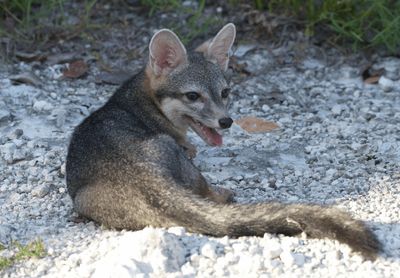


In the ruins of Mayan temples on the island of Cozumel, archaeologists once came across the remains of mysteriously small foxes. For years, many feared the creature must have vanished into extinction. It turns out these strange little beasts are still among us — and scientists now have the pictures to prove it.
For the first time ever, scientists have photographed the Cozumel dwarf fox, one of the world's rarest canids (that's the family of animals including dogs, wolves, coyotes, foxes, and other hound-like species).
However, despite this long-awaited evidence, its history and future remain shrouded in mystery.
Photographing a legend
Images of the elusive fox came around through a streak of luck and a ton of determination. In the early hours of September 14, 2023, reports began circulating via social media and the phone lines of a disoriented fox wandering through Cozumel, an island in the Caribbean Sea off the coast of Mexico's Yucatán Peninsula.
Rafael Chacón, director of the Fundación de Parques y Museos de Cozumel, grabbed his camera and went on a search. Eventually, by around 6 am in the morning, an adult male fox was located near the coastal highway on the eastern side of the island.
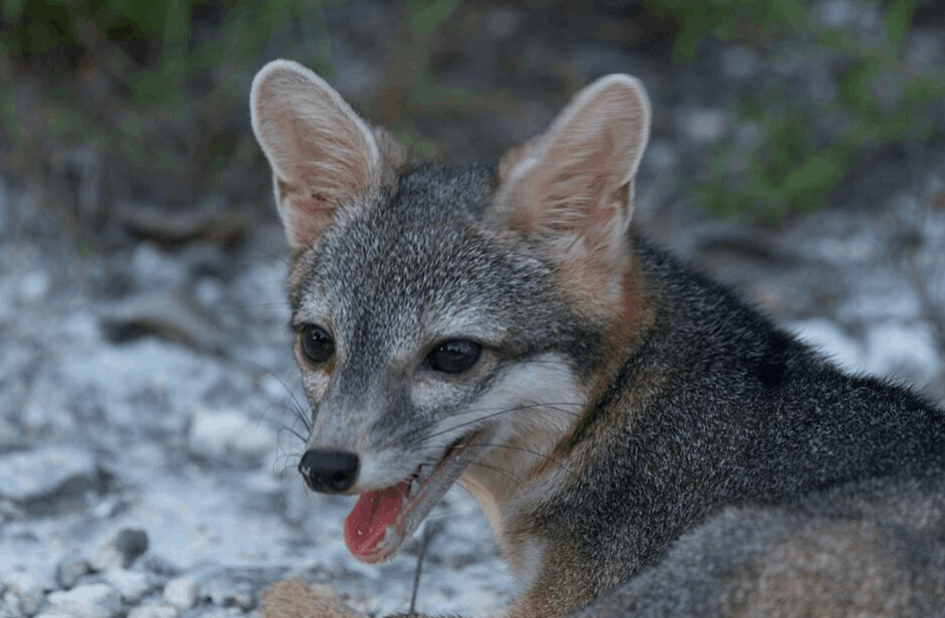
They managed to photograph and even capture the tiny fox. After several days under observation, it was safely released at a carefully chosen site away from roads in habitat matching its suspected preferences.
What is the Cozumel dwarf fox?
The Cozumel dwarf fox (Urocyon sp.) is found only on the island of Cozumel. Little else is certain about the species, not least because it is so extraordinarily rare.
The last secondhand sighting had been reported in 2001 and, prior to this recent rediscovery, the main physical evidence of the fox's existence was its semi-fossilized remains found at Mayan archaeological sites.
Its closest relative is the gray fox (Urocyon cinereoargenteus), found throughout mainland North and Central America. In a textbook example of island dwarfism (AKA insular dwarfism), the forces of natural selection have whittled the Cozumel population down to just 60-80 percent the size of its mainland cousin.
This significant size reduction suggests the fox has been evolving in isolation for at least 5,000 to 13,000 years, perhaps long enough to warrant classification as its own species. It has never been formally described, but scientists consider it critically endangered and likely on the brink of extinction.
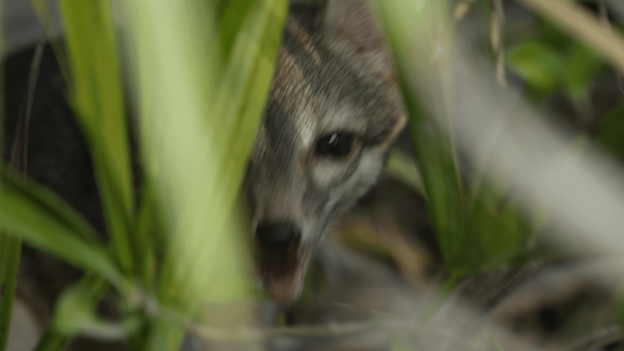
Oddly enough, Cozumel has a few animals that are exclusively found on the island and nowhere else. Stranger still, three of them are dwarfed mammalian carnivores: the pygmy raccoon (Procyon pygmaeus), the dwarf coati (Nasua nelsoni), and the Cozumel fox (Urocyon sp.).
Why this island harbors such exceptional wildlife remains unclear, though researchers say the fox's rediscovery underscores the urgent need to protect these imperiled species before it is too late.
“The rediscovery of the fox is not a conservation success story yet, but it represents a second chance,” Travis Bayer, the founder of Pathos Wildlife and author of the new study, said in a statement.
“Ultimately, we hope this work helps move the Cozumel fox from a little-known, uncertain presence on the island to a better-understood key part of Cozumel's ecosystems. We also hope it demonstrates that conservation is often most urgent when certainty is lowest and that uncertainty itself can be a call to action,” added Bayer.
The study is published in the journal Neotropical Biology and Conservation.