Nature
 PUBLISHED




Raccoons are always getting up to hijinks. If they’re not breaking into banks, they’re raiding bins and getting drunk on crab apples. Their propensity for shenanigans may finally have an explanation, as a new study has established that they’ll solve puzzles just for the fun of it.
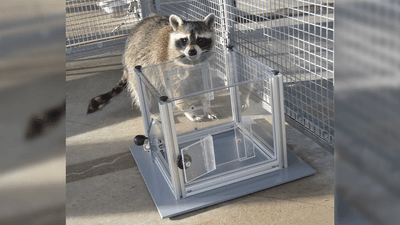
To test the problem-solving skills of raccoons, researchers with the University of British Columbia created a custom-built puzzle box. The box had nine entry points riddled with mechanisms like latches, sliding doors, and knobs. At its center: a precious marshmallow.
The raccoons enrolled in the study were given 20 minutes to solve the puzzle boxes, with entry points rated from easy to medium and hard. Turns out, they didn’t really need the marshmallows.
“We weren’t expecting them to open all three solutions in a single trial,” said UBC researcher Hannah Griebling in a statement. “They kept problem-solving even when there was no marshmallow at the end.”
Continuing with a task when there’s no reward is considered a clear sign of information seeking. Carrying on meant the raccoons could learn more about the box at hand with each attempt, even if they didn't get a snack for their efforts. What was interesting was how they used that information to approach the different difficulties.
For easy solutions, they took a broad approach, varying the order and type of opening they targeted. When things got trickier, they returned to reliable solutions, but could still be flexible if they didn't work. Essentially, they balanced their curiosity with the perceived risk of failure.
“It’s a pattern familiar to anyone ordering at a restaurant,” said Griebling. “Do you order your favourite dish or try something new? If the risk is high – an expensive meal you might not like – you choose the safe option. Raccoons explore when the cost is low and quickly decide to play it safe when the stakes are higher.”
This kind of curiosity and love of the puzzle – marshmallow or not – contribute towards our understanding of why these “trash pandas” have become so successful in urban environments. We already knew that their grabby, sensitive hands mean they have great dexterity for problem solving. Now, it’s clear that their thirst for information is another driver behind the adventurous behavior that’s seen them become such excellent bin raiders and bank robbers.
“Raccoon intelligence has long featured in folklore, yet scientific research on their cognition remains limited,” added UBC researcher Dr Sarah Benson-Amram. “Studies like this provide empirical evidence to support that reputation.”
The study is published in the journal Science Direct.