Nature
 PUBLISHED
 2
2


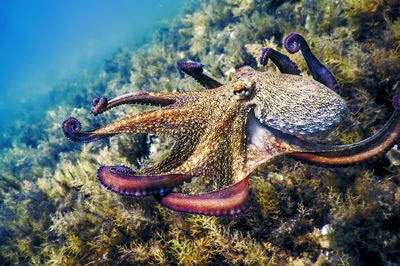


The plans to build the world’s first commercial octopus megafarm have been scrapped following years of backlash.
Multinational seafood company Nueva Pescanova had hoped to construct a giant aquaculture complex dedicated to octopus farming along the dock of Las Palmas in the Canary Islands, Spain.
Their pioneering farm-factory was set to rear up to 1 million octopuses annually, eventually handling every step of the octopus aquaculture process, from birth and maturity to slaughter and processing.
However, the group has reportedly withdrawn its application to the port concession, according to local newspaper La Voz Canaria. Among the reasons cited for the decision are the "significant extension of administrative deadlines" and uncertainty around the "completion of environmental and sectoral procedures."
Public and political pressure
Beyond these logistical concerns, the question of octopus aquaculture is riddled with ethical and environmental worries. Campaigners from animal welfare and environmental groups, NGOs, scientists, and the public have spent the last five years vocally objecting to the project, criticising it as inhumane, unsustainable, and with a potentially devastating environmental impact.
Reports suggested the amount of fish required to feed the octopuses was expected to be around 28,000 tonnes or 2.1 billion wild-caught fish in its first year. Great for the fishing industry, not so great for biodiversity and ecosystems.
In 2023, the Aquatic Life Institute (ALI) released a report that critiqued the project, claiming Nueva Pescanova was “prioritizing profits and polluting Las Palmas”.
The NGO argued that the facility's proximity to the sea created a serious risk that pollutants and waste discharge could harm local marine life. It also warned that densely packed tanks full of octopus could be prone to disease outbreaks, which would likely require heavy antibiotic use, adding to the broader problem of antimicrobial resistance and superbugs.
Ethical concerns
Campaigners emphasized the proposed inhumane treatment of animals that have demonstrated cognitive complexity, noting that octopuses are incredibly intelligent creatures capable of experiencing pain, possibly even emotions, which made the cramped conditions of a commercial farm especially troubling from a welfare perspective.
In 2021, the UK became the first country to recognize octopuses and squids as sentient beings as part of its animal welfare bill. Other countries like Norway, Sweden, New Zealand, Canada and the European Union have similar strict laws surrounding cephalopods based on the evidence that they can feel pain.
Now that the Las Palmas project has been put on ice indefinitely, ALI says it's a big win for marine life, the environment, and public health.
"Nueva Pescanova's decision to abandon the pursuit of the Las Palmas commercial octopus farming project is a watershed moment in the global effort to ensure this practice, which has negative implications for animal welfare, the environment, and public health, is never established," Tessa Gonzalez, Director of Research and Impact at ALI, said in a statement sent to IFLScience.
It's not over yet
"Innovation has an important role to play in improving food systems; however, it cannot resolve every challenge involving ethics, governance, and animal welfare," said Gonzalez.
"Sometimes, the most responsible innovation is restraint, and today's decision reminds us that progress is measured not only by what we choose to build, but also by what we choose not to."
However, it’s not the end of the battle. Several other countries – including Australia, Chile, Japan, Mexico, and Spain – already have small octopus farming operations, and some are investing in research to scale them up.
For now, many of these ventures remain constrained by practical challenges; octopuses are notoriously difficult to breed at scale in captivity, for one.
Nevertheless, it seems increasingly likely that interest in farming octopus for food will continue to linger, driven by rising global demand for seafood and dwindling wild catches.