Nature
 PUBLISHED





An innovative new forest finance mechanism hopes to turn the tide on deforestation by creating a way for economics to work in favor of conservation. Named the Tropical Forest Forever Facility (or TFFF), it honors countries achieving low deforestation rates with continued funding in return for conserving their green spaces.
Previous attempts to make money work for nature through forest conservation mechanisms have included the much-criticized system of carbon credits. These credits were meant to offset emissions by investing in projects that actively removed greenhouse gases from the atmosphere.
However, a 2025 review conducted by the University of Oxford and University of Pennsylvania concluded that they have failed, and represent “a dangerous distraction from the real solution to climate change, which is rapid and sustained emission reductions,” so said lead author Dr Joseph Romm, Senior Research Fellow at the Penn Center for Science, in a statement at the time.
In some cases, carbon credit projects have been found guilty of “green land grabbing,” as foreigners displaced Indigenous communities – key stewards of biodiverse landscapes. Understandably, conservationists have been eager to explore more viable and ethical alternatives.
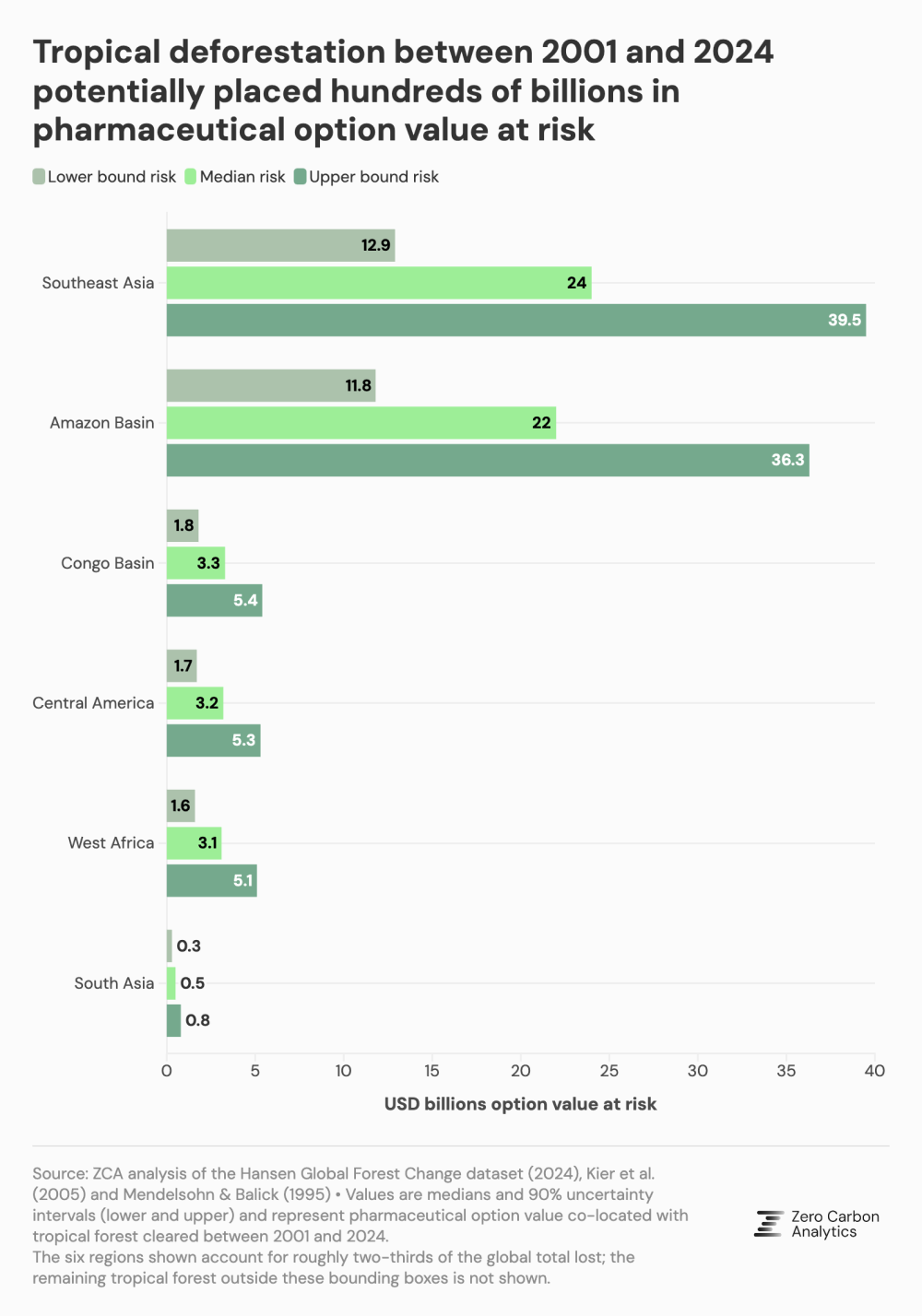
Safeguarding tropical forests is critically important for tackling climate change because they act as massive carbon sinks. Beyond the environmental benefits, a report from Zero Carbon Analytics estimated tropical forests hold up to $1.2 trillion in untapped value from drug discovery.
The TFFF marks a new approach in paying tropical forest countries directly for each hectare of standing forest they maintain. This avoids “greenwashing” whereby companies neutralize their unsustainable operations by spending money, and delivers the subsequent investment directly to the countries maintaining their green spaces.
Its current proposal includes 74 UN-listed countries that are home to over 1 billion hectares (3.8 million square miles) of tropical forest. The fund will act as a financial incentive for countries with low deforestation to keep the forests they have standing, while simultaneously encouraging countries with high deforestation to adjust land management so that they, too, can qualify.
In turn, this would see some of the world’s poorest forest countries receiving significant flows of finance, such as Africa’s Congo Basin.
Furthermore, 20 percent of payments must go to Indigenous Peoples and local communities that are actively engaged in forest conservation. If successful, it would represent the single biggest source of international finance to these communities that are so often at the forefront of effective land management.
So far, so good, but the TFFF has only received funding from a handful of countries at time of writing. They include Brazil, Indonesia, France, Germany, Norway, and most recently the UK, which has confirmed investment of £400 million.
It is so far falling short of its goal of $25 billion from government investment, which will be supplemented with $100 billion in private investment; money that could be invested in our greatest weapons against the catastrophic climate change that threatens the global community.
“The wildfires, heatwaves and droughts that have wreaked havoc on Europe's communities this year – and the catastrophic floods in Nepal – are profoundly intertwined with the health of the forests stretching across the Amazon, Congo Basin, Southeast Asia and beyond,” said Edward Davey, Head of World Resources Institute Europe's UK Office, in a statement emailed to IFLScience.
“With more investment and smart governance, this mechanism could provide countries with the long-term incentives they need to keep forests standing, while ensuring Indigenous Peoples and communities have the finance, tenure and rights to the land they have protected for generations.”