Nature
 PUBLISHED





There’s a vast amount of methane trapped beneath the seafloor. Were it to be released due to warming global temperatures, it could have a potentially catastrophic influence on the environment. As such, finding out how ecosystems respond to methane leaks is of great importance to ocean scientists.
Generally, we prefer to investigate these things on purpose, but when a drilling incident in 2018 caused a methane leak, it was too good an opportunity to pass up.
Over the course of six years, in situ monitoring of the situation revealed an incredibly rapid response from the ecosystem, and within just 2 years it had established a methane-munching worm bed.
Oceanic burps
Methane seeps exist naturally on the seafloor where cracks in the rock enable gases to passively leak out into the ocean. However, we humans have a habit of punching through solid surfaces.
In 2018, gas hydrate exploration in the South China Sea caused a human-made underwater methane leak. It wasn’t detected until a year later, but it allowed researchers to study the seabed as the ecosystem quickly underwent a rapid and drastic transformation.
Before the drilling event occurred, the seabed looked pretty much bare, with little in the way of benthic fauna making a living down there. Immediately following the leak, there was a further sharp decline in the seafloor life as microbial richness dipped by around 50 percent.
Specialist clean-up crew
That was, except for the methane specialists. The anaerobic methanotrophic archaea ANME-2e and ANME-3 had a bonanza, going from scarcely detectable to an expanding population. These microorganisms paved the way for bigger things to come.
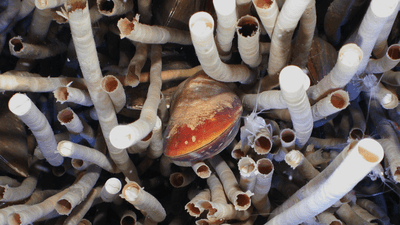
Within 1 to 2 years, the once barren sediment was covered in an extensive “worm bed”. This was due to the rapid colonization by Spionid and Acrocirrid polychaete worms and Metridinid copepods. This crew of opportunistic invertebrates are thought to be a good indicator of early-stage seep ecosystems.
The blooming of life – big and small – created a kind of animal-microbe biofilter that was breaking down methane about as effectively as methane seeps that had been going on for decades. Reaching 60 to 100 percent of their methane-degrading capacity, they provided an ecosystem service that formed far quicker than previously thought possible.
In the fight for our planet's climate, it seems we may be sleeping on the methane-munching capacity of deep-sea worm beds.
The study is published in the journal National Science Review.