Nature
 PUBLISHED


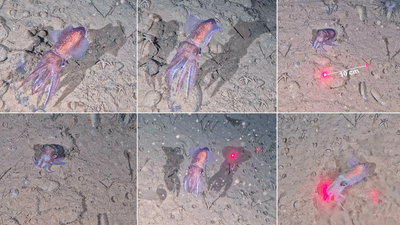


A footage first was recently captured by a team of researchers working in the remote waters of Northeast Greenland National Park, the largest national park in the world. Here, they spotted an Arctic bobtail squid, marking the first time these animals have ever been filmed in the region, and it gets better.
The surprise sighting came with an added bonus as it was discovered the squid was carrying an egg sac. A glittering reminder that daring to venture into understudied areas of our ocean really pays off.
“Northeast Greenland National Park is the largest national park on Earth but one of the least biologically documented marine regions in the Arctic,” said Dr Paige Maroni, a Postdoctoral Research Fellow from the University of Western Australia (UWA), in a release.
“The squid and eggs were recorded at a depth of 50 metres in water around −1.6 °C, which highlights the resilience of marine life in one of Earth’s most extreme environments.”
The Arctic bobtail squid Rossia moelleri is a charming marine creature. It’s the largest and most cold-adapted of the three Arctic bobtail squid species, with the characteristic googly eyes that make these animals so ripe for the Pixar treatment.
Cute and colorful though they may be, they’re pivotal predators that sit around the middle of the food web, forming a critical bridge between pelagic and benthic ecosystems.
We also know Arctic bobtail squid have short life spans and a rapid turnover, making them especially sensitive to changes in environmental conditions. It’s precisely for these reasons that researchers are eager to get a better understanding of where and how they’re living during a turbulent chapter in our planet's history.
“Establishing knowledge of the biodiversity in this region is crucial for understanding ecosystem function and resilience under accelerating climate change,” said Maroni. “This study provides a valuable new baseline for tracking ecological change in the rapidly warming Arctic.”
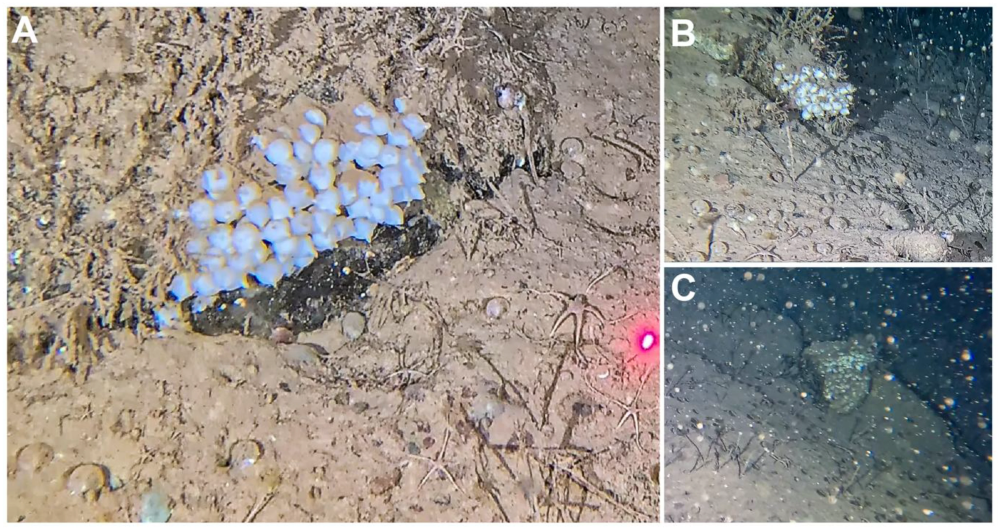
That knowledge means heading out into the field. Easier said than done when you’re searching for critters with a preference for sub-zero conditions in remote parts of the world.
Fortunately, the researchers were able to hitch a ride aboard a Secret Atlas Micro Cruise Expedition vessel. As part of the Polar BLAST Expedition, they deployed a remote-operated vehicle (ROV) enabling them to explore the frigid waters from the comfort of a cruise.
This kind of ecotourism has been the topic of much debate as the pros of exploration are weighed up against the cons of potentially impacting the environment. In this instance, Maroni believes it’s helping to close our knowledge gap of the oceans.
After all, we can’t protect what we don’t know is there.
“Our results show low-impact science and expedition tourism can help fill major biodiversity gaps in remote polar regions,” Dr Maroni said.
“In poorly studied polar ecosystems, even one verified observation can provide important insight into species distributions, reproduction and resilience under climate change.”
The study is published in the journal Polar Biology.