Nature
 PUBLISHED


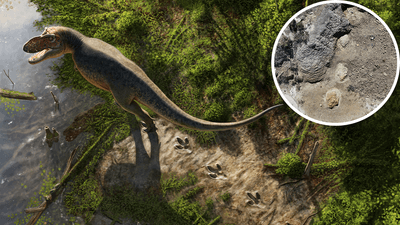


It can be pretty hard to determine who made footprints from 66.5 million years ago, given that sediment changes, many dinosaurs shared similar-looking feet and claws, and often bones are not found in the same area as footprints, given the differences in the preservation process. However, the new discovery of four dino footprints in North Dakota could be the first-ever adult T. rex trackway in the world.
The newly discovered trackway is composed of four large footprints, each measuring around a meter long. The Hell Creek Formation in North Dakota, USA, is not known for theropod tracks, but the team believes the size and three-toed nature of each footprint are consistent with an adult T rex having made them. Plus, the surrounding area is known for an abundance of T. rex fossils.
Just two adult T. rex single footprints have been found in the world, one in Montana and one in New Mexico, so this represents the first-ever adult T.rex trackway found anywhere.
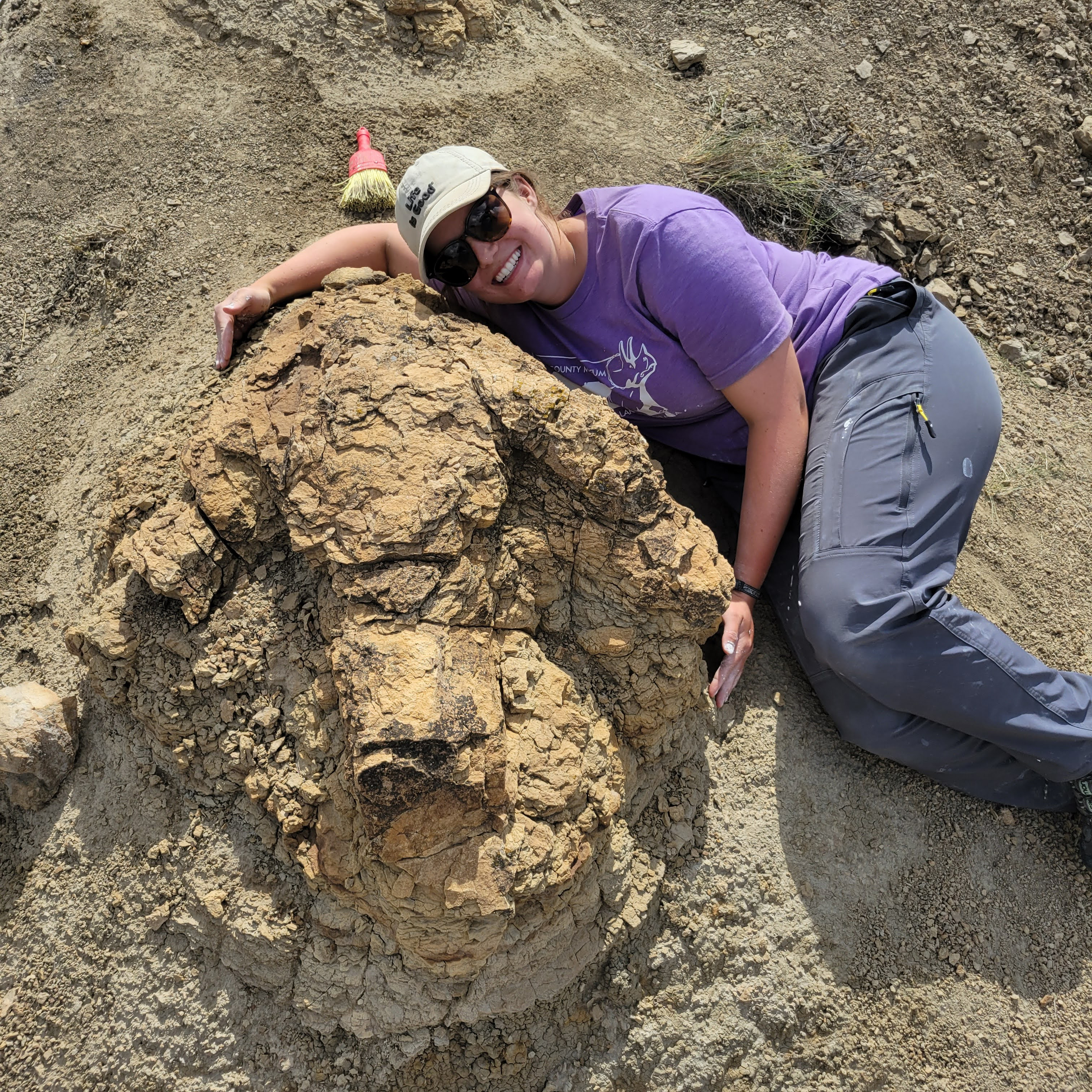
The trackway was discovered by Kent M. Hups, a teacher at Northglenn High School, in 2025 on federal land in Marmarth, North Dakota. A year later, Hups is a co-author on the paper describing this world-first discovery.
“As a teacher, I’m always telling my students that science starts with curiosity, passion, and careful observation. I never imagined that could lead me to a discovery like this,” said Hups in a statement.
T. rex may be the most famous dinosaur of all time, but there is still plenty we don't know about it.
“Bones tell us an enormous amount about these animals, but footprints capture a moment of behavior. With a trackway, we can actually follow an animal as it moved across the landscape. That is incredibly rare for T. rex,” said Tyler Lyson, another co-author and senior curator of vertebrate paleontology at the Denver Museum of Nature & Science.
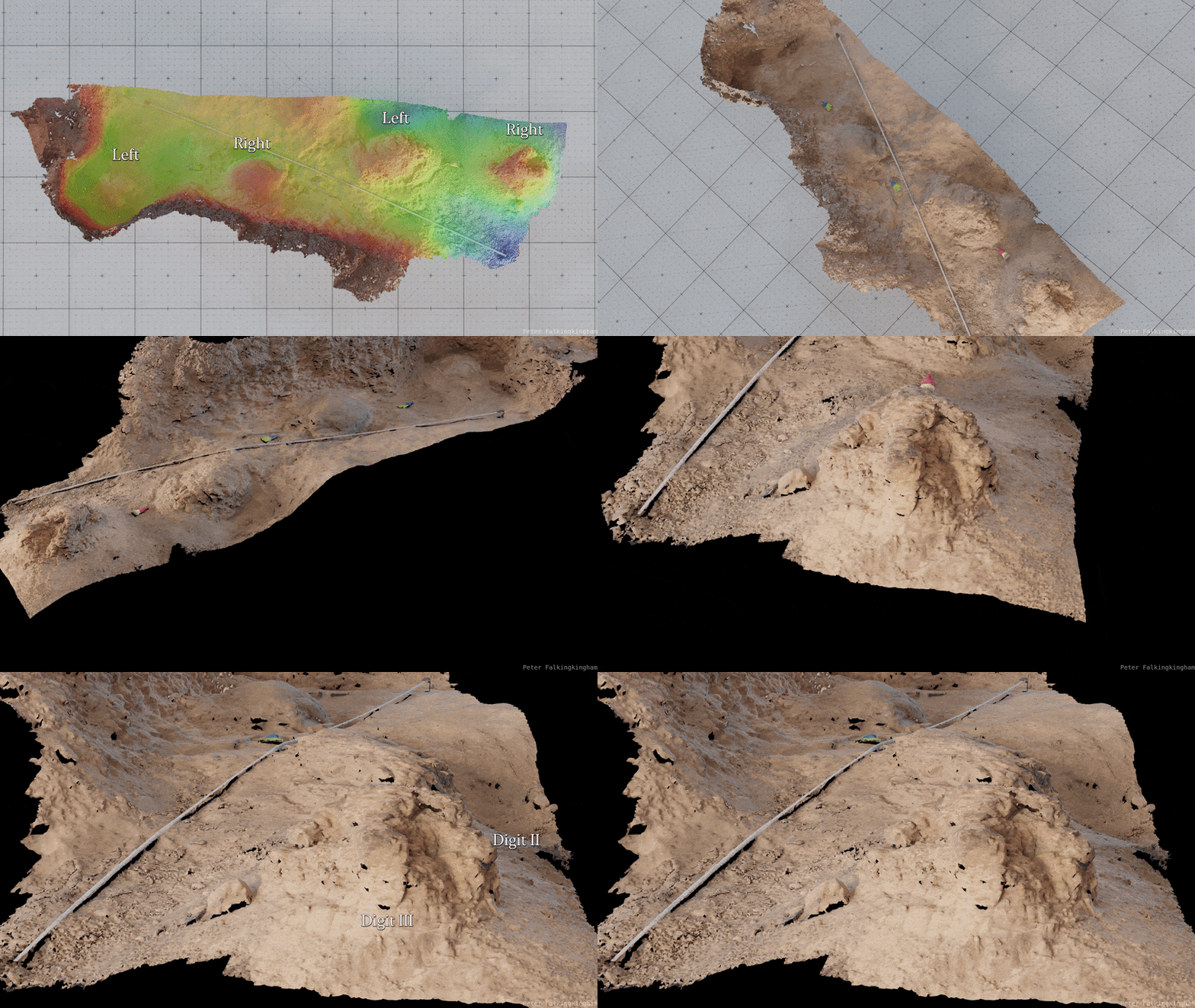
The trackway dates back 66.5 million years and measures 7 meters (23 feet) in length. By using high-resolution 3D surface scanning, the results show the footprints are thought to be two lefts and two rights.
The unique sandstone rocks have allowed minerals to crystallize and collect, helping to preserve the trackway.
The world's longest dinosaur trackway is found in what is now Colorado and contains a 96.3-meter-long (316-foot) stretch of 134 consecutive dinosaur footprints dating back to the Late Jurassic.
While the track is pretty well preserved, it's difficult to tell much about the speed the T.rex was traveling when it made the tracks. The footprints suggest that the T. rex's hip was 4 meters (13 feet) in the air and had roughly a 4-meter stride (13 feet). The team calculated the animal was likely moving at around 1.5-2 meters per second (3.5 to 4.5 miles per hour) or slower at a walking pace.
Whether it can shed any further light on the idea T. rex walked on its tippy toes is not yet clear.
The paper is published in the Journal of Vertebrate Paleontology.