Nature
 PUBLISHED




What you'll discover in this article
- Charnia was a curious ancient animal that was one of the first large, complex creatures to exist.
- Scientists have uncovered the first-ever 3D-preserved fossils of Charnia, revealing new details about its appearance and life.
- Dr Yorick Veenma told IFLScience that more "Ediacaran fossils are still waiting to be found in unexpected places."
Over half a billion years ago, sediment blanketed the seafloor, smothering all life that was living on it. Now, these astonishing 3D fossils have been unearthed, giving an incredible glimpse into the early evolution of complex life.
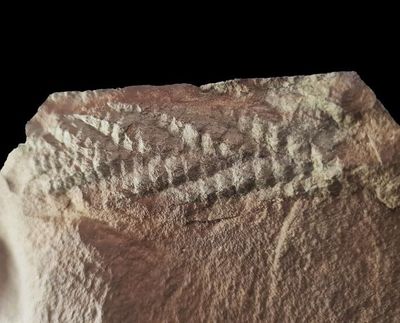
Normally, the fossils of Charnia are found preserved flat. Looking not unlike a feather, with a leaf-shaped body and veins issuing out from a central stem at an angle, they could grow up to 66 centimeters (30 inches) long.
It looks deceptively leaf-like.
Dr Yorick Veenma
Although it might not look like much, Charnia has an important place in the history of life on Earth. When, in 1958, fossils of the organism were officially recognized as being up to 570 million years old, it became the first Precambrian fossil to be recognized as such.
Up until this point in time, palaeontologists didn’t believe that large, complex life existed before the Cambrian Period.
The fact that the fossils were found in rocks that formed in deeper water also showed that this unusual organism was not photosynthetic and so was actually an animal.
“Charnia was a soft-bodied organism that lived on the seafloor during the Ediacaran Period, a very early chapter in the history of complex life,” Dr Yorick Veenma, from the University of Cambridge’s Department of Earth Sciences, told IFLScience.
“Although it looks deceptively leaf-like, Charnia is often discussed in the context of early animal evolution. It existed before many more recognizable forms of complex life would appear in Earth’s oceans.”
But recreating how it would have lived has proved difficult. Scientists know that it was sessile, meaning that the animal was stuck in place on the seafloor, but it has no obvious feeding arms, mouth, or even a gut.
New fossils unearthed in a sheep field in Norway, however, are helping to shed light on these unusual early animals.
An ancient goo-filled bag
The new fossil site in Norway has revealed some of the earliest known 3D-preserved fossils in existence.
Ediacaran fossils are still waiting to be found in unexpected places.
Dr Yorick Veenma
Initially alerted to the region by the discovery of Charnia holdfast fossils in the rocks, the researchers were unprepared for the exquisitely preserved, intact Charnia fossils that eventually came out of the cliff.
They show that the animal was essentially a “goo-filled bag” that was a little like a jellyfish stuck to the ground.
But this ancient fossil was also able to provide more information to the palaeontologists.
“When some of this 3D morphology is retained, as in the new Charnia fossil from Norway, it can reveal additional details,” explains Veenma.
“In this case, the fossil preserves sharp ‘keels’ along the branches of the Charnia, making them appear more angular than often inferred from flatter fossils.”
While these animals would have been quietly living in deeper waters, the team thinks that the Charnia was preserved when an underwater avalanche of sediment swept the area. The rapid covering of the organism allowed for such detailed preservation.
A chance discovery in a sheep field
These are not only some of the earliest known 3D fossils, but also the first Charnia fossils to have been found in all of Scandinavia.
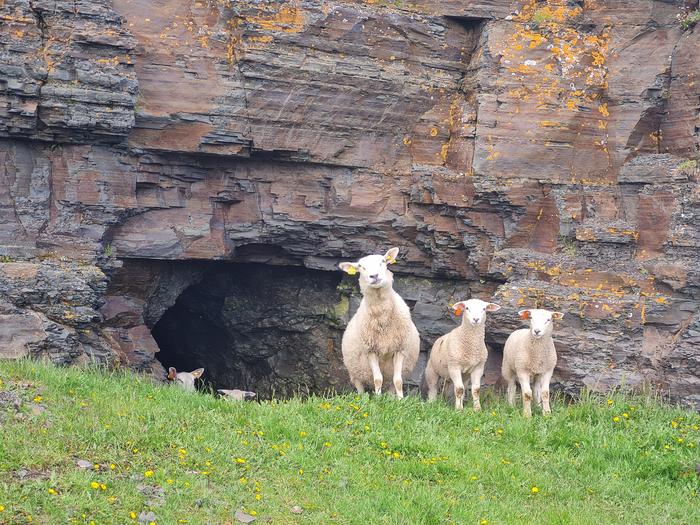
They were discovered in a sheep field in the Norwegian Arctic near an outcrop of rocks dating to the Ediacaran that had previously shown hints of preserving ancient life. The chance find of a rock fall revealed the importance of this site, the first new major locality of its kind discovered anywhere in Europe over the last 20 years.
“A lot of what we know about Ediacaran life comes from a relatively small number of well-known fossil sites around the world,” explains Veenma.
“The outcrops in northern Norway had mainly revealed subtler signs of Ediacaran life, such as holdfast structures thought to have anchored organisms to the seafloor. The fact that Charnia has now turned up shows that sites like these still have a lot to reveal, and that Ediacaran fossils are still waiting to be found in unexpected places.”
The team hopes that the site will reveal even more of this ancient Ediacaran ecosystem, and that more sites of this age will be discovered in the future.
The study is published in the journal Palaeontology.