Nature
 PUBLISHED



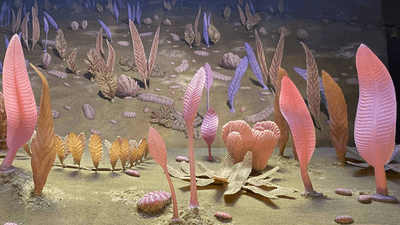


It’s a miracle that any life on Earth becomes a fossil. The process only happens to a lucky few, and even then much is lost along the way – a fact nobody seems to have told the Ediacaran Biota.
These animals lived 570 million years ago, and are the world’s oldest large organisms. And yet, their remains are preserved in exceptional detail. For years this has vexed scientists who have been unable to explain these incredible fossils.
Some suggested they were so well-preserved because they had hardy tissues, but now researchers have finally figured out what gave rise to some of the world’s weirdest fossils.
Ancient aliens
Their remarkable fossilization isn’t the only reason the Ediacaran Biota are considered some of the strangest fossils ever found on Earth. These mysterious soft-bodied creatures are so unusual that they defy classification.
“The Ediacara Biota look totally bizarre in their appearance,” said Dr Lidya Tarhan, a palaeontologist at Yale University in a statement. “Some of them have triradial symmetry, some have spiraling arms, some have fractal patterning. It's really hard when you first look at them to figure out where to place them in the tree of life.”
But classify we must because the Ediacaran Biota appear within a critical moment during the evolution of complex life. Their reign came just before the Cambrian Explosion, a diversification boom that gave rise to nearly all of the evolutionary lineages still living today.
What was once considered a bang is now thought to have gone off with a “long fuse”, a liminal period during which the Ediacaran Biota were being weirdos all over the oceans. As such, scientists are eager to study their remains to understand how this all unfolded, and it just so happens that these 570-million-year-old fossils are incredibly well-preserved.
Preservation secrets of the Ediacaran oceans
To figure out why they fossilized so well, Tarhan and colleagues measured isotopes of lithium present in Ediacaran fossils unearthed in Newfoundland and northwest Canada. This information is helpful because it can indicate whether the dead animals were coated in clay when they died, and whether that clay washed off from continents, known as detrital particles, or precipitated on the seafloor, called authigenic particles.
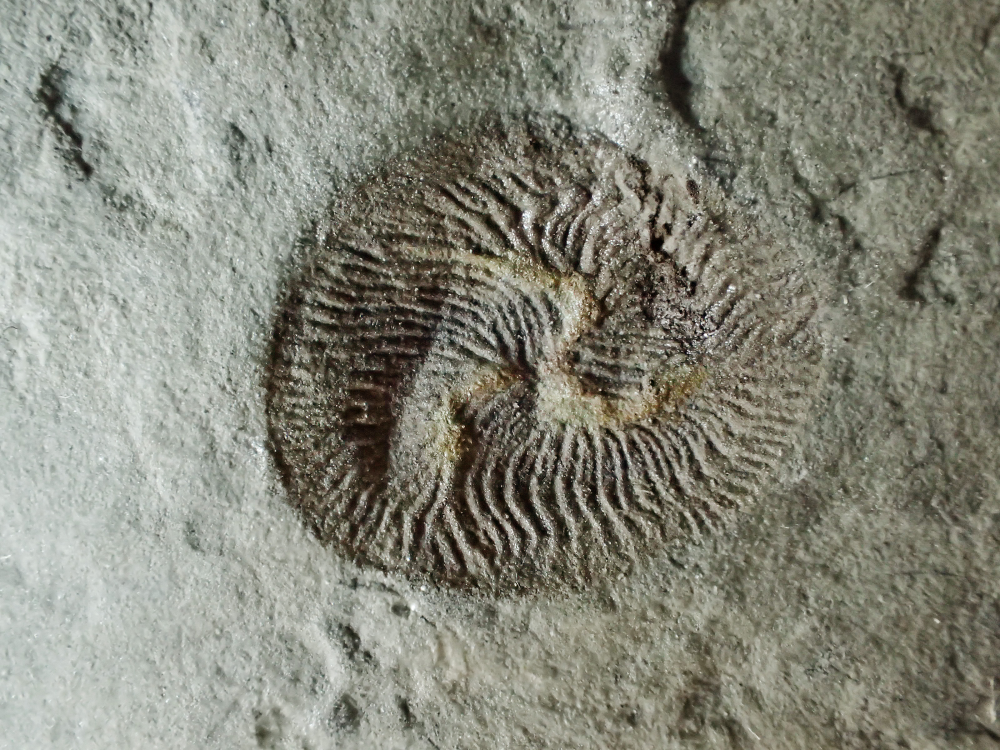
What their research revealed was a mix of the two. When animals of the Ediacaran Biota died, at first detrital clay particles buried their remains. These particles then acted like nuclei for authigenic clay particles, combining to form a kind of cement that trapped sand particles and created near-perfect molds of the soft-bodied animals.
This process was driven by the unique chemistry of the Ediacaran oceans. It provided an eerily high-resolution snapshot of just how alien a landscape these waters were with squishy, tendrilly, and fractal lifeforms scattered across the seabed.
An answer to some of the planet’s most puzzling fossils, then, and a step closer to understanding what drove life to leap from simple microbial organisms to some of the most bizarre animals the Earth's ever seen.