Nature
 PUBLISHED



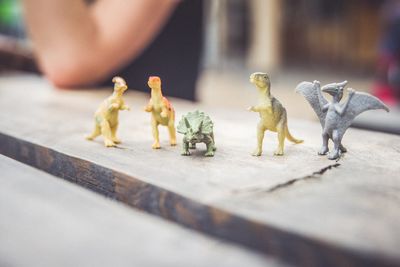


Think of a dinosaur. Was it a mighty T. Rex? A towering sauropod? Or maybe something a little smaller? These prehistoric beasties grew to uniquely large maximum sizes, but (modern birds aside) they never seemed to grow all that small. Dinosaurs the size of a mouse or a rat just don't crop up all that much in the fossil record.
To investigate why, the researchers behind a new study looked into factors affecting maximum and minimum size across different groups of animals. With what they discovered, they believe they've narrowed down the true reason for the lack of miniature dinos.
“Everyone loves a giant dinosaur,” said study co-author Roger Benson at the American Museum of Natural History in a statement. “But we decided to look at the other end of the scale. The absence of tiny dinosaurs may be just as interesting as the existence of giant ones.
Dinosaurs ruled the Earth from their origins in the Triassic until they were wiped out by the Chicxulub asteroid impact that drove the Cretaceous mass extinction event 66 million years ago. They persisted for 180 million years, while we Homo sapiens have only managed a measly 300,000 so far.
Yet in all that time, even the smallest non-avian dinosaurs we know about never got below about 400 grams (0.9 pounds), which is about the same weight as a regulation soccer ball. While that's quite small in the grand scheme of things, it makes even the titchiest dinosaurs more than 200-3,000 times as large as the smallest birds, mammals, and reptiles alive today.
"Most living species are small, much smaller than us, and smaller than even the smallest dinosaurs," Benson told Reuters last week.
One possible explanation is that we just haven't got our hands on the fossils yet. Tiny animals are harder to discover, and their delicate bones are less likely to fossilize. But Benson and co-author Stephanie Lechki at Princeton argue against that explanation because fossil deposits routinely preserve much smaller animals alongside large dinosaurs, including mammals, lizards, amphibians, and other vertebrates.
So, to solve this mystery, the researchers analyzed the distribution of body sizes in a range of organisms and compared this with those animals' physiology. Using this data, they were able to build a mathematical model based on an animal's energy requirements.
The model was successful at predicting body sizes and distributions for birds, mammals, and turtles. However, when it came to lizards and snakes, it tended to overpredict the size of the animals compared with what is actually seen in nature. The same thing happened with crocodylians for both body size and body size distribution, as well as flightless birds.
The team believes the model works only when the main constraint on an animal's size is internal. The situations where it doesn't work so well, such as for lizards and dinosaurs, are more likely to be explained by some external factor in the environment, such as a feature of the animal's habitat or the presence of competitors, that is preventing them from growing beyond or below a certain size.
The idea marries up well with something researchers already believe, which is that mammals stayed small during the reign of the dinosaurs because the bulky reptiles had already staked their claim on the heavyweight niche, pushing out the mammals and preventing them from growing beyond a certain size.
This new work provides evidence that the reverse may also have been true: dinosaurs might not have been able to hack it in the undergrowth with the mammals, and so they didn't get quite as small as their physiology might otherwise have allowed them to.
In the crocodilians the models could be explained by the fact there are simply fewer crocodilian species, and so they don’t fill out the distribution as nicely as some of the more specious groups.
However, in terms of body size: “Living crocodylians have generally large body sizes compared to most of their extinct relatives, occupying only a small portion of the body size distribution explored by extinct members of their total group,” write the authors in a paper documenting the study results.
"It is likely that small-bodied early mammals outcompeted dinosaurs, preventing them from reaching small body sizes. Similarly, large dinosaurs likely outcompeted early mammals, preventing them from reaching large body sizes," Stephanie Lechki, co-author of the study, told Reuters.
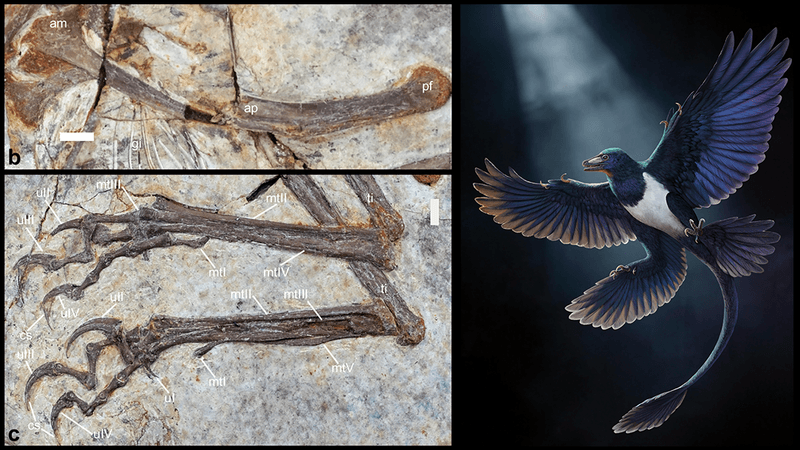
One group that was able to conquer both large and tiny body plans is the birds, specifically the flying kind. The authors therefore think the evolution of flight is what allowed birds to fill the whole gamut of ecological niches and make even the tiniest body plans work.
So, while the non-avian dinosaurs never got to be tiny, their close relatives eventually did.
The study is published in Evolution.


 1
1