Humans
 PUBLISHED
 1
1



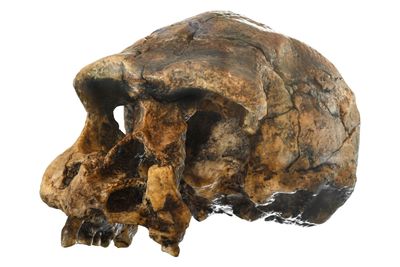


The story of humanity is something of a Royal Rumble, with different hominins entering the ring as others were eliminated over the course of millions of years.
As the last ones standing, we Homo sapiens like to think of ourselves as the winners, but the truth is that one of our prehistoric ancestors was the real champ, at least if we're judging by how long they walked the Earth.
From somewhere in Africa, and weighing in at around 65 kilograms (143 pounds) with a record of almost two million years undefeated, the highly disputed hominin champion of the world is… Homo erectus!
The people’s champ
This plucky little hominin boasts an impressive resume and was the first human species to migrate out of Africa about 1.85 million years ago.
Once in Eurasia, it proved remarkably adept at colonizing new lands and adapting to different habitats, spreading across the continent and most likely reaching China by 1.77 million years ago.
Eventually, Homo erectus found itself in Indonesia, where it finally perished a little over 100,000 years ago. In total, the species survived for just under two million years, which makes it by far the longest-lived member of the Homo genus.
By comparison, Neanderthals walked the Earth for about 400,000 years and modern humans have been around for roughly 300,000. If we’re talking about rounds boxed, then the tale of the tape massively favors Homo erectus over any other species in our lineage.
Despite its age, this seasoned journeyman was more than capable of getting into the mix with younger competitors. For instance, it’s thought that the ancestors of Neanderthals and Denisovans interbred with a Homo erectus population somewhere in Eurasia after leaving Africa about 700,000 years ago.
This remarkable species boasted far more than just longevity in the fossil record, however; it also had brains to go along with its endurance.
As the first human species to possess an expanded brain with large frontal and parietal lobes, Homo erectus was capable of producing advanced Acheulean stone tools, which represented a significant upgrade on the so-called Oldowan toolkit associated with earlier hominins.
Homo erectus was also the first human to use fire, capturing burning embers from wildfires and bringing them into their caves about 1.8 million years ago. There have even been claims that H. erectus was capable of seafaring, although these ideas generally aren't thought to hold water.
Let’s get ready to rumble
Given all the victories achieved by H. erectus, you'd think it would be difficult to argue that this isn’t the most successful human species. However, anthropologists are locked in fierce debate over whether the species can actually take credit for its many supposed triumphs.
The disagreement is taxonomical in nature. In the red corner, we have Homo erectus sensu lato, which is an umbrella term used to describe a massive assortment of Homo-erectus-like fossils found across Africa, Europe, and Asia.
Supporters argue that, despite a high degree of variation in their bones, these specimens should all be classed as Homo erectus, and that the species therefore encompasses a huge geographic and chronological range.
In the blue corner sits Homo erectus sensu stricto. This classification applies to a small number of fossils from China and Indonesia, which some scholars say are the only bona fide Homo erectus specimens.
Other fossils found elsewhere, they argue, should be classed as entirely separate species, such as Homo ergaster in Africa and Homo georgicus in Georgia.
As the debate rages on, the term "Homo erectus" remains a hotly contested one, and it is difficult to say exactly what it even refers to. Still, the general consensus is that this species and its close relatives dominated much of our prehistory.
When it comes to endurance, then, it seems that we Homo sapiens can’t even lay a glove on our extinct ancestors.